This is my interview with Abby Martin, a journalist working on behalf of the [Peter] Allard Prize Foundation, on the scope of my work with a focus on my anti-corruption work. Ms. Martin compiles videos with select nominees for the Allard Prize for International Integrity, of which I am one.
The anti-corruption discourse in our country usually rationalises the failure or refusal to prosecute any important persons for corrupt acts as being a result of our small size. After all, everyone has a friend who will see for them. Those friends will warn them, lie for them, forget for them or even lose a file or two for them. We have all had these frustrating discussions and wondered if we can ever muster the will or the wits to lock-up the important people who regularly commit acts of grand corruption.
When one considers the global news on this anti-corruption struggle, it is clear that in some substantial way the tide has turned. In a variety of countries, the citizens have become so outraged at the damage that large-scale corruption has done to their societies that the authorities there have now started to take decisive action against this scourge. It all makes me wonder when is the Caribbean going to catch-up with the rest of the world in punishing these destructive acts. Continue reading “Does Size really Matter?”→
Caribbean Economist Marla Dukharan and leading Trinidadian Transparency Activist Afra Raymond will discuss the recently-released Corruption Perception Index via an interactive webinar:
The current state of corruption in Trinidad & Tobago
From accountability to enforcement: What is missing?
Specific steps that need to be taken to improve transparency
Q&A
Tuesday, 6 March, 2018 • 11:00 AM AST (10:00 AM EST)
My focus has been on grand corruption, the large-scale acts of fraud which endanger the very stability and rationale of our society and its key institutions. No act of grand corruption is possible in isolation. The only way to steal these large amount of money is to have the collaboration of responsible officials and professionals, who either look the other way or actively assist in the looting.
That was the case in Eden Gardens and the other episodes covered thus far. None of these acts of grand corruption would have been possible without the intentional help of professionals such as attorneys, engineers, accountants or even surveyors. Our current private and public sector systems rely on the professional standards and ethics of those professionals to ensure value for money. Continue reading “The Ethics Gap – part four”→
‘…Doublethink is the ability to hold two completely contradictory beliefs at the same time and to believe they are both true…’
—from George Orwell’s ‘1984’
On 25 January 2017 the annual Corruption Perceptions Index report was published by Transparency International, with the results reflecting poorly on our country. T&T’s score fell from 39 in the previous year to 34 in 2016 – this scale measures greater perceptions of public sector corruption as declining scores, with the countries seen as least corrupt having the highest score. As a result of the declining score, our ranking fell from 72nd out of 168 countries to 101st out of 176. That decline in perception was a serious one and really little surprise to the attentive citizen, none whatsoever. Of course perceptions take some time to change, so the question is whether the post-September 2015 regime can improve those poor perceptions.
I believe that there is now an outbreak of tragic ‘doublethink’ within our country’s leadership, in relation to the CL Financial bailout. That must be challenged if we are to ever see any improvement in our nation’s fortunes, not to mention the slide in terms of perception of corruption. Continue reading “CL Financial bailout – DoubleThink”→
This issue examines the long-awaited Public Procurement and Disposal of Public Property Act and makes important points about the central role of the President in its implementation. (Recorded – Saturday 1st October 2016)
I did an excellent radio show with some vibrant young colleagues from TTTI on the morning of Sunday, 13 November 2016 on Boom Champions 94.1FM. The topic of discusson was “Sweet T&T or corrupt nation?: Revealing the truths on a corrupt state of affairs. Audio courtesy Boom Champions 94.1 FM
Afra Raymond visits the T&T Unpacked studio to talk with Justin Collymore and Rochelle Amour about T&T’s 2017 National Budget, why criminals get away with corruption and what we can do to make a change. It gets heavy, so for more details check out Afra’s blog at afraraymond.net or follow his page on Facebook.
On Sunday 22nd May 2016, the front-page story in this newspaper was headlined ‘We will pay it back‘. That article featured very interesting quotes from former CL Financial Executive Chairman, Lawrence Duprey as well as the Minister of Finance & the Economy, Colm Imbert, on the prospects for repayment of the huge sums of Public Money spent on this CL Financial bailout.
Duprey claimed to have made a formal proposal to the State to repay taxpayers and all stakeholders who are owed money, while insisting that the amount owed was yet to be determined. The failure or refusal of the State to publish any audited statements in relation to this CL Financial bailout appears to be impeding the discussions as to a settlement of this massive debt. The sidebar contains a summary of how the Public Money spent on this bailout has grown from the initial 2009 estimates of $5 Billion to a 2016 figure now said to exceed $24 Billion. Continue reading “CL Financial bailout – Duprey’s Story: SIFI vs PIFI”→
Last week we learned that Lawrence Duprey and his fellow CL Financial shareholders are victims of a badly-handled bailout. According to the Duprey version, the State must halt all asset disposals and he must regain control of the CL Financial group of companies. In what seemed to be an immediate response, Minister of Finance & the Economy, Colm Imbert, said he was so alarmed at the gross mismatch in the bailout figures that he decided to order a forensic audit on the entire process. These two contrasting stories are the latest big news on the CL Financial bailout.
I have always objected to the CL Financial bailout and it has become a strong example of how the Public Interest can be perverted under a series of disguises.
The Duprey Gambit is just the latest attack on good values in our country. It is a nasty, shocking outbreak of moral hazard. It needs to be dismantled and discredited, nothing less will do.
The Imbert Initiative looks like a welcome move to examine the details of this scandalous waste of Public Money. The proposed forensic audit seems to signal some official appetite for disclosure. However, if this is to properly protect the Public Interest, there are some ‘litmus tests’ which can show the official commitment to disclosure

 When one considers the global news on this anti-corruption struggle, it is clear that in some substantial way the tide has turned. In a variety of countries, the citizens have become so outraged at the damage that large-scale corruption has done to their societies that the authorities there have now started to take decisive action against this scourge. It all makes me wonder when is the Caribbean going to catch-up with the rest of the world in punishing these destructive acts.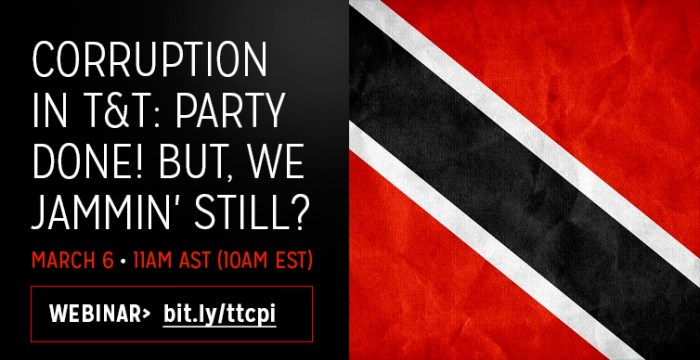

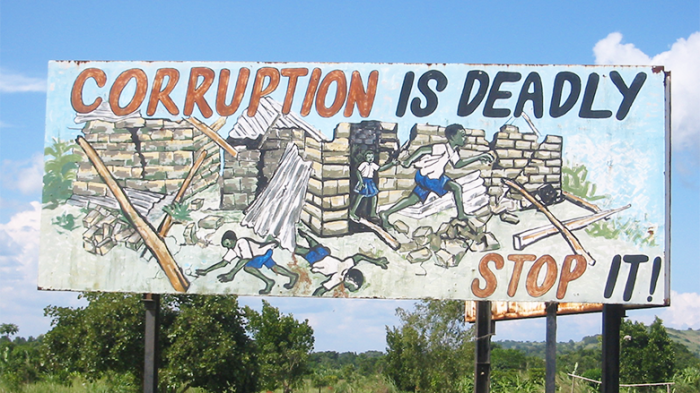

 I did an excellent radio show with some vibrant young colleagues from TTTI on the morning of Sunday, 13 November 2016 on Boom Champions 94.1FM. The topic of discusson was “Sweet T&T or corrupt nation?: Revealing the truths on a corrupt state of affairs. Audio courtesy Boom Champions 94.1 FM
 Afra Raymond visits the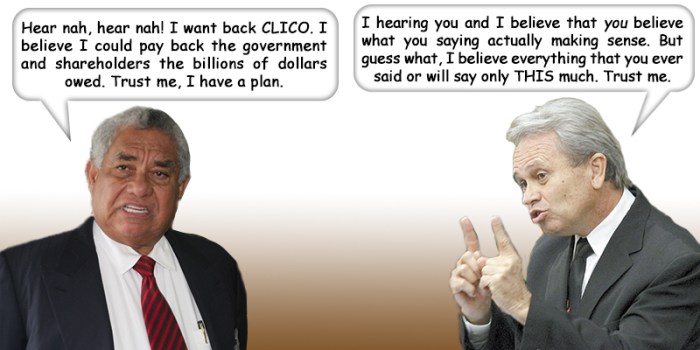

 AfraRaymond.net