Managing Director, Raymond & Pierre Ltd.
Past-President, Joint Consultative Council for the Construction Industry, Trinidad and Tobago- December 2010 to November 2015.
Past President Institute of Surveyors of Trinidad & Tobago 2009-2010.
This is the start of my Season of Reflection, my two-month period of deeper and hopefully more fruitful work. This article will appear on Wednesday, 31 July, the next day being Emancipation Day (1 August 1834), the real start of the Season, the next point being Independence Day on 31 August (1962) and the third is Republic Day on 24 September (1976). The meaning of those events is deep, as they denote the outlawing of slavery of African people to the end of British colonial rule and then the birth of our Republic, crystallizing real equality amongst humans, at an aspirational level at least. The special sequence of those holidays adds to the Season as part of our efforts to build a civilisation.
On 4th July 2019, the High Court (with presiding judge, Justice Frank Seepersad) ruled in my second lawsuit to get the remaining details of the CL Financial bailout. In the first lawsuit, I was able to get the details of the $10.823 Billion in Public Money paid to 13,200 named EFPA claimants within this massive bailout. CLICO sold the EFPA, which comprised most of its liabilities at the time of the CL Financial collapse in January 2009.
The ruling specified that my full costs be paid by the State, so that showed the case ended overwhelmingly in my favour. That said, there was a significant disappointment in that the ruling also specified that the payees’ names for British American Insurance Company (BAICO) and CLICO be omitted from the details to be provided within 28 days.
Afra Raymond was interviewed by Ralph Maraj on i95.5 FM on Tuesday, 16 July 2019 about the Freedom of Information Act in Trinidad and Tobago in light of Mr Raymond’s win in court to get further information in the CL Financial bailout. Following on from that victory, he also discusses research conducted on public housing using information gleaned from prior Freedom of Information requests. Video courtesy i95.5 FM
Programme Length: 00:42:43 Programme Date: 16 July 2019
The Rotary Club of Penal invited me to speak at their handing-over ceremony on Saturday 29th June 2019. My presentation summarised recent findings of my research into national policies and programs for social housing. I started that research in 2004 and the officials at the Housing Ministry and the NHA/HDC have always been supportive of my work over that period. I again thank them publicly – it is important to say that.
The national housing policy (18th September 2002) states the provision of affordable housing for low and middle income applicants as its main objective. Having carefully examined the housing market and the details provided from the public officials, it is clear that the national program for social housing is not proceeding in conformity with the actual housing policy. I have closely examined the 16 years in which the housing policy was in effect 2003 to 2018.
Outgoing president Narda Ramkissoon present Afra Raymond with a token of appreciation after his address at the Penal Rotary Club handing over ceremony. Photo courtesy Rotary Club of Penal.
This is the recording from Saturday, 29 June 2019 at Rotary Club of Penal’s Handing Over Ceremony at which guest speaker Afra Raymond spoke on the national housing policy and programme of Trinidad and Tobago. Video courtesy Rotary Club of Penal.
Programme Length: 00:32:02 Programme Date: 29 June 2019
What are the underlying commercial arrangements in relation to our State-owned hotels? Is there any reason to think that these arrangements operate to our benefit, or is there genuine cause for concern?
My efforts to sift the evidence are ongoing in the face of this carefully crafted confusion.
Hyatt Regency Trinidad
Hyatt Regency is reputedly the most successful of the three State-owned hotels, so one would imagine any government would be eager to share news of those good results. The total Public Money invested in Hyatt Regency is $854M to date and that hotel opened in January 2008, so what return has the State earned on that investment? Certain limited tax and performance details for those hotels emerged after I started in 2016 to question the widespread unawareness of the underlying commercial arrangements in our State-owned hotels. I am not querying those taxation or profit details, indeed how could anyone, in the absence of audits or tax transparency?
“…3. (1) The object of this Act is to extend the right of members of the public to access to information in the possession of public authorities…”
—Objects statement in FoIA
“…Because outside of national security matters and matters of the Cabinet…there are few other matters on the government files, that should really be secret…”
—PM Dr Keith Rowley at the post-Cabinet press briefing on 23 May 2019.
Afra Raymond appeared on CNC3’s The Morning Brew with host Hema Ramkissoon on Monday 10 June 2019 to discuss the proposal to amend the Freedom of Information Act (FOIA). The FOIA has been an instrumental piece of legislation in the quest for transparency and accountability in governance. Any amendments to this act necessarily affect this process. Video courtesy CNC3 Television
Programme Length: 00:27:04 Programme Date: Monday 10 June 2019
“…Trinidad and Tobago maintains that the principles of open government-accountability, transparency and citizen participation are essential for effective democratic governance…In the execution of good governance, efforts are currently underway to increase the availability of information about governmental activities, support civic participation, implement the highest standards of professional integrity throughout the administration and increase access to new technologies for openness and accountability…”
—These extracts are from the T&T official statement on the Open Government Partnership, which this country joined in 2013.
The ongoing Information War is increasingly driven by the Freedom of Information Act (FoIA), which in 1999 created the right to obtain information held by Public Authorities, subject to certain limitations as to State security and private or commercial information.
The relationship between a bank and its customers is a useful analogy to understand these principles. The customer depositing money into her account does so for safekeeping and to earn some small interest. Although the bank is responsible for that money, at no point in time is it the property of the bank – indeed, it is a liability in the bank’s accounts. The bank merely has custody of that money and must follow the customer’s lawful instructions as to how that money is dealt with.
The FoIA at S.4 defines ‘official documents’ held by Public Authorities as – “…a document is held by a public authority if it is in its possession, custody or power…”.
The Privy Council ruled on 20th May 2019 in favour of well-known UNC activist, Ravi Balgobin Maharaj, who was seeking leave to file a judicial review of the refusal of Petrotrin to release two witness statements made in intended legal action against a former Board of Directors. That was a PNM-appointed Board, chaired by the late Malcolm Jones, and the intended US$97M legal action was in respect of alleged negligence in Petrotrin’s large-scale investment in the Gas to Liquids project. That legal action was stopped during the term of the current PNM administration, so the air was rife with allegations and denials.
At the post-Cabinet press briefing on 23 May 2019, PM Rowley made a commitment to have refusals of FoIA requests by Public Authorities subject to vetting by the Attorney General so as to reduce ‘unnecessary liabilities’, in terms of legal costs, on the State. Dr Rowley made two further important statements –
A general principle – “…Because outside of national security matters and matters of the Cabinet…there are few other matters on the government files, that should really be secret…”
In relation to the Petrotrin matter, on which the Privy Council had just ruled – “…I am instructing the Minister of Energy to use the authority that he has under the Constitution to instruct Petrotrin to make the two witness statements, the same thing that went to the Privy Council, that they (the UNC) claim is the smoking gun, available and public, so that the public can read them and determine whether Malcolm Jones can rest in peace…”
“…Maharaj said Rowley and Attorney General Faris Al-Rawi have both said there is nothing incriminating or conspiratorial in the witness statements. He questioned why the statements have not been released. Maharaj also claimed the law firm representing Petrotrin, JD Sellier and Company, refused to accept service of the claim. He alleged the firm said it had no instructions on the matter.
As such, Maharaj said he now has to serve the FoIA claim directly on Petrotrin…”
While the PM’s statements on the application of the FoIA are welcome, I am aware of a cosy consensus across the so-called political divide. Let me explain.
Under S.40 of the FoIA –
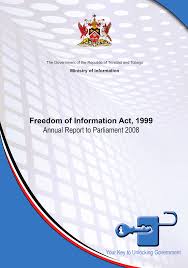
“…40. (1) The Minister shall, as soon as practicable after the end of each year, prepare a report on the operation of this Act during that year and cause a copy of the report to be laid before each House of the Parliament…”
That Report was a valuable examination of the operation of the FoIA, but the last such Report was laid in Parliament in 2010. Since 2010, we have had no official Report on this important aspect of our rights as citizens, but it does not seem to have disturbed either political camp. I am subject to correction, but no protest or strong statement on that breach of the law comes to mind.
More particularly, the Invaders’ Bay matter was an action by the JCC to disclose the legal advice relied upon by the Minister of Planning and Development in relation to the proposed large-scale development of public property at Invaders’ Bay in POS. In that case, the State lost at both the High Court and Appeal Court stages, with no further action taken to file an appeal to the Privy Council. Indeed, para 38 of that Privy Council ruling on the Petrotrin FoIA matter refers to that Invaders’ Bay ruling as “…the leading decision of the Court of Appeal…”. Yet that Court of Appeal ruling that those legal advices be published remains unenforced. Of course, it is entirely unrealistic to expect that the UNC would ever protest that failure or refusal to satisfy the Court of Appeal ruling, since the illegal decision to refuse disclosure was made during its term in office as the Peoples Partnership.
That is the cosy consensus which binds us, in this Information Age.

 Afra Raymond was interviewed by Ralph Maraj on i95.5 FM on Tuesday, 16 July 2019 about the Freedom of Information Act in Trinidad and Tobago in light of Mr Raymond’s win in court to get further information in the CL Financial bailout. Following on from that victory, he also discusses research conducted on public housing using information gleaned from prior Freedom of Information requests. Video courtesy i95.5 FM
 The national housing policy (18th September 2002) states the provision of affordable housing for low and middle income applicants as its main objective. Having carefully examined the housing market and the details provided from the public officials, it is clear that the national program for social housing is not proceeding in conformity with the actual housing policy. I have closely examined the 16 years in which the housing policy was in effect 2003 to 2018.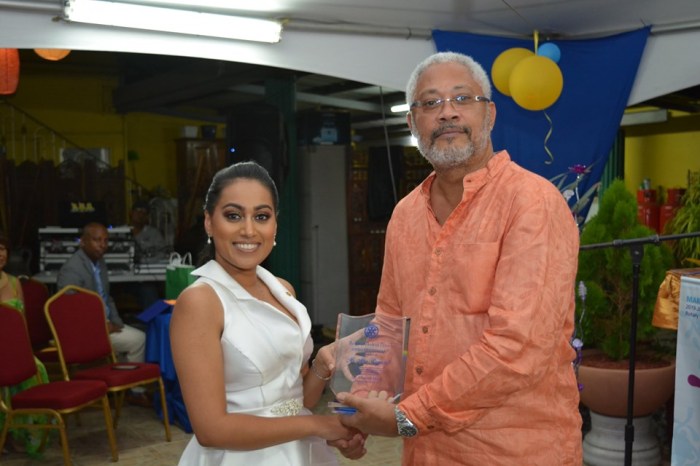
 This is the recording from Saturday, 29 June 2019 at Rotary Club of Penal’s Handing Over Ceremony at which guest speaker Afra Raymond spoke on the national housing policy and programme of Trinidad and Tobago. Video courtesy Rotary Club of Penal.
 This is a short telephone interview I did with ieTV on Monday, 1 July 2019 on my critique of the Housing Policy & Program. Video courtesy ieTV
 Afra Raymond appeared on CNC3’s The Morning Brew with host Hema Ramkissoon on Monday 10 June 2019 to discuss the proposal to amend the Freedom of Information Act (FOIA). The FOIA has been an instrumental piece of legislation in the quest for transparency and accountability in governance. Any amendments to this act necessarily affect this process. Video courtesy CNC3 Television
 “…Trinidad and Tobago maintains that the principles of open government-accountability, transparency and citizen participation are essential for effective democratic governance…In the execution of good governance, efforts are currently underway to increase the availability of information about governmental activities, support civic participation, implement the highest standards of professional integrity throughout the administration and increase access to new technologies for openness and accountability…”
 That Report was a valuable examination of the operation of the FoIA, but the last such Report was laid in Parliament in 2010. Since 2010, we have had no official Report on this important aspect of our rights as citizens, but it does not seem to have disturbed either political camp. I am subject to correction, but no protest or strong statement on that breach of the law comes to mind.
