The NGC Bocas Lit Fest has a new campaign in these times, The 100 Caribbean Books That Made Us. Afra Raymond, described as “a prolific reader” by the organisers weighs in with five of the books that made him, from Eric Williams to Marlon James! Video courtesy Bocas Lit Fest.
VIDEO: Conversations For Change 8 COVID-19, An Opportunity for Reset : Views from the Global South

- Margaret Rose-Goddard — Legal Futurist, Founder the Caribbean Procurement Institute, Disclosure Today, Global Social Entrepreneurship Award Winner, serial social entrepreneur and trailblazer in public procurement, anti-corruption and civic empowerment, and
- Anja Blaj, — Chief Strategist Officer- Future Law Institute, President of Blockchain Think Tank Slovenia, Level Counsel at Datafund and the Co-Organizer of the DGOV Foundation,
for a riveting and revolutionary-rousing discussion on Democracy, Information Tyranny, Capitalism, Colonialism and his views on the T&T’s COVID-19 Recovery Committee and the enigmatic and exclusionary modus operandi of such committees thus far on the island and their lack of effectiveness thus far in bringing about real progress towards an equitable, sustainably developed society befitting the country’s wealth of human and natural resources. Video courtesy Future Law.
- Programme Length: 01:13:26
- Programme Date: 10 May 2020
Proposals to the Post-COVID-19 Recovery Team
I am making two proposals to the Post-COVID-19 Recovery Team appointed by the PM on 16 April 2020 –
- Transparency – the draft/interim/provisional Reports of the Recovery Team should be published now for the widest public participation and;
- Procurement – the very first priority of these Recovery efforts must be full implementation of our country’s new Public Procurement system.
These proposals are set out in greater detail here –
Recovery Team Process
Given the unprecedented scale and scope of this crisis, it is imperative that maximum public confidence and participation be achieved. The current method is for public submissions to be invited and for the completed Report to be published, presumably after it is approved by Cabinet and debated by Parliament.
‘We are are all in this together‘ must move, from being a slogan, to a different and embracing way of working so that the invaluable and intangible fundamental of public trust could be built in this period.
Given the highly-charged atmosphere emerging from this major disruption and the added fact that this is an election year, it will be extremely difficult to achieve the required high level of public confidence, or buy-in, if the usual approach of publication at the final stage is adopted. This is an opportunity to take a more inclusive approach which would see the draft Reports published for public input as the Recovery Team does its important work.
In support of this proposal, please consider that we have long adopted an effective and open process for creation of new public policy and/or laws via the appointment of working parties/advisory committees; invitation for submissions; publication of Green Paper; further comments on that Green Paper; publication of White Paper; final comments on White Paper and ultimately, official adoption of new Policy and/or creation of new law or regulations.
One can readily accept that these are exceptional times which significantly limit the time one could allow for comments, but equally, one could realistically assert that today’s ease of communication is so great that the opportunity ought not to be missed to place this exercise of national importance into the front and center of our inescapable journey to being an open society.
Priorities and Targets
This crisis presents at least three interlocking challenges –
- sharp declines in national revenue due to convulsions in the global energy markets;
- steep increases in claims on those declining Public Monies in terms of relief for unemployed persons and affected companies;
- the stark fact that no one can tell just how long this crisis will endure, or indeed, what shape it will take in time to come.
It is therefore now more important than at any point in our past that every possible step be taken to get the most from our dwindling Public Money. We need strong measures, first of which should be full implementation of the Public Procurement and Disposal of Public Property Act, including operationalising the Office of Procurement Regulation. This would be an indispensable safeguard to greatly reduce the large-scale, widespread wastage and theft of Public Money with which we have been beset and which we can least afford at this time.
On 28th February 2020, the Finance Minister told Parliament that –
…The last correspondence from the regulator was received by the Minister of Finance on December 18, 2019…Following that letter of December 18, 2019, the draft regulations and proposed amendments to the Act were submitted to Cabinet and sent to the Legislative Review Committee for final review. Barring unforeseen circumstances, it is anticipated that the final amendments to the Act will be laid and debated in Parliament in March 2020, followed by the regulations shortly thereafter….”
(pages 6 & 7 of Hansard)
COVID-19 only forced office closures towards the end of March 2020, so the LRC has had those papers for final review for at least three months. The completion of the regulations, handbooks and guidelines for the implementation of this important new law is now imminent, so we need to ensure that this is a first priority in light of these exceptional challenges.
The global story is as criminal as it is common, with widespread reports of large-scale corruption unfolding in the new situation of fear and urgency caused by the COVID-19 crisis. We are witness to the Shock Doctrine in real-time as a proof of the olden learning that ‘haste makes waste‘. We must do better.
A variety of authoritative source material is attached in support of my latter proposal (see below) and I trust that these proposals will be given due consideration by the Recovery Team.
Afra Raymond – afraraymond.net
VIDEO: Interview on TTT on post-pandemic priorities for T&T recovery
 This is the interview Afra Raymond did with Dike Rostant with the COVID-19 Review on TTT. They discuss Afra’s recent video on Post-COVID-19 Process and Priorities. Video courtesy TTT.
- Prorgamme Date: 23 April 2020
- Programme Length: 00:09:03
VIDEO: Interview on CNC3 on COVID-19 task force priorities – 20 April 2020
 On Monday, 20 April 2020, Afra Raymond was interviewed by Hema Ramkissoon of CNC3 on the process and priorities of the Road To Recovery Team tasked with economic planning for a post-COVID-19 Trinidad and Tobago. Video courtesy CNC3 Television.
- Programme Length: 00:17:47
- Programme Date: 20 April 2020
VIDEO: Process and Priorities for the PM’s COVID-19 ‘Road To Recovery’ Committee
Trinidad and Tobago Prime Minister, Dr. Keith Rowley, appointed a 22-member COVID-19 ‘Road to Recovery’ committee on 16 April 2020 to handle and advise on the path of the post-pandemic economic and social recovery. Afra Raymond discusses what he believes should be the priorities of this committee.
- Programme Length: 00:10:15
- Programme Date: 18 April 2020
AUDIO: Caribbean Corporate Governance Institute webinar – 25 March 2020

Afra Raymond did a webinar with the Caribbean Corporate Governance Institute where he was the keynote speaker at what was originally carded to be breakfast seminar at Hyatt Regency. -Co-panellists were Chartered Accountant and CLICO Chairman, Claire Gomez-Millar and OPR Chairman, Moonilal Lalchan, which CCGI Chairman, Nigel Romano, chaired the discussion. The topic was The role of the Board of Directors in light of the new Public Procurement and Disposal of Public Property Act.
- Programme Date: Wednesday, 25 March, 2020
- Programme Length: 02:20:28
Letter to the Editor: FCB IPO matter
#brightforspite #onlydemwenttoschool #takeweforfool
How I winced at the 2014 FCB IPO imbroglio in the media recently with the announcement of three Settlement Agreements of 20th December 2019 between the TTSEC and the four parties under investigation. Those agreements required the parties to pay fines totalling $2.8M, about 22% of the total profit of about $12.7M created by the various manoeuvres.
Those Settlement Agreements and Bourse’s statement of 3rd February 2020 confirmed no admission of wrongdoing, guilt or liability, so one is considering only alleged breaches. Of course we have no idea as to the costs incurred by TTSEC in pursuing this matter over those six years and how those compare to the agreed fines.
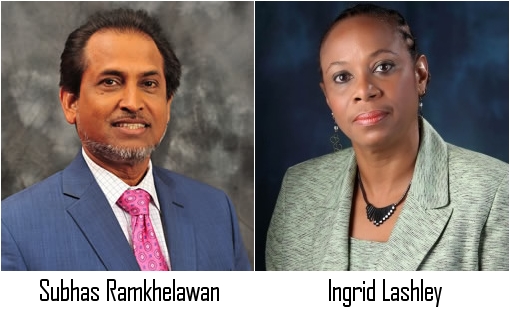
The Managing Director of Bourse is Subhas Ramkhelewan, who was serving as Chairman of the T&T Stock Exchange and an Independent Senator at the time these allegations arose. The Chairman of the Bourse group is Ingrid Lashley, who is also the Chairman of National Enterprises Limited. Both Subhas and Ingrid have been my good friends over an extended period, not at all limited to our professional lives, which is why this is so, so what?
In an ideal world, the entire profit would have been disgorged together with the dividends earned during the period, before any penalties or regulator’s costs were applied, but that is not the situation at all.
I have three concerns –
- TTSEC’s no lessons learned? – It is disappointing to note that these Settlements with agreed payments, no admissions and no remedial action, seem to leave the investing public no better protected. Just imagine police officers stopping a motorist with defective headlights one night and issuing a standard ticket after engaging with the driver who really did not realise the problem with the vehicle. So far so good, you might say, but what would you think if those officers allowed that polite motorist to continue driving on the road with no headlights? The lack of any prescribed remedial action is intolerable in this situation;
- So why was a fine paid? – It is only barely possible to sustain the line set out in the Settlements with no admissions of wrongdoing or any finding of truth of the allegations, but the thorny question remains. The payment of a traffic ticket by an errant motorist is tantamount to an admission that some rule was broken which makes it necessary to pay that fine. It does not rise to the level of an actual conviction in law as recorded by the courts, but the fact is that the driver pays the fine is a tangible admission of wrongdoing. So are we being asked to believe that Bourse was just giving something back?;
- Has Bourse learnt anything? – Most striking for me is the penultimate sentence of the Bourse statement–
Polite disdain is no road to progress. The opportunity was not taken to examine internal practices to prevent a recurrence of those concerns from our Regulator or to commit to staff training in the areas identified during our meetings with the Regulator. So will any of Bourse’s conduct or procedures be revised?…This Agreement allows us to put this Matter behind us and to focus, even more so, on adding value to our clients and other stakeholders…
These three, taken together, taste terrible. Serious challenges require mature leadership which is willing to change course or seek advice as new perspectives and facts emerge. That is the behaviour of thinking, conscientious leaders.
Afra Raymond
afraraymond.net
An edited version of this was published in the Newsday of Tuesday 11th February 2020.
VIDEO: Webinar on Transparency in Procurement – 26 January 2020

- How Trinidad and Tobago is performing in the Corruption Perception Index
- The current status of procurement legislation
- Proposed amendments related to Government to Government and PPP agreements.
Programme Length: 47:47
Public Procurement Delays – the tangled web
This series ends by examining the last five years in relation to the implementation of the Public Procurement and Disposal of Public Property Act, No 1 of 2015 (The Act). This is my final article before I pause for a shift in focus and again, I am drawing on the public record for these positions.
My previous article traced the accountability arc of attempts by PNM governments to dilute our country’s accountability framework. That arc is rooted in the record, serving to dismantle the fanciful tales about ‘morality in public affairs’ and so on. According to Dr. Rowley – “Facts are stubborn things.”
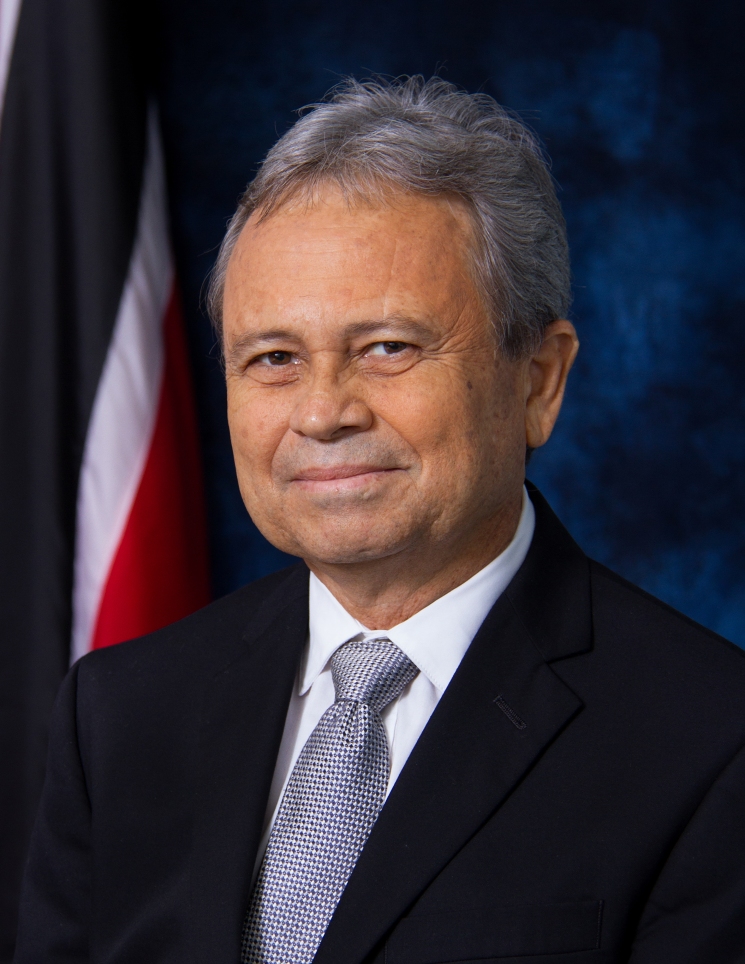
Colm Imbert has served as Finance Minister since PNM’s general election win in September 2015. The provisions of S.7 of The Act, which apply to Government to Government Agreements (G2G) and Public Private Partnerships (PPP) have remained the same over that entire period.
The OPR Board was appointed in January 2018 by then President Anthony Carmona, as his final official act, so it was impossible to implement the new system before that.
Consider the budget statements over the five-year period 2016 to 2020.
Continue reading “Public Procurement Delays – the tangled web”

