Property Matters – 2017 Budget Prospects

The 2017 budget is due to be presented on Friday, 30 September 2016 to an anxious nation. Having had to endure the literally unbelievable optimistic economic claims of the previous government prior to the September 2015 general election, we were told by then Central Bank Governor, Jwala Rambaran, in December 2015, that the nation had been in recession for 6 months. I tell you. Of course that message has now been repeated after the messenger was dismissed for various alleged offenses, but that is for another column.

Our levels of public expenditure have moved sharply upward, with only a single decline in 2010, as shown in the graph and table for 2005-2016. Those totals are derived from the estimates stated in the various budget statements and do not represent the actuals. In that period, estimated revenue was $534.57Bn with estimated expenditure of $574.6Bn. That balance between revenue and expenditure yielded a combined deficit of $40.125Bn – 84% of which ($33.67Bn) occurred under the Peoples Partnership government, 2011-2015. Continue reading “Property Matters – 2017 Budget Prospects”

VIDEO: INVADERS’ BAY ISSUES on ‘The Morning Edition’ on TV6 – 20 September 2016.

tv6_logoJCC Immediate Past-President, Afra Raymond, interviewed by TV6’s Kejan Haynes on Morning Edition on Tuesday 20 September 2016 on the ongoing issues at development site at Invader’s Bay and their connection to the larger procurement public policy issues. Video courtesy TV6

  • Programme Air Date: Tuesday 20 September 2016
  • Programme Length: 0:20:45

Property Matters – Hotel Facts

No Man's Land, Tobago is a potential site for Sandals Resort in TobagoThe previous article on the Sandals Tobago proposal ended by pointing to the need for attention to the underlying, commercial arrangements which drive projects of this type.

The procurement model is key to understanding how these large-scale, internationally-branded hotels are created and sustained. The two ends of the procurement show different approaches –

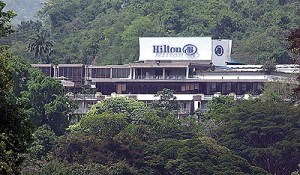
  1. hiltonposthe T&T model is one in which the State paid to design, build, fit and furnish the hotel to the specifications of the hotelier. The hotel then operates via a management contract which splits the revenue between the State and the hotelier. Trinidad Hilton, Tobago Hilton/Magdalena Grand and Hyatt Regency were built by the State using this method.
  2. The other approach is one in which the hotelier constructs the hotel and receives tax concessions from the ‘host State’ in return.

Both these are Public Private Partnerships (PPPs) in which risk and reward are shared.

Continue reading “Property Matters – Hotel Facts”

Property Matters – Pay Day? Part Two

past-dueI previously estimated State debt to the construction industry in the $3.2-3.5 Billion range. I have since been reliably informed that construction industry claims against WASA are estimated to be in the $600M range, which of course would be subject to verification as discussed previously. My revised estimate (see table below) is now in excess of $3.8 Billion, compared to the JCC’s 27 July 2016 estimate of $2.3 Billion.

The size of my more recent estimate gives a severe picture of the State’s indebtedness to the construction industry, which is the sector that Central Bank research shows to be the largest employer in the national economy. Apart from that, the construction industry also has deep links to other important parts of the national economy such as quarrying; banking/finance/insurance; hardware stores; a range of manufacturers; transportation and so on. Continue reading “Property Matters – Pay Day? Part Two”

Privacy Pros & Cons

The recent high-level of public concern over the SSA Amendment Bill was of limited concern to me, until I started listening properly. In the event, the proposed law was passed by the Parliament and there is some threat from the Opposition of a lawsuit to test its constitutionality. We will see.

Two very interesting stances surfaced during the heated debates and it is at these kind of moments that I sometimes think of our so-called political divide. Those were the Right to Privacy stance disclosed by the AG and the private briefing of Parliamentarians as a legislative tool.

Sen. Faris Al Rawi, Attorney General
Faris Al Rawi, Attorney General

The AG, Faris Al Rawi, was emphatic on 2nd May 2016 that we have ‘…no enshrined right to privacy under the law…‘. He was almost immediately contradicted by former CJ, Michael de la Bastide QC, who relied on Section 4 (c) of the Constitution which specifies ‘the right of the individual to respect for his private and family life’. In ‘The creep of Tyranny‘ on Monday 9th May 2016 in this newspaper, my colleague Michael Harris also made strong objections to the AG’s stance. Of course we have rights to privacy and those are entrenched in our Constitution, but now those rights can be limited by the new law, intended to promote national security. Continue reading “Privacy Pros & Cons”

Property Matters – Housing Issues – part 5

hdc-logo

SIDEBAR: CORRECTION

With apologies to readers, this is to correct my figures in relation to the amount of Public Money which TTMF received in relation to the 2% subsidised mortgage programme. The figures disclosed in TTMF’s Summary Financial Statements are actually liabilities, being the reducing balance on the original allocation of $200M for this programme.

The recalculated figures for TTMF’s recovery of 2% mortgage subsidy 2007 to 2014 are

YEAR SUBSIDY (cumulative)
2007 $.9M
2008 $5.3M
2009 $16.5M
2010 $34.1M
2011 $52.7M
2012 $70.4M
2013 $87.4M
2014 $105.2M

These figures are far less than those I cited in my article, since only $105.2M has been drawn from the original allocation of $200M, as against my erroneous claim that $1,227.5M of Public Money had been spent on this subsidy.

Last week I examined housing subsidy to illustrate the ways in which Public Money is used to provide better housing opportunities.

The sidebar contains my correction, which shows that a total of $105.2M was spent in this 2% subsidised mortgage programme between 2007-2014. I was also informed that the 2% subsidised mortgage had been granted to 1,466 applicants, who earn less than $10,000 per month, to buy homes under $850,000. In late 2014, TTMF also started offering 5% mortgages to applicants who earn up to $30,000 per month for homes up to $1.2M – 298 of those mortgages have been granted to date.

This revision and the new information will require that we pay even greater attention to the HDC’s operations, since it far outstrips the other agencies providing housing options.

So, what is the proportion of applicants between the lower and middle income groups? At pg 28 of the Vision 2020 Housing Sub Committee Report (2005) that is estimated as follows –

…shows that more than half of the demand for housing to 2020 (57.3%) falls within the low-income group with 30.7% in the middle income group and 12% in the high-income group…”.

It is difficult to reconcile those researched conclusions as to the demand for homes with the actual distribution of new HDC homes, in which only 21.7% were rentals. The pattern of distribution of those homes seems to indicate that the decision was taken to promote home-ownership in preference to building rental units. There is no doubt that this decision was detrimental to the neediest applicants, who were unable to qualify for mortgages, while at the same time being beneficial to those whose earnings qualified them for mortgages. Continue reading “Property Matters – Housing Issues – part 5”

Call for OPEN DATA for Parliamentary expenses

No More Secret Spending! Public Money is Our Money!

opendata

This is an open call for the Administration of our Parliament to take the lead in publishing all the details of Parliamentarian’s expenses for the past ten years – 1st January 2005 to 31st December 2015.

Recent revelations have sparked a national discussion on the use and abuse of MPs’ entitlement to Public Money for the operation of Constituency Offices. We are now having a vital and long overdue national conversation about the proper use of MPs’ benefits and the need for the public to scrutinize this aspect of public money expenditure.

Our Parliament provides freely-available information with great ease of access at www.ttparliament.org and in its various online broadcasts, as well as GISL and 105.5FM.

The details of the Constituency Office expenses of MP Marlene McDonald were disclosed to Fixin T&T under the Freedom of Information Act. That precedent having been established, it is difficult to imagine that any tenable objection could be raised to the publication of the same information for the other 40 MPs.

We are therefore proposing to the Administration of the Parliament that they take this historic opportunity to lead the transition from the current ‘Freedom of Information’ paradigm, in which citizens have to apply for information, to the modern, more proactive, approach of ‘OPEN DATA’ in which public information of interest is routinely published on a voluntary basis online, in searchable databases.

We also suggest that the Legislature consider the lessons from the UK Parliament (often considered to be the our ‘Mother’ Institution), which, as a response to the parliamentary expenses scandal in 2009, announced the creation of the Independent Parliamentary Standards Authority (IPSA), intended to manage Members’ expenses at “arm’s length” from the House.

Our Parliament is our highest Court and it is important that it take the lead in setting higher standards of Transparency, Accountability and Good Governance. These challenging times call for non-partisan and decisive leadership: we expect no less from our Parliament.

Specifically, our call is for the details of MPs expenses to be published for the ten year period – January 1st 2005 to December 31st 2015, with quarterly updates as necessary. The expenses which should be disclosed are –

  • Details of annual allocation of Public Money to be spent via Parliament for operation of Constituency Offices;
  • Guidelines on the use of those sums of Public Money, together with changes in those guidelines, with updates to show when these were in force;
  • MP’s names;
  • In relation to each MP’s office/s, names of employees to include period of employment, position held, salary etc;
  • In relation to each MP and their office/s, details of the non-salary expenses claimed and paid, to include utilities (TTEC, TSTT, WASA etc) furniture/equipment rental etc;
  • In relation to each MP’s office/s, details of the rentals paid, lease/tenancy agreement;
  • Annual Financial Reports submitted to the Parliament by MPs and the consolidated Financial Reports to the Parliament.

Many of the positive steps taken by our Parliament in relation to disclosure of information were supported by former Speaker of the House, Wade Mark. We expect this to be continued by the current Speaker of the House, Bridgid Annisette-George.

Friday 25th March 2016 Trinidad Express Link
Afra Raymond
Disclosure Today
Trinidad & Tobago Transparency Institute
Constitution Reform Forum

2016 Budget Review

The 2016 budget statement was made on Monday 5 October 2015 by newly-appointed Minister of Finance & the Economy, Colm Imbert MP. Imbert is a professional engineer, so the fact that he lacked any formal certification in the financial field sparked much debate. The budget proposals have been made, so we are well past that point now.

These expenditure and revenue figures are from the Budget Statements, so no account has been taken of either actual outcomes or supplemental appropriations – this is the process used by the Government to obtain authorisation from the Parliament to exceed the approved spending limits in the national budget.

Continue reading “2016 Budget Review”

Our Land – The Caroni case Part 2

The previous article outlined the size of the Caroni lands and some of the intended uses to which that land would be put. I contrasted the positions taken by UWI in 2003 and my own from 2004, with the current situation.

UWI’s July 2003 Position Paper – ‘A Framework for National Development: Caroni Transformation Process‘ – was developed by diverse contributions, mostly made at a special seminar on 27 April 2003. At that time there were strong rumours that the then PNM government, headed by Patrick Manning, intended to close Caroni (1975) Ltd. The expressed fears at the time were that PNM supporters, friends, family and financiers would all benefit from a ‘land grab’. Caroni was a State Enterprise which had made heavy losses in the virtually 30 years since it had been purchased from its British owners, sugar giant Tate & Lyle.

The UWI Seminar was most timely since their Position Paper was issued in July 2003 and presented to the then Minister of Agriculture, Land & Marine Resources, John Rahael, in September 2003. Caroni (1975) Ltd was closed on Emancipation Day 2003.

The UWI study took a long-range view of the Caroni issues and as such it is an important document which set a framework for these Caroni lands. The land area was determined, at Appendix 1, to be 74,780 acres. At page 30, ‘Consultation’ is specified as the first requirement for the development of these lands.

The UWI Position Paper sets out its Recommendations at Chapter Eight on pages 71 & 72 –

  1. Govt to prepare & publish a comprehensive plan for Caroni.
  2. Govt to convene an urgent National consultation on the Caroni resources and the published plan.
  3. Any departure from the National Physical Development Plan be done through the legally- stipulated process which includes bringing those proposals to Parliament.
  4. That all terms and conditions for the leasing and tenure of the Caroni lands be detailed to the public in a public document, to meet the requirements of transparency.
  5. That Govt establish a skills bank so that the Caroni workers would have choices as to how they would be integrated in future planned enterprises.
  6. That the State establish an independent Screening Committee to stringently screen potential investors who seek Caroni lands as their location of business.
  7. That the Ministry of Agriculture Land and Marine Resources establish an independent authority charged with the implementation of plans for agriculture and agriculture-related industries.
  8. That Govt establish a comprehensive system of water control on the Caroni lands, in order to facilitate irrigation, as an essential pre-condition for the establishment of agricultural enterprise on the Caroni lands.
  9. The the Govt establish a Lease Income Funding Enterprise System and embark upon a comprehensive joint funding venture with companies in the heavy industrial sector, in order to fund national platforms for development, such as the following ones proposed by this Position Paper:
    1. A Botanical Plan
    2. A Technological & Vocational Institute
    3. A Buffalo Reconstruction program
    4. A Model Program for Untenured Residents
    5. A Food Park Plan
    6. A Research and Development Mandate, for the University of the West Indies and other research institutes in order to support Agro-Industrial Development.

As far as I am aware, none of those sensible recommendations have been implemented.

Dr. the Honourable Roodal Moonilal, Minister of Housing and Environment

After Caroni was closed, there was a serious debate in the Parliament – here is Dr Roodal Moonilal MP, speaking in the Agricultural Census Order debate on Friday, 14 May 2004

“…We want to challenge the Government yet again, as we did with the Member for Port of Spain North/St. Ann’s West to come to the House and bring the plan for Caroni (1975) Limited to the House. Let us debate their plan for Caroni (1975) Limited…” (pg 601)

Chandresh Sharma MP, speaking in the same debate (pg 637)

Chandresh Sharma MP
Chandresh Sharma MP

“…Mr. Speaker, I was talking about UWI ’s recommendations based on the Caroni (1975) Limited lands that say there should be no land grabbing. These qualified minds thought of the process and they have looked at what obtains in the Government. Some of the best agricultural lands in this country were taken by the PNM —Aranguez and Trincity—and some of the best sugar came from there, and also cocoa in the earlier days. They built houses to secure PNM votes. They must not forget that the East-West Corridor—stretching from Chaguanas to Arima—has 14 seats, which the PNM hopes to control all the time. The seats that they do not control are the ones involved in agriculture like Barataria/San Juan, St. Augustine, St. Joseph, and Tunapuna would return to us soon. So they took the best agricultural lands and built houses on them. The thinkers saw the PNM at work…”

Also –

“…I have just identified some of the thinking from the University Position Paper which is A Framework for National Development Caroni Transformation Process produced by UWI in July 2003. It is instructive to note that to date the Government has not responded to any of the proposals obtained in this document. This is another clear demonstration of how they intend to treat with agriculture and those who are involved in agriculture…” (pg 638)

So, the UNC’s key speakers were insisting, in 2004, that the UWI plan must be considered.

It is striking to consider the identity of some of the Contributors listed at page i of the UWI Position Paper –

  • Winston Dookeran (then an MP, now Minister of Foreign Affairs, after serving as Minister of Finance)
  • Dr Roodal Moonilal (then an MP, now Minister of Housing and Urban Development)
  • Rudranath Indarsingh (then President of the All Trinidad General Workers’ Trade Union Union, now Minister in the Ministry of Finance)
  • Professor Clement Sankat (then at the Engineering Faculty, but now UWI Principal)
  • Dr Asad Mohammed (then a UWI academic, now Chairman of the National Planning Task Force)

It seems clear to me that the Caroni lands were identified as critical national resources which needed an urgent, strategic intervention from our leading thinkers to preserve the Public Interest. That UWI Position Paper is extremely important for our long-term collective interests. Sad to say, but it seems to have been sidelined and forgotten, just like the 1992 Land Policy.

What is more, we do not have any clear account as to what happened to those Caroni lands in either the period between 2003 and the PP’s election victory in May 2010, or the period between May 2010 and now.

After one time, is really two times.

UWI must, as a matter of urgency, reconvene a seminar to examine what has happened to the Caroni lands. That is imperative.

Next, I will consider the role of EMBD and the LSA in developing our lands, particularly the Caroni area.

SIDEBAR : The SIS episode

Hon. Jairam Seemungal, MP. Minister of Land and Marine Resources

One of the controversial episodes arising recently in relation to Caroni land is the occupation of 35 acres of land at Couva by SIS Ltd, the contractor company linked to many controversial State projects. There were claims by farmers who had been in occupation of the land that SIS had put them off the site before fencing it, with further statements by the Commissioner of State Lands (who has responsibility for management of State Lands) that SIS did not have a tenancy for that land and were in illegal occupation. To add to the brew, the Minister of Land & Marine Resources, Jairam Seemungal, was reported in the Trinidad Express newspaper on 12 March 2015 as denying that there was no agreement for SIS to occupy that land. When asked what were the terms of that lease or tenancy, the Minister is reported to have said –

“…When you enter into an agreement the arrangement in the agreement itself is private, the State land is State land but when you enter into an agreement when the Commissioner enters into an agreement or anybody enters into an agreement with any person whatsoever then the process itself whatever documentation all these things inside of the agreement those become a private matter unless it is registered in the Ministry of Legal Affairs where one can go and do a search…”

A private agreement for Public Lands. I tell you.

To crown-off the entire episode, the Prime Minister told Parliament, on Friday 13 March 2015 –

“…I have spoken to the hon. Minister of Land and Marine Resources. He has indicated that at no time did he state that lease or other agreements with regard to state lands entered into between SIS and the Government is a private matter and therefore should not be disclosed…”

Complete denial. What is clear is that there is a serious hostility to the truth on display here. Simply appalling.

Our Land – The Caroni case

EMDB Agricultural Development Site Map
EMDB Agricultural Development Site Map. Click this link to see a Google Earth Map of the EMBD Agricultural Development Sites.

Caroni (1975) Ltd, the loss-making sugar conglomerate which was also a State Enterprise, was closed on 1 August 2003. The Caroni estate has to be located within the wider context of our national Land Policy, if we are to make sense of what is happening.

“The now-defunct Caroni (1975) Limited includes lands the size of Tobago whose value has been under-stated and which now could fall prey to a land grab……The current Caroni Transformation Process is about converting national assets into private assets. In the main it is serving the interest of those who wish to generate private capital from public wealth stocks; for this reason the current process is exploitative and fraught with inequity.

“The historical model is being excruciatingly exacted on Caroni lands. The current transformation clones the historical model.” The Report criticised areas of the current restructuring process which echoed those of the exploitative historical model. It said: “The enterprise is conceived to control land space. To control land space especially prime property near the port is to control the socio-economic agenda. Land is leased on gratuitous terms, 99 years for example, without publication of the terms of the lease or tenure. This leaves the process open to political and economic opportunism and speculation…”

These extracts are from UWI’s Position Paper – ‘A Framework for National Development: Caroni Transformation Process’ dated July 2003 as reported in the Trinidad and Tobago Newsday.

At that time, my academic colleagues at UWI were placing on record their serious concerns at the implications of the procedures being adopted by the Manning government in relation to the Caroni lands.

How many of those concerns are justified today, with the Peoples Partnership government in office since May 2010?

The best estimates of the land area of the Caroni Estate at 2003 were in the 76,000 to 77,000 acre range, which would equate to about 6% of our country’s entire land area. The Caroni lands stretch from Orange Grove in the north – just south of Trincity – to the outskirts of Princes Town in south Trinidad. The lands belonging to Caroni (1975) Ltd also included property at Mayaro and ‘Down-the-Islands’.

EMDB Residential Sites

The EMBD website states that it is responsible for the development of the former Caroni lands – some 7,500 residential lots are being prepared for ex-Caroni workers as part of their retrenchment package, with a further 8,400 agricultural leases of 2-acre parcels reportedly being processed. By my estimation, that means about 940 acres are to be used for the residential lots, with at least 16,800 additional acres to be used for the agricultural plots. The total land area to be used in these programs would therefore be of the order of 17,740 acres, which is just under a quarter (about 23%) of the estimated area of the Caroni lands.

There are significant struggles becoming evident in relation to the EMBD land distribution exercise, with these lands being allocated free to former Caroni workers as part of their retrenchment compensation.

The Trinidad Express reported that the Minister of Finance & the Economy, Larry Howai, announced a significant change in the original policy in the 2015 budget, in that the ex-workers receiving agricultural leases were now free to sell these lands. This announcement in September 2014 sparked a sharp response from Shiraz Khan, President of the Trinidad United Farmers’ Association, who labelled the new policy as ‘nonsensical‘ and ‘destructive to the agricultural sector.‘ One has to wonder if this important shift in land policy was discussed with the Farmers’ Association.

The split in positions became glaring with the swift response of Lily Herai, an ex-Caroni worker who is President of the Couva/Point Lisas Chamber of Commerce, who is reported to have “welcomed the move because it will add to the business development of the area.” Ms. Herai was also quoted as saying – “…We are in the Couva/Point Lisas area. There are a lot of service type business that have emerged recently and it keeps growing. It gives the leaseholders an opportunity to sell their lands…

To my mind, the most startling statements on the EMBD lands came from Minister in the Ministry of Finance & the Economy, Rudranath Indarsingh, former President of the All Trinidad General Workers’ Trade Union (ATGWTU). His comments are reported in the Trinidad Express on 12 December 2014:

“…Despite being given permission to sell their lands on the open market, ex-Caroni (1975) workers were urged yesterday not to sell by Minister in the Ministry of Finance Rudranath Indarsingh.

Indarsingh, a former president of the All Trinidad General Workers’ Trade Union (ATGWTU), said the union worked hard to get the lands for the workers, and land value can only increase.

He was speaking yesterday at a ceremony in Couva to distribute more land leases to the ex-employees.

Speaking to the Express afterwards, Indarsingh said there were rumours Government ministers were preying upon the recipients, encouraging them to sell their recently received land…”
(The emphasis is mine.)

I tell you.

The State Agencies responsible for land

This is a listing of the key Ministries and the relevant State Agencies which manage our country’s lands. The sheer number of bodies with overlapping responsibilities makes understanding the land question a major challenge.

  1. Jairam Seemungal, MPMinistry of Land and Marine Resources
    Minister: Jairam Seemungal MP

    Agencies

    • Lands & Surveys Division
    • Commissioner of State Lands
    • Land Settlement Agency (LSA)
  2. Hon Dr Roodal MoonilalMinistry of Housing and Urban Development
    Minister: Dr Roodal Moonilal, MP

    Agencies

    • Estate Management & Development Company Ltd (EMBD)
    • Housing Development Corporation (HDC)
    • Urban Development Corporation of T&T (UDECOTT)
    • Sugar Industry Labour Welfare Committee (SILWC)
  3. Bhoe TewarieMinistry of Planning & Sustainable Development
    Minister: Senator Dr Bhoendradatt Tewarie

    Agencies

    • Town & Country Planning Division (TCPD)
    • Chaguaramas Development Authority (CDA)
    • East Port-of-Spain Development Company Ltd.
  4. Hon Devant Maharaj, MPMinistry of Food Production
    Minister: Senator Devant Maharaj

    Agencies

    • Agricultural Development Bank
    • Agricultural Society of T&T
    • Cocoa & Coffee Industry Board of T&T
    • Livestock & Livestock Products Board
    • National Agricultural Marketing and Development Company (NAMDEVCO)
    • Sugarcane Feeds Centre
  5. Sen. Ganga SinghMinistry of the Environment & Water Resources
    Minister: Senator Ganga Singh

    Agencies

    • Environmental Management Authority (EMA)

Apart from this battle on the EMBD projects, we have to consider the ‘Land for the Landless’ program which is intended to provide some 3,000 to 4,000 residential lots each year. That is the strain being put onto the limited lands available in our country, as we fight for clarity on what is happening to our country’s lands.

The lack of the database proposed in the 1992 Land Policy means that we are operating in an information vacuum which appears to be deliberate.

Every public official is accustomed to the world of today, with the instantaneous access to detailed information on an astounding range of issues, worldwide. We all know that the banks and insurance companies have all the relevant details of many millions of accounts and transactions available at our virtual fingertips. We all know that, so why are we continuing to permit this rapid disposal of our country’s land without some public system to provide the details for our consideration?

As I wrote in May 2004 –

“…Our nation’s interest demands that we recognise that the Caroni lands are too big, too important and too valuable to be the preserve of any single group or political party…”

At that time, I was criticising the short-sighted policy of the Manning government in relation to the Caroni lands.

After one time, is two times.

Next, I will delve further into the EMBD situation and the features of the land/property information system we so urgently need.