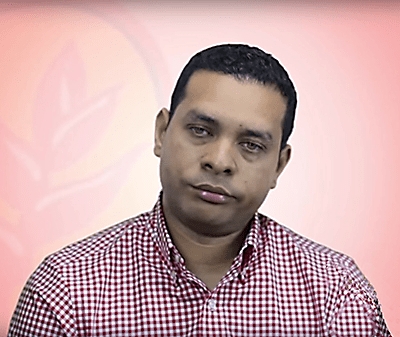
 This is my interview with Mariano Browne and Ardene Sirjoo on I95.5FM on Friday 5th May 2017 on Property Tax and the TSTT agreement to purchase Massy Communications. Audio courtesy i95.5 FM
Programme Date: 5 May 2017
Programme Length: 00:38:23
This is my interview with Mariano Browne and Ardene Sirjoo on I95.5FM on Friday 5th May 2017 on Property Tax and the TSTT agreement to purchase Massy Communications. Audio courtesy i95.5 FM
Programme Date: 5 May 2017
Programme Length: 00:38:23
This article contains background information on the new Property Tax and answers some Frequently Asked Questions.
Getting the data
In this information age, the government was not able to create an accessible database into which property owners could have directly uploaded the required property details. Why not adopt this more efficient method to gather the information? We can, and must, do better.
Whose Taxes?
These taxes seem to be payable to the Consolidated Fund. It is my view that they ought to be collected by the respective Local Government bodies.
I support the re-instatement of the Property Tax, it is long-overdue and property owners have enjoyed a seven-year holiday since it was last collected in 2009. I have two substantial criticisms which are set out in the sidebar, but overall this is an important and positive move by the government.
There are strong objections and many questions on this new tax with two main sources – people who are genuinely unsure of how the new arrangements will work and political objectors from the Opposition.
These are the national totals of Property Tax paid in the period 1993-2009, compiled from –
 The previous column labelled the repeated official statements as to the increased supply of affordable homes as ‘alternative facts’. This week, I will set out just what needs to happen for the HDC to provide more affordable housing.
Even when the definition is well established, it is notoriously difficult to deliver affordable housing to those who really need it. The challenges is far greater if there is no attempt by the responsible officials to define the goal. A degree of clarity is therefore essential if affordable housing is to be truly achieved. Continue reading “Property Matters – Achieving Affordability”

“AFFORDABILITY IS THE MAIN PILLAR OF THE HOUSING POLICY SINCE 2002”
—Key quote from HDC’s Home Ownership webpage
“…Housing Minister Randall Mitchell says Government has made housing more affordable to low and middle-income families unlike the People’s Partnership government which catered for high-income earners…” December 2016
Once again, the HDC and the Minister of Housing and Urban Development, Randall Mitchell, have been in the news with strong claims based on the HDC’s program and new mortgage offerings by TTMF. The headline in this newspaper on 10 February 2017 was “More people to access affordable housing“. In my view those are baseless and misleading official claims which readily qualify as ‘alternative facts’. Bigly so.
These statements are not unique to Minister Mitchell, who is relatively new to this portfolio, but enough is enough. Given the importance of public housing in the nation’s welfare arrangements and the sheer lack of reliable information on the issues, it is now time to dismantle the myth of an increasing supply of affordable housing. Continue reading “Property Matters – The Affordability Hoax”

30th January is the anniversary of the infamous 2009 CL Financial bailout, so I collaborated on this open letter to the Central Bank Governor, Dr Alvin Hilaire, to raise some urgent and important questions on the Central Bank’s management of this situation.
Our letter was sent on 31st January 2017 and was signed by David Walker, Disclosure Today and I.
Please read this and spread the word…
Remember that –
Silence is the Enemy of Progress!
The Board of EFCL was reported to have dismissed its CEO after he failed/refused to comply with their directions in a certain matter. There are allegations reported that the Cabinet attempted to direct the EFCL Board, which raises the perennial issue of the nature and extent of Cabinet authority over State Enterprises.
From both the Companies Act and the recent High Court/Appeal Court rulings in the eTECK matter, it seems clear to me that the Board of Directors have fundamental responsibility for the direction and control of the company. That is the legal position, but it seems that our fundamental political culture and conduct is in real conflict with notions of independent professional responsibility.
The State Enterprise sector is once again the subject of public concern on the good governance issues of accountability and transparency. Where does the power lie?
The two most striking issues emerging recently are the declaration of new accountability targets for State Enterprises and that the ‘EFCL Board fires CEO‘, reportedly in defiance of Cabinet directions.
The Accountability and Transparency Deficit is the first issue and it needs to be put into a timeline to illustrate the reality. Continue reading “Board Games again”
This examines the main issues on ‘The Invaders’ Bay Mystery’ – recorded on Saturday 1st October 2016.
Programme Date: 18 January 2017
Programme Length: 09:58
The critical facts on the existing proposals for new State-owned hotels in T&T – recorded on Saturday 1st October 2016.
Programme Date: 12 January 2017
Programme Length: 08:29

Further details on property tax are needed to understand the process and possibilities arising from its implementation. The 2010 estimate of revenue from that tax was $325M, as against a 2017 estimate of $503M, so it seems that there has been some allowance for inflation and new properties.
The innate effectiveness of this tax is that property is an immovable asset, so those persons and companies which are now evading other taxes will be unable to escape this new tax on the various properties in their ownership.
Property owners will be required to provide details of their properties to the Ministry of Finance so that the valuation process can be started. Owners who fail to provide details will have their properties valued without their input. The only efficient method of completing that number of valuations is by a mass-valuation approach which uses software to analyse details from owners, along with transaction details, to estimate the correct figures. Continue reading “Property Matters – Tax Facts part two”
Are our Rulers taking us for a Ride?
You decide…
Do our Rulers have things to Hide?
You decide…
Is the Upholder worse than the Thief?
That is an old-fashioned belief…
Programme Date: 31 October 2016
Programme Length: 07:19

