JCC President Afra Raymond interviewed on Heritage Radio 101.7FM by Hans Hanoomansingh to discuss JCC matters such as Public Procurement, Invader’s Bay and G2G Arrangements. 04 December 2013. Audio courtesy Heritage Radio 101.7 FM
I closed last week’s article by restating my view that all the ingredients for corruption were present at Invader’s Bay.
What are those ingredients?
Here is my list –
Extensive public assets coming onto the market, in turbid circumstances. Those assets can include property, concessions, contracts and jobs;
Questions of access to the gatekeepers – in these scenarios, some people will have unbelievable access to the decision-makers;
Conflicting and confusing versions of the project or proposal. The confusion is as persistent as it is deliberate, a part of the tangled web.
Blatant double-standards and lying is the norm in these situations;
Apart from ceremonial fluff, such as sod-turnings and ribbon-cuttings, there is no intention whatsoever to give any proper public account or statement of intentions. True transparency is evaded like taxes;
Professional Civil Servants who are unable or unwilling to insist on the maintenance of minimum standards;
Extensive Public Assets
These lands are estimated to be worth in excess of $1.2Bn at today’s priced, that means the unimproved value. Although the lands are reclaimed, a significant amount would have to be spent on infrastructure to make the property ‘shovel-ready’ for development.
As I noted in the first in this series, there were conflicting claims on this aspect, with the selected developers claiming extensive infrastructure expenses as a way to reduce what they would pay for the land. There were no estimates given for the developers’ cost of infrastructure, but I noted that the National Budget for 2014 had specified, at pg 89 of the Public Sector Investment Program, that there would be publicly-funded ‘Infrastructure Development’ at Invader’s Bay.
I have been assisted by some of the professionals in the very Ministry of Planning & Sustainable Development in identifying that item as being a $50M allocation for 2014. The actual works are unspecified, so it is difficult to be certain what is included. It certainly seems a modest sum given the size and peculiar challenges posed by the Invader’s Bay property.
In addition to the obvious public asset of the actual property, readers should note that assets in this context can include concessions. In this context that can mean maritime & docking concessions as well as tax concessions, so we will have to maintain full vigilance to safeguard the public interest.
As a first position, all the details of the overall agreements must be published for public consideration at the earliest opportunity. This is no minor point, since really huge sums of wealth can be transferred from public hands to private interests if proper transparency is not ensured. Just remember that in June this year while the President of the Peoples Republic of China was here there was the signing of a Government to Government Agreement. The JCC has lodged many strong objections to those agreements. How many readers will remember that there was an important agreement signed with respect to the Pitch Lake at that time?
…According to a release from Lake Asphalt of Trinidad and Tobago (1978) Ltd, the signing ceremony of a Memorandum of Understanding and a Confidentiality Agreement with Beijing Oriental Yuhong Waterproofing Technology Co Ltd of the People’s Republic of China is scheduled to take place at the Hyatt Regency, Port of Spain…
So, faced with a Freedom of Information Act which ensures disclosure, the new trend is to wrap-up the details in yet another layer of secrecy. We need to be alert to that trend. After all, this is the same Ministry which claims to have legal advice confirming that its actions conform to the Central Tenders Board Act, yet steadfastly refuse to publish that advice.
Access to the gatekeepers
One of the two successful proposers has been the MovieTowne principal, Derek Chin, whose confidence has been striking.
According to Mr. Chin, in an extensive interview –
…Chin has met with the Prime Minister and many government ministers seeking approval for this project.
Before Christmas 2010, he had a meeting with the Transport Minister Jack Warner, Foreign Affairs Minister Suruj Rambachan, and other ministers, at the Prime Minister’s Office. They all supported his plans. “I have been lobbying the Government for a year now, even before the elections. I sent in the preliminary sketches about the concept; I met 19 Cabinet ministers over the last six months. The next minister I am meeting is Bhoe Tewarie, Minister of Planning. He wants to see me. I also met with Jearlean John, Udecott chairman. She also loves it, but that was three to four months ago…
That interview was given in early July 2011, which is over one month before the Request for Proposals was published by the Ministry of Planning & Sustainable Development at the end of August. I tell you.
Conflicting and confusing versions
So, to return to the legal opinions, we have this swirling set of stories.
To date, Minister Tewarie has insisted that the project has been removed from UDeCoTT’s portfolio and placed within the Ministry of Planning. He claims that Cabinet approved this in 2011 and also insists that there is no tender process at Invader’s Bay. Of course it is impossible for the Ministry to proceed to invite tenders for anything without following the Central Tenders Board Act.
The first legal advice I saw was clear that there is indeed a tender process at work here and that the CTB Act ought to have been followed. Obviously, that conclusion did not ‘fit the script’, so an escape hatch had to be fashioned. Shortly thereafter another opinion was submitted by Sir Fenton Ramsahoye SC, on an entirely different set of assumptions which made UDeCoTT the central enabling agency in the entire scheme.
The approach endorsed by the Ramsahoye opinion flatly contradicts the version being advanced by Minister Tewarie.
That is the deep, intentional confusion being encouraged by public officials in this matter.
Blatant double-standards and lying
So, let us start with the role of the Ministry of Planning & Sustainable Development on the Invader’s Bay project. How does that Ministry reconcile its active role in seeking public views on the King’s Wharf project in San Fernando with its silence on Invader’s Bay in POS?
These are blatant double-standards of the worst kind. One can scarcely believe that there are professional civil servants who could condone this reckless and underhanded approach to national development. But there we have it.
When is the Ministry of Planning & Sustainable Development going to host a public consultation on Invader’s Bay? That is now an inescapable requirement. Sooner rather than later.
But that is not all. No, not at all.
This administration campaigned on the findings of the Uff Enquiry and made several public promises to implement the 91 recommendations of the Uff Report. Such was the importance of the matter in the political agenda that it formed the first item of the very first post-Cabinet Press Briefing of the Peoples Partnership administration on 1st July 2010. That is a broken promise, since those Uff recommendations have not been adopted and the JCC’s many attempts to offer our assistance to achieve that have all been rejected.
The 17th recommendation of the Uff Report is –
User groups and other interest groups should be properly consulted on decisions regarding public building projects, to ensure that relevant views can be expressed at the appropriate time and taken into account before decisions are made…
There has been no consultation at all on the Invader’s Bay proposals. Quite frankly, apart from rumours and conflicting press reports, I do not really know exactly what is going to be built or where or even when.
According to the iconic American jurist Louis Brandeis, speaking on eradicating corruption –
Having written four critical articles consequent on the Appeal Court’s 27th June 2013 ruling and having been preceded by two leading commentators — Andre Bagoo & Anthony Wilson — I was intrigued by this Public Notice published at p. 49 of the Sunday Express of 6 October 2013.
It does not mention any particular articles and purports to clarify the ruling. I will be continuing this examination in my reply.
Invader’s Bay has re-emerged from the shadows via PNM Senator Faris Al-Rawi’s budget contribution on Monday 23 September 2013 (pp. 168-175). The twists and turns in this controversial proposed scheme are detailed at JCC’s webpage.
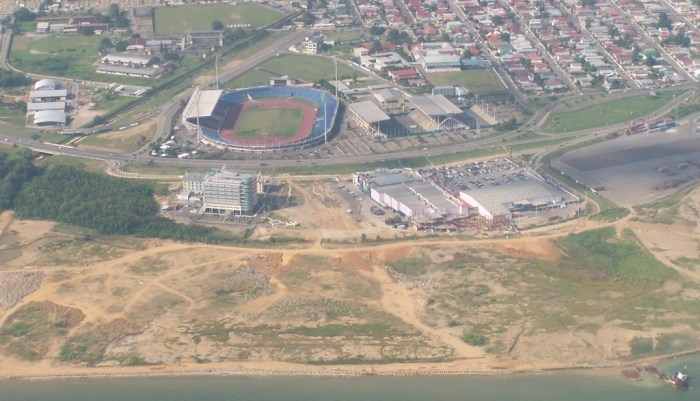
Invader’s Bay is a 70-acre parcel of reclaimed State land off the Audrey Jeffers Highway – just south of PriceSmart & MovieTowne – in the western part of Port-of-Spain. Its value was estimated by the State in 2011 to be in excess of $1.2Bn, so these are prime development lands, possessing these attributes –
Water, Electricity and all urban services are readily available;
Flat/gently-sloping terrain;
Direct access to Audrey Jeffers Highway;
Waterfront location.
Before proceeding to the latest revelations, it is important to restate the main objections raised by the JCC and others with respect to this proposed development –
The Request for Proposals (RFP) was published by the Ministry of Planning in August 2011 seeking Design-Build proposals for the development of these lands and specifying an entirely inadequate 6 weeks for submissions;
There has been no public consultation at all, so the public has not been involved in this, the largest proposed development in our capital in living memory;
The RFP was silent as to the other three, extant strategic plans for the POS area, all paid for with Public Money. Given that the RFP was published by the Ministry of Planning, that is a tragic irony, to say the least;
EIA – The RFP is silent as to the requirement for an Environmental Impact Assessment in a development of this scale;
The proposals were to be evaluated against the “Invader’s Bay Development Matrix and Criteria Description”, which was only published after the closing-date for submissions. That is a clear breach of proper tender procedure, which renders the entire process voidable and therefore illegal.
I am fully in support of a vigorous and conscientious Integrity Commission (IC). I do not want to see the IC abolished or sidelined. The IC must realign its limited resources to ensure a decisive impact on the conduct of Public Officials. The proposals contained in its 2012 Annual Report show clearly that the Gordon Commission has started to seriously grapple with that challenge.
The derailment of the IC between 2004 and 2009 is a clear example of what can happen to an Independent Commission if we do not maintain vigilant oversight.
This matter is of the greatest interest for those of us campaigning for Public Procurement reform so as to get effective control over all transactions in Public Money. The arrangements we are proposing include new Independent Commissions/Officeholders. It is therefore critical that we learn the lessons from this debacle so as to safeguard the bodies we are proposing. The stakes are very high for our nation’s Integrity Framework, which must be strengthened, with swifter resolution of allegations.
To continue in the current manner is to drag the system into further disrepute, encourage even more bold-faced thieves, more reckless public officials and we can expect complete loss of the residual respect for the post-independence civilization we have tried to grow. That would be an ugly and violent future for our society, so this episode requires stern and conscientious examination. Continue reading “Integrity Threat – Part 4”→
The previous column discussed the Appeal Court judgment in #30 of 2008, in which both TSTT and the Integrity Commission sought to challenge the High Court ruling in #1735 of 2005. That High Court ruling found that the phrase contained at para 9 of the Schedule to the Integrity in Public Life Act (IPLA) was to be taken ‘as read’ to define those people who are subject to its provisions –
“Members of the Boards of all Statutory Bodies and State Enterprises including those bodies in which the State has a controlling interest.”
The Appeal Court – comprising CJ Archie, together with Mendonca JA and Smith JA – ruled that –
“CONCLUSION
TSTT is not a State Enterprise. The members of its Board are not subject to the Integrity Provisions.
It is only the members of the Boards of those Statutory Bodies which exercise public functions that are subject to the jurisdiction of the Commission.“ Continue reading “Integrity Threat: Part 2 & 3”→
TSTT is not a State Enterprise. The members of its Board are not subject to the Integrity Provisions.
It is only the members of the Boards of those Statutory Bodies which exercise public functions that are subject to the jurisdiction of the (Integrity) Commission.
Telecommunications Company of Trinidad & Tobago (TSTT) is a company established between the T&T State and the British-based multinational, Cable & Wireless. C&W holds 49% of the shares in TSTT, while the State holds about 42% of the shares together with the right to nominate 5 of its 9 Directors.
That unanimous ruling has serious consequences for the viability of our nation’s integrity framework.
The intended purpose of that framework is to ensure a satisfactory level of transparency and accountability in the way Public Money is transacted and Public Functions are discharged. There is still a strong case for this Integrity Framework as a necessary ingredient in the Good Governance of our nation. The Integrity Framework includes the Auditor General; the Integrity Commission; the Investments Division of the Ministry of Finance and the two Parliamentary Accounts Enterprises Committees. Ours is the most vibrant Caribbean economy and the State is clearly the largest player, so the proper management of that sector is critical. Given the continuing rise in the waste and theft of Public Money, there will always be a need for an improved, more effective Integrity Framework to oversee these huge, controversial operations. Continue reading “Integrity threat from the Appeal Court”→
This is the interview on Caribbean Corruption for ‘Time to Face the Facts‘ which was broadcast out of Barbados-based Caribbean Media Corporation on Sunday 26th May 2013.
The audience was regional via cable and global via their Facebook page. The interviewer is Jerry George and the format was a live call-in. Video courtesy Jerry George
Afra Raymond is on ‘Time to Face the Facts‘ to discuss Corruption with host Jerry George…
This is a live telecast on Sunday 26th May 2013 – today being the 50th anniversary of the establishment of Africa Liberation Day, for those of us who still remember…- from 7pm to 9pm on Cable TV as CaribVision or streaming on the internet via their FaceBook page –https://www.facebook.com/timetofacethefactsshow?fref=ts
The last four articles in this series have focused on what I call ‘two sides of the same coin’ – the coin being the large-scale and improper use of Public Money.
I examined the THA/BOLT office project called MILSHIRV being undertaken with the Rahael group and the Calcutta Settlement land scheme in which the HDC acquired developed lands at several times the proper price the State could have paid.
Throughout this type of critique one has to strive for effective balance and fundamental integrity. The extent of the waste and/or theft is never easy to pinpoint when one is working from outside and relying solely on published documents, but my best efforts to establish those facts is what is presented. Of course it is impossible to say for sure that any amount of money was stolen in a particular project, hence the phrase ‘wasted or stolen’.
Objectively, it does not matter whether the money is wasted or stolen, if it is ultimately unavailable for the benefit of the Public. Once spent, that Public Money is gone forever, which is why Value for Money is of such importance in any proper Public Procurement system.
Subjectively, however, the errors of inexperience or poor process must be differentiated from an active conspiracy to defraud. Although the objective measure of loss might be identical in terms of the dollar-amount, there are different long-term consequences. Innocent errors and miscalculations can be rectified over time by ongoing review processes. Deliberate conspiracies to defraud require concerted and well-grounded attacks in order to be eliminated. What is worse about the deliberate conspiracies is that they affect the very atmosphere in which public business is conducted.
We end up with a situation where it pays to pay a bribe and the decision not to pay is to suffer delay.
That is why we are where we are today. Simple so.
One of the important lessons emerging from the Wall St disaster is that the variety of financial regulators with their varying rules and experiences allowed financial players to engage in ‘Regulatory Arbitrage’. That was the scenario in which financial players shopped for pliable or suitable regulators within which to channel their products, resulting in the unprecedented financial disaster we are all living through.
Here in T&T we have seen a similar pattern in our financial markets, but the point being made here is that it has also emerged in the Public Procurement arena, with TIDCO paving roads; the rising profile of State-owned entities which were deliberately excluded from the formal procurement controls; those same companies breaking their own rules and so on. That is the emergence of a toxic kind of ‘Procurement Arbitrage’, which is the reason why we must have over-arching regulations to control all transactions in Public Money.
So, there are two types of losses being charted here –
Firstly, inexperienced officials or poor processes can approve wasteful uses of Public Money through sheer ignorance.
Secondly, there is deliberate conspiracy to defraud the Treasury of our precious Public Money.
Only a Court can establish whether the lost Public Money was wasted or stolen, so I have ventured no opinion as to which is which. Readers can reach their own conclusions.
These charts illustrate the extent of the waste or theft of Public Money in the THA/BOLT and Calcutta Settlement projects.
‘A good example is worth a thousand words‘
THA/BOLT – MILSHIRV Project
Click on the charts above to see full size version
Calcutta Settlement Land sale – Eden Gardens
Click on the charts above to see full size version

 Having written four critical articles consequent on the Appeal Court’s 27th June 2013 ruling and having been preceded by two leading commentators — Andre Bagoo & Anthony Wilson — I was intrigued by
  Invader’s Bay has re-emerged from the shadows via PNM Senator Faris Al-Rawi’s
  I am fully in support of a vigorous and conscientious Integrity Commission (IC). I do not want to see the IC abolished or sidelined. The IC must realign its limited resources to ensure a decisive impact on the conduct of Public Officials. The proposals contained in its 2012
  On 27th June 2013 the Appeal Court ruled that –


 AfraRaymond.net