These are my emails to formally raise the issue of the applicability of our Integrity in Public Life Act—which requires Public Officials to file declarations of their interests and assets as an Integrity safeguard—to the Directors of CL Financial.
This is an issue I first wrote on in May 2009 and the questions remained unanswered, so the questions have now been put directly to the relevant officials.
To – Mr. Martin Farrell, Registrar of the Integrity Commission
Dear Sir,
The Integrity in Public Life Act requires that “Members of the Boards of all Statutory Bodies and State Enterprises including those bodies in which the State has a controlling interest” are required to file returns and declare interests with the Integrity Commission.
Clause 3.1. of the CL Financial Shareholders’ Agreement of 12th June 2009 – see https://afraraymond.net/wp-content/uploads/2010/03/mou21.pdf – specifies that the Board of Directors of CLF shall consist of seven Directors, four of which shall be nominated by the Government. The GORTT has a controlling interest and it is public knowledge that the GORTT has exercised those rights, amounting to strong influence evidencing control.
It seems clear that the directors of CL Financial Ltd are therefore persons who should file declarations, and therefore also the directors of subsidiaries under their influence and control, but having visited your offices earlier today to examine the Register of Interests it seems that these Directors have not been filing returns with you.
For your information, your staff confirmed to me today that none of these people have filed declarations or been required to file such for 2009, 2010 or 2011 –
Gerald Yet Ming (CLF’s current Chairman)
Hayden Charles (CLICO Director)
Ronald Harford (Republic Bank’s Chairman)
Dr Euric Bobb (former CLF Chairman)
Rampersad Motilal (Managing Director of Methanol Holdings Limited)
I am therefore requesting, in the public interest, your confirmation that Directors of CL Financial and the companies within its control are required to file declarations or your confirmation that those Directors are not required to file or such other informative response that will satisfy this complaint of apparent non-compliance.
From: Afra Raymond <afraraymond@gmail.com>
Date: Mon, Sep 10, 2012 at 10:13 PM
Subject: Compliance of CL Financial Directors with the Integrity in Public Life Act
To: [email hidden by author]
To – Senator Larry Howai, Minister of Finance & the Economy
Honourable Minister,
The Integrity in Public Life Act requires that “Members of the Boards of all Statutory Bodies and State Enterprises including those bodies in which the State has a controlling interest” are required to file returns and declare interests with the Integrity Commission.
Clause 3.1. of the CL Financial Shareholders’ Agreement of 12th June 2009 – see https://afraraymond.net/wp-content/uploads/2010/03/mou21.pdf – specifies that the Board of Directors of CLF shall consist of seven Directors, four of which shall be nominated by the Government. The GORTT has a controlling interest and it is public knowledge that the GORTT has exercised those rights, amounting to strong influence evidencing control.
In addition, the CL Financial bailout has consumed large amounts of public money, in which connection I would invite your attention to the 3rd April 2012 affidavit of then Minister of Finance, Winston Dookeran, in which the public money committed to this bailout is detailed as –
Para 21    (a)     $5.0Bn already provided to CLICO
           (b)     $7.0Bn paid to holders of the EFPA and

Para 22           $12.0Bn estimated as further funding to be advanced.
That amounts to an estimated $24Bn of public money to be expended in bailout exercise and it is my contention that our country’s Integrity safeguards must be firmly in place to reduce any potential for improper behaviour or the suspicion of such.
It seems clear that the directors of CL Financial Ltd are therefore persons who should file declarations, and therefore also the directors of subsidiaries under their influence and control, but having visited the Integrity Commission offices earlier today to examine the Register of Interests it seems that these Directors have not been filing returns.
For your information, Integrity Commission staff confirmed to me today that none of these people have filed declarations or been required to file such for 2009, 2010 or 2011 –
Gerald Yet Ming (CLF’s current Chairman)
Hayden Charles (CLICO Director)
Ronald Harford (Republic Bank’s Chairman)
Dr Euric Bobb (former CLF Chairman)
Rampersad Motilal (Managing Director of Methanol Holdings Limited)
I am therefore requesting, in the public interest, your confirmation that Directors of CL Financial and the companies within its control are required to file declarations or your confirmation that those Directors are not being required to file or such other informative response that will satisfy this complaint of apparent non-compliance.
I only starting to talk about it in the last little while, but this season is always one of reflection and re-dedication for me, with the two month transition from Emancipation Day on 1st August to Independence on the 31st August, then onto Republic Day on 24th September…I always spend this spell in some sober reflection, in between the life. It seems to me that the very sequence of events and the consequent holidays in the season imbue it with an inner meaning in terms of a national transition to some kind of depth and purpose…Emancipation to Independence to Republican status…maybe that is just sentimental of me, but let us see…
So there has been a growing campaign to challenge the presence of Jack Warner in our Cabinet – the leading people in that effort have been Lasana Liburd of Wired868 and Kirk Waithe of Fixin’ T&T – The effort is a necessary one as it raises questions as to the proper role and functioning of the Cabinet in our Republic…I have gone a little further in calling for a higher standard in terms of who is eligible to be admitted to our Parliament…I believe the minimum test should be the ‘Fit & Proper’ rules as established by the Central Bank, in which case Dr Bhoe Tewarie would also be ineligible…Now we have had people being scandalized that Jack Warner was made acting PM after he resigned from FIFA and this morning the place is buzzing with talk about Collin Partap’s dismissal from Cabinet for allegedly refusing to give a specimen of his breath to the police after partying.
At this 50th year or Jubilee Juncture, the burning question in this arena is how are we doing? Have things improved on that governance aspect?
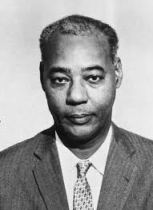
Eric WilliamsPatrick Solomon
What is interesting is that amidst all the sound and fury, we can sometimes miss the lessons history can offer us as to the roots of some of these issues…I am saying thank you here to Judy Raymond – yes, she is my cousin – who has started a series of fascinating articles which are using the Guardian’s extensive archives to show some situations from earlier days…I did resign from the Guardian, but the edition of Sunday 26th August had a real classic, “PM: Who don’t like it…Could Go!” which recalled the infamous 1964 episode in which the ‘Father of the Nation’ defied his critics by re-appointing and promoting Dr. Patrick Solomon…also see “Solomon Acts as PM,” and “Minister Took Stepson From Cops.”
Of course, every right-thinking person knows that ‘Two wrongs do not make a right‘ – so that is not what I am saying.
I think that our ongoing concern over arrogant and irresponsible behaviour in high office has serious roots, so we need to dig deep to end this nonsense.
‘King’ David Rudder, used the opening stanza of his 1996 classic “The Strange Tale of Madame Occohantas and the Westminster Dreadlocks” on the virtual silencing of our Parliament by the growing rift between the then PM, Patrick Manning, and the Speaker of the Parliament…all of which lead to a messy climax with a bizarre State of Emergency being imposed so as to virtually imprison the Speaker of the House. I tell you…Rudder’s first verse is something our children should learn in school…
Rudder was telling us about all then and now…in fact is Sparrow who gave Rudder the 1986 acclamation of dubbing him ‘King David’…which leads right back to the start…
Yes, the title of this post is from the Mighty Sparrow’s biting classic on that scandal – you can hear it here. The fight for betterment is a part of our lives now and we must keep it up! Listen to Sparrow…yuh think it sorf?
The ‘ole-talk’ at the time was that Solomon slapped a policeman when he went to have his stepson ‘released’ – he was the then Minister of Home Affairs, with responsibility for the Police Force.
This is the text of the ‘Emancipation’ column published in the Business Guardian of 30th July 2009 as my attempt to grapple with some of the the unspoken causes and consequences of this huge fiasco.
I am republishing for two reasons…
Firstly, there have been recent attempts by several people to claim that the Hindu Credit Union part of the Colman Commission is not related to ‘race’…that was surprising since some of those were people who ought to know better – Sir Anthony Colman, the Guardian Editorial-writer and of course, Andre Bagoo. In my opinion a significant part of these two interlinked stories – the CL Financial and HCU collapses – is rooted in our own issues with race. It would be a grave error to dismiss race in trying to understand these crises.
Secondly, the original column was published before this blog was launched, so this is a way of putting the point to those who missed it on the first subscribers.
I have not had the time to delve into the role of race in the HCU matter, so this is my offering in relation to CL Financial and our own African Emancipation Day celebrations…maybe readers can share with me if they see the relation between this situation and the HCU one…
Emancipation
This week the meaning of Emancipation is considered alongside the CL Financial fiasco. It is a painful, but necessary, task. Those of us concerned to commemorate the Emancipation of African people from slavery must have the courage and clarity to reflect on our past, both the distant and the recent. In reflection we can find direction and perhaps, the beginning of a solution.
How, if at all, is the CL Financial fiasco connected with the story of Emancipation? I deliberately use the word ‘story’ since it is clear that there are many versions of this period in our history. I say ‘our history’ because, whatever the race of today’s readers, the Emancipation journey is of vital concern to the progress of humanity.
There were notable and honourable African leaders who put up strong resistance to the efforts by Europeans to enslave their people. But the sad and inescapable fact is that there were others who thought of the process differently. It is a painful matter to discuss, but the fact is that some African rulers collaborated with the European slave-traders to capture and sell their people. Not all, but enough to make the difference. Without getting into the entire history, which is way beyond the scope of this column, the actions of that group of rulers were enough to ensure the success of the entire monstrous project. The Atlantic slave-trade shaped large elements of today’s world and we have been trying to build a new one ever since. Yes, an immoral and greedy group of rulers put a greater value on their personal enrichment than the well-being of those they were entrusted to lead.
The entire society paid the price for the selfish ambitions of these rulers.
One of the most striking things about the CL Financial fiasco is that Lawrence Duprey is one of us, an indigenous Caribbean man. Yes, a black man, with African blood flowing through his veins and that is something that has not formed part of our public discussion so far. One of the strangest features of these times is how, despite the over-supply of media, critical issues are not discussed. When one considers that the vast majority of the population of the region comes from an African background, it is striking that Lawrence Duprey is the only such tycoon in the region with his level of profile. But wait, I almost forgot that there is another one. Yes, I am speaking about Michael Lee Chin.
Whichever way you slice it, this is extremely telling and as a result Duprey carried a peculiar set of expectations. Because of his unique profile as a black man, the fact is that Lawrence Duprey was the recipient of widespread admiration, envy and wonder. That is our society and that is one of the ways we deal with its ugly realities.
To go further, the leading people in the CL Financial team were also black. Yes, most of the CL Financial team have African blood flowing in their veins. Yes, by now I can hear some readers saying things like – ‘But X or Y doesn’t think that they are Black’ or ‘So what?’ or ‘Exactly what is your point?’. That kind of skepticism is expected when one discusses this kind of issue. In fact it is my view that the underlying attitude is the very problem.
At the same time, let us note that the regulators are themselves black people. Yes, the picture I am painting is that the main players are virtually all black people – the Cabinet, the Central Bank and the CL Financial/CLICO chiefs.
We African people have come from far, both metaphorically and physically. We now find ourselves in a sorry place with this CL Financial fiasco. We have a particular responsibility to do better this time around. There is no escaping that fact.
CLICO was built around the ideal, by its founder Cyril Duprey (Lawrence’s cousin) that ‘Give a man service, give a man value and he will give you more business’. Simple, but strong, those were the foundation stones of CLICO. Truth prevailed and with hard work the company prospered. CLICO developed unprecedented levels of investor confidence, as a black company (indigenous) in which one could have faith. Given our history as African people, that level of investor confidence is no small or incidental thing. It could only have been the result of solid vision and diligent long-term application, to name just two of the qualities of the founder.
CL Financial was established as a holding company and rapid diversification followed, with investments in a number of areas unrelated to conventional insurance business. As a result of its success, CLICO was able to provide most of the cash to pay for the group’s unorthodox expansion.
At that stage, the activities of the group shifted to reflect the new ambitions of its new chiefs, most notably its Executive Chairman, Lawrence Duprey. Those activities ultimately undermined the stability and health of the whole.
The Emancipation story has many lessons, but the central one, from my point of view, is that many of our rulers lost sight of the balance between private wealth/privilege and the public good. Are we doing better now? For us, in this Emancipation week, it is useful to consider the extent to which we have learnt from our past.
The actual behaviour of the CL Financial chiefs and the group’s shareholders in this moment is instructive. At every turn, the public good has been shafted in favour of private wealth. From the payment of dividends while CLICO’s Statutory Fund was in deficit to the payment of dividends to CL Financial shareholders after they wrote for urgent financial assistance from the State. The pledging of assets which had already been pledged and the attempted sale of assets contrary to the original MoU. The shocking statement of CLICO’s new boss that $5.0Bn was missing from its Statutory Fund and the utter silence subsequently as to its whereabouts.
All this shocking behaviour and no sign of any reprimand, charge or censure from our rulers. Instead, we are told that our entire Treasury has been pledged to assist savers and restore shareholder value. Trinidad & Tobago is a land of many firsts, but this is a tragic one.
How did we get to the point of pledging our common wealth to restoring value to a few privileged people who are showing no proper regard for the public good?
Do we have the moral fibre to recognize what has gone wrong in our past and behave differently?
Afra Raymond chats in ‘The Barbershop‘ with John Wayne Benoit on i95.5FM about the CL Financial bailout and Public Procurement issues and other topics. 30 June 2012. Audio courtesy i95.5FM
JCC President Afra Raymond speaks on Procurement revelations in the Parliamentary debate on No-Confidence in the Prime Minister on First Up with Paul Richards and Jessie-May Ventour.
A timeline of events within the People’s partnership period…
4 November 2010
Afra Raymond’s Agreement for Freelance Services with CNMG was discontinued. My agreement with CNMG was as a Commentator with a one-hour current affairs program to be aired alternative Sundays and weekly editorial slots on Friday mornings as part of the ‘First Up’ program.
TnT Mirror and I95.5FM are reportedly the subjects of an embargo in respect of State advertisement – both these outlets have been identified as being strongly critical of the present Peoples Partnership government. MATT issues a statement condemning “advertising boycott.” Minister of Foreign Affairs and Communications denies the existence of the advertising embargo in January 2012.
O’Brien Haynes resigns as CEO of Radio Vision Limited (which includes Power 102.1FM)
29 December 2011
Ian Alleyne is the subject of Police Search on TV6/CCN/Express offices. Ian is the controversial host of ‘CrimeWatch’, the country’s most popular TV show, a hard-hitting and interactive outlet for the #1 public concern – the relentless rise of violent crime. ‘CrimeWatch’ is deeply critical of certain elements in the Police Service. MATT issued a statement on the “TV6 raid”
Afra Raymond’s column on Karen Nunez-Tesheira sent to her by Trinidad and Tobago Guardian’s Ag Editor-in-Chief. My Business Guardian columns had been a critical analysis of a range of issues from ‘Property Matters’ to the ongoing scandal of the ‘CL Financial bailout’. I resigned as a columnist at the Guardian on 4 January 2012
David Mohammed suspended indefinitely from 102.1FM. David was the originator of ‘The Black Agenda’ programme, which rose to become T&T’s most popular radio program. ‘The Black Agenda’ programme can be followed on Twitter, on Youtube or on Facebook. The only report I have seen in the print media on David’s virtual dismissal was in the T&T Mirror. Also, there were statements of support from the National Workers’ Union, and the OWTU.
CCN Directors are requested to present themselves for Police interview, which seems to have arisen out of the same episode with Ian Alleyne and the broadcast of the so-called ‘rape tape’.
The Newsday office and reporter Andre Bagoo’s home is the subject of Police search. Andre is the lead investigative reporter for the Newsday, with emphasis on politics and corruption in public administration.
This is a sinister pattern, which we need to recognise now.
To seed this discussion, I have three threads…
The use of Police resources to target journalists is questionable in light of the apparent, unexplained delays in dealing with the CL Financial chiefs, the UDECOTT chiefs and of course, the HCU chiefs. The Police anti-media operations were apparently executed in exemplary fashion with warrants being obtained and searches done using the element of surprise – no reasonable person could find fault with the execution of those operations. The burning question for me, given the apparent delays in prosecuting or even searching the ‘White Collar robbers’ – even during the recent SoE – is ‘What are the priorities of our Police Service? Are our limited Police resources being effectively allocated in the fight against ‘White Collar crime’?
The second issue is the agenda of the Media practitioners. Despite the strong and clear statements from the Media Association of T&T (MATT) on these issues – the embargo of State advertising for the Mirror and I95.5FM, the Police search of TV6/CCN on the Ian Alleyne issue and the Police search of Newsday and Andre Bagoo – there is still no MATT comment on the Power 102.1FM dismissals and the issue of the Guardian’s Acting Editor-in-Chief sending my column on Karen Nunez-Tesheira to her for comment. We need to be mindful of self-censorship in a world in which most of the media is in private ownership. Which shifts into my next point…
Lastly, there are the issues emerging from the world we live in now. It is a truly New World, with the commonly-held conviction that ours is a ‘free society’. Our Constitution guarantees freedom of speech, freedom of expression and freedom of association. It also guarantees the rights of property owners and that takes me straight to the vexatious juxtaposition of those rights. You see, if we do live in a society with all those rights, the question arises ‘What is wrong with the owner of a media outlet deciding to let-go/fire/suspend indefinitely/re-assign a particular commentator?’ Even more to the point – “Are we saying that the privately-owned media can pick-and-choose their commentators, but the State-owned outlets have a different set of rules to follow?” Despite the provisions of T&T’s international anti-corruption and media treaty obligations in favour of whistle-blowers, there are still those who want to know what is wrong with the government deciding how to place its advertisements.
I am closing this off now; to let the discussion flow…the battle-lines are clear to me…our sentiments on the free nature of our society come into conflict with the impulse for self-protection once we achieve Public Office. In this rounds, given the boundless nature of the new technology, we are going to see a sharper, more wily, battle to reduce the strength and clarity of our media. I greet it.
As always, the struggle is against the enemy without and the enemy within…
Please view my iPad oPinion video Podcast on this topic here
This is the video of the segment from the show Making A Difference with Felipe Noguera called Caribbean Economic Forum. Appearing with guest Afra Raymond was David Walker, another prominent analyst on the CLICO debacle. Video courtesy Making a Difference
The former Minister of Finance, Karen Nunez-Tesheira, is once again in the news, due to her dispute with the Integrity Commission as well as her expected testimony at the next session of the Colman Commission.
The former Minister has had to defend against allegations of insider information1 related to her early withdrawals from CLICO Investment Bank (CIB). [Hansard report of February 4, 2009 calls it “PERSONAL EXPLANATION Allegations of Insider Trading.”] There was a lengthy address to the Parliament on Wednesday 4 February 2009. The 7 March 2009 revelation in the Trinidad and Tobago Guardian Newspaper, that Nunez-Tesheira was a CL Financial shareholder was also the cause of further defensive statements to Parliament on 27 March 2009. In the first wave of defence, there was silence as to the fact of Nunez-Tesheira’s shareholdings in CLF. In November 2011, her attorney attempted to challenge my position on this at the Colman Commission, but I maintained that ‘If the genuine attempt was to address the perception of corruption in a forthright fashion, all the information should have been given’. In the second wave of defence, there was no mention of the fact that the insolvent CL Financial group paid a dividend to its shareholders after writing that fateful letter to the Central Bank for financial assistance. Again, through the unfolding scandal we are witness to responsible officials who chose to be selective in making the required full and frank disclosure. All to the detriment of the tax payer.
Those attempts to defend against the allegations were only partially successful, since there is little doubt that Nunez-Tesheira’s reputation has been damaged by the entire episode.
Nunez-Tesheira is now alleging that the Integrity Commission failed to properly notify her of exactly what possible charges have been notified to the Director of Public Prosecutions. I understand that the charges relate to an allegation that the CLF shareholding held by Nunez-Tesheira amounts to a conflict of interest in relation to the discharge of her duties as Minister of Finance at the time of the bailout.
If the former Minister’s concerns are true, that may negate the fundamental investigation, which would be a real pity in terms of settling the elementary accounts of that turbid period.
I have my own serious concerns, derived from the same set of facts, about the lessons to be learned from the decisions of that individual, Karen Nunez-Tesheira.
Form of Oath (affirmation) for A Minister or Parliamentary Secretary
I, A.B.. do swear by………… (solemnly affirm) that I will bear true faith and allegiance to Trinidad and Tobago and will uphold the Constitution and the law, that I will conscientiously, impartially and to the best of my ability discharge my duties as ………… and do right to all manner of people without fear or favour, affection or ill will.
To my mind, the only reasonable reading of the phrase ‘conscientiously, impartially‘ is that personal, family, friends or other commercial interests must never be present or considered when discharging public duties. The closing phrase specifies without fear or favour, affection or ill will, the plain meaning of which only reinforces the previous point.
I keep returning to the National Gas Corporation (NGC) Press Release of 4 February 2009 in response to widespread rumours that its heavy withdrawals had prompted the collapse of the CL Financial group. That Press Release rebutted those allegations, but was interesting in that it also spoke of CIB’s failure to return significant deposits in November and December 2008. This citation from the Press Release –
That official NGC statement establishes that the CL Financial group was known to have been in very serious financial difficulties as far back as November 2008 – after all, over a three-month period CIB was unable to repay in excess of $250M in matured deposits. Given the high degree of trust between the CL Financial group and the government of the day, that breach must have been known at the very highest level.
Then I move to consider the extensive interview Nunez-Tesheira gave on 4 February 2009 to the Trinidad Express on the broken deposits, the headline being truly priceless ‘Everybody knew CIB was in trouble’. That interview formed part of my submission at the Colman Commission, with neither its inclusion, nor my inferences from it, being challenged by Nunez-Tesheira’s attorney during his cross-examination on 10 November.
…She then said: “On December 31, 2008, I withdrew an account which had matured on December 31, 2008”. Since then, Express investigations have discovered that Nunez-Tesheira had (not one) but two accounts with CIB, which matured (not on December 31) but was due to mature in April and August 2009 respectively. And she applied on December 30 to break these two deposits.
In an interview with the Express on February 4, Nunez-Tesheira also confirmed that her sister made an application on December 30 to break the $2.1 million deposit held in her late mother’s name, Una Nunez. In that interview Nunez-Tesheira said: “Everybody knew CIB was in trouble.” But she stressed that she only received the formal brief on the issue of CL Financial troubles on January 14.
In an interview on the same day with this newspaper, she stated: “The information about CIB and the concerns about CIB, were out there in the public domain for a long time, and my sister being a banker, would have been one of the persons who would have heard the concerns about CIB.”
Asked if in hindsight she should have declared her investments in CIB and CMMB before making any statements in the Parliament on the issue, Nunez-Tesheira said she had no need to do so. “In answering that question, it would imply that there was something that somehow was untoward,” she said, adding that there was not(hing untoward)…
In her statements to the Parliament Nunez-Tesheira was emphatic on these important points – from page 629 of Hansard of 4 February 2009 –
...Prior to January 14 of this year, I can truthfully state that I had no personal, formal or informal information about the extent of the liquidity difficulties the Clico Investment Bank has found itself in, other than the information known and available to any other citizen of Trinidad and Tobago and those on the other side, for that matter. Like any other citizen of this country, I also have to attend to my personal affairs and I did so until December 30, 2008 with respect to my personal transactions with Clico Investment Bank…
The emphasis is mine.
The emphasis on extent, as distinct from the existence of the liquidity difficulties, is crucial. The way that statement to Parliament is crafted, it is possible to have been aware of the existence of the liquidity problems and still claim to have been ignorant of the extent of those problems. In my view, Nunez-Tesheira’s choice of words is artful, since she is already on the record as to her motivations in ensuring that her family monies were withdrawn from CIB when she learned of the financial problems there.
The then Minister of Finance was also clear that she took official action only at the point when she was officially informed.
In my view, this sequence of facts represents a real, clear example of breach of public duty and breach of the ministerial oath of office. By her very own words Nunez-Tesheira was informed and believed that the group had problems, as a result of which, she took the necessary steps to protect her own family’s financial position. Following that, the then Minister was officially advised that the CL Financial difficulties were now going to be requiring a State bailout at which stage she took official steps to deal with the crisis.
In my opinion, the Oath of Office does not permit that course of action. Under the terms of that Oath, officeholders are required to properly discharge their duties at all times. A holder of ministerial office ought not to allow family interests to come into conflict with his/her duty to protect national/public interests. It seems clear to me that the actual course of decisions by Nunez-Tesheira in this episode is contrary to both the spirit and intent of the Oath of Office.
So, firstly, we have Nunez-Tesheira’s apparent decision that the information as to CIB’s financial crisis – wherever it came from – was solid enough to take immediate steps to protect personal interests. Apparently, the public, proper duties of that office awaited an official letter. I tell you.
Next, we have the payment of the final dividend by CLF and the burning question of whether her Cabinet colleagues were informed by Nunez-Tesheira that she was not only a shareholder, but also in receipt of dividends from the very group that was seeking a State bailout. Those are the questions which can only be answered by lifting the conventional veil of Cabinet secrecy.
If you are not outraged, you haven’t been paying attention…
This is the recording of my actual testimony on my Witness Statement and the amended Power Point presentation.
I was led in evidence by Counsel to the Colman Commission, Peter Carter QC, with questions at the close from these parties –
Gita Sakal, former CL Financial Corporate Secretary – represented by Justin Phelps, who had a few questions on the post-Shareholders’ Agreeement Directorships.
Karen Nunez-Tesheira, former Minister of Finance – represented by Frederick Gilkes, who questioned my assertions on the Minister’s undeclared shareholding.
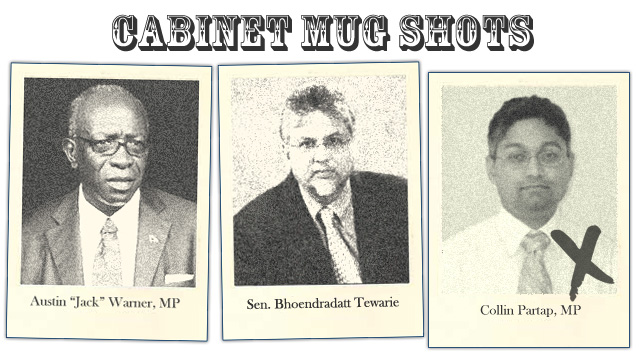 So there has been a growing campaign to challenge the presence of Jack Warner in our Cabinet – the leading people in that effort have been Lasana Liburd of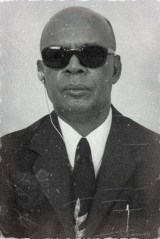

 Afra Raymond chats in ‘The Barbershop‘ with John Wayne Benoit on i95.5FM about the CL Financial bailout and Public Procurement issues and other topics. 30 June 2012. Audio courtesy i95.5FM



 Fazeer Mohammed re-assigned at CNMG. Fazeer was the popular co-Host of the leading breakfast TV show ‘First Up’. He subsequently resigns.
 Marcia Henville suspended from 102.1FM. Marcia was the outspoken livewire who led a highly-popular drivetime talk-show examining current affairs

 Ian Alleyne is the subject of Police Search on TV6/CCN/Express offices. Ian is the controversial host of ‘CrimeWatch’, the country’s most popular TV show, a hard-hitting and interactive outlet for the #1 public concern – the relentless rise of violent crime. ‘CrimeWatch’ is deeply critical of certain elements in the Police Service. MATT issued a statement on the “TV6 raid”
 David Mohammed suspended indefinitely from 102.1FM. David was the originator of ‘The Black Agenda’ programme, which rose to become T&T’s most popular radio program. ‘The Black Agenda’ programme can be followed on
  The Newsday office and reporter Andre Bagoo’s home is the subject of Police search. Andre is the lead investigative reporter for the Newsday, with emphasis on politics and corruption in public administration.

 AfraRaymond.net