I am responding to the points made by Central Bank Governor, Jwala Rambarran, in his 6 November speech to the T&T Coalition of Service Industries.
This speech attempted to both re-affirm the Central Bank’s important role in our economy –
…as the country‟s prime financial regulator, the Central Bank has an almost fifty year record of maintaining the safety and soundness of the financial system…
and to distinguish Rambarran’s tenure as Governor since July 2012 –
…These are just a few of the initiatives the Central Bank has been working on over the last fifteen months to rebuild confidence, strengthen financial stability and to help create our future financial system…
Having completed my four-part series [1, 2 & 3, 4] on what I termed ‘The Integrity Threat‘, I was intrigued by two recent public notices on the meaning of the Appeal Court’s recent activity on these matters.
6 October – The Integrity Commission issued a Public Notice which was a clear statement by the Commission that State Enterprises were within its lawful remit, according to the Appeal Court ruling on 27 June. My reading of that ruling was that it effectively narrowed the 9th part of the Schedule to the Integrity in Public Life Act (IPLA) so that it only applies to Directors of Statutory Bodies performing public functions. I maintain that view. Even if one accepts the Commission’s reading of events, as set out in the exchange of emails in the sidebar, this ruling was a seriously retrograde step in the operation of our nation’s Integrity Framework, as I will illustrate;
5 November – the Judiciary issued a Media Release on the recent reports in other newspapers on a 28 October Appeal Court hearing on a 2006 Freedom of Information request made to TSTT. I want to read the actual ruling/findings of the Appeal Court at that hearing before writing in detail on this. Two things are clear – firstly, the Judiciary is able to set the record straight if there is a danger of the media misunderstanding important rulings. That is the behaviour of a healthy Public Institution. I am also noting here that the Judiciary has made no such efforts in respect of #30 of 2008, despite the several pointed criticisms in the media. The second point is about the subject-matter of this lawsuit, which is the 2006 letter the Commission wrote to TSTT’s Directors confirming that they did not have to submit declarations. That letter and the official efforts to conceal it, were the subject of this 7-year lawsuit. I had raised this arrangement with senior officials of the Commission in earlier discussions, since it seemed incredible to me that TSTT could have gained such a concession. I was told that the Commission had agreed to ‘hold its hand‘ since the issue was subject to the Court’s ruling – this is my paraphrasing of conversations, so of course I am subject to correction. On the one hand I was recently told by the Commission that this arrangement was ‘in order‘ and on the other, it is now emerging that TSTT expended considerable time & money to conceal those details. I am calling on the Commission to publish those details. Continue reading “The Integrity Account”→
I closed last week’s article by restating my view that all the ingredients for corruption were present at Invader’s Bay.
What are those ingredients?
Here is my list –
Extensive public assets coming onto the market, in turbid circumstances. Those assets can include property, concessions, contracts and jobs;
Questions of access to the gatekeepers – in these scenarios, some people will have unbelievable access to the decision-makers;
Conflicting and confusing versions of the project or proposal. The confusion is as persistent as it is deliberate, a part of the tangled web.
Blatant double-standards and lying is the norm in these situations;
Apart from ceremonial fluff, such as sod-turnings and ribbon-cuttings, there is no intention whatsoever to give any proper public account or statement of intentions. True transparency is evaded like taxes;
Professional Civil Servants who are unable or unwilling to insist on the maintenance of minimum standards;
Extensive Public Assets
These lands are estimated to be worth in excess of $1.2Bn at today’s priced, that means the unimproved value. Although the lands are reclaimed, a significant amount would have to be spent on infrastructure to make the property ‘shovel-ready’ for development.
As I noted in the first in this series, there were conflicting claims on this aspect, with the selected developers claiming extensive infrastructure expenses as a way to reduce what they would pay for the land. There were no estimates given for the developers’ cost of infrastructure, but I noted that the National Budget for 2014 had specified, at pg 89 of the Public Sector Investment Program, that there would be publicly-funded ‘Infrastructure Development’ at Invader’s Bay.
I have been assisted by some of the professionals in the very Ministry of Planning & Sustainable Development in identifying that item as being a $50M allocation for 2014. The actual works are unspecified, so it is difficult to be certain what is included. It certainly seems a modest sum given the size and peculiar challenges posed by the Invader’s Bay property.
In addition to the obvious public asset of the actual property, readers should note that assets in this context can include concessions. In this context that can mean maritime & docking concessions as well as tax concessions, so we will have to maintain full vigilance to safeguard the public interest.
As a first position, all the details of the overall agreements must be published for public consideration at the earliest opportunity. This is no minor point, since really huge sums of wealth can be transferred from public hands to private interests if proper transparency is not ensured. Just remember that in June this year while the President of the Peoples Republic of China was here there was the signing of a Government to Government Agreement. The JCC has lodged many strong objections to those agreements. How many readers will remember that there was an important agreement signed with respect to the Pitch Lake at that time?
…According to a release from Lake Asphalt of Trinidad and Tobago (1978) Ltd, the signing ceremony of a Memorandum of Understanding and a Confidentiality Agreement with Beijing Oriental Yuhong Waterproofing Technology Co Ltd of the People’s Republic of China is scheduled to take place at the Hyatt Regency, Port of Spain…
So, faced with a Freedom of Information Act which ensures disclosure, the new trend is to wrap-up the details in yet another layer of secrecy. We need to be alert to that trend. After all, this is the same Ministry which claims to have legal advice confirming that its actions conform to the Central Tenders Board Act, yet steadfastly refuse to publish that advice.
Access to the gatekeepers
One of the two successful proposers has been the MovieTowne principal, Derek Chin, whose confidence has been striking.
According to Mr. Chin, in an extensive interview –
…Chin has met with the Prime Minister and many government ministers seeking approval for this project.
Before Christmas 2010, he had a meeting with the Transport Minister Jack Warner, Foreign Affairs Minister Suruj Rambachan, and other ministers, at the Prime Minister’s Office. They all supported his plans. “I have been lobbying the Government for a year now, even before the elections. I sent in the preliminary sketches about the concept; I met 19 Cabinet ministers over the last six months. The next minister I am meeting is Bhoe Tewarie, Minister of Planning. He wants to see me. I also met with Jearlean John, Udecott chairman. She also loves it, but that was three to four months ago…
That interview was given in early July 2011, which is over one month before the Request for Proposals was published by the Ministry of Planning & Sustainable Development at the end of August. I tell you.
Conflicting and confusing versions
So, to return to the legal opinions, we have this swirling set of stories.
To date, Minister Tewarie has insisted that the project has been removed from UDeCoTT’s portfolio and placed within the Ministry of Planning. He claims that Cabinet approved this in 2011 and also insists that there is no tender process at Invader’s Bay. Of course it is impossible for the Ministry to proceed to invite tenders for anything without following the Central Tenders Board Act.
The first legal advice I saw was clear that there is indeed a tender process at work here and that the CTB Act ought to have been followed. Obviously, that conclusion did not ‘fit the script’, so an escape hatch had to be fashioned. Shortly thereafter another opinion was submitted by Sir Fenton Ramsahoye SC, on an entirely different set of assumptions which made UDeCoTT the central enabling agency in the entire scheme.
The approach endorsed by the Ramsahoye opinion flatly contradicts the version being advanced by Minister Tewarie.
That is the deep, intentional confusion being encouraged by public officials in this matter.
Blatant double-standards and lying
So, let us start with the role of the Ministry of Planning & Sustainable Development on the Invader’s Bay project. How does that Ministry reconcile its active role in seeking public views on the King’s Wharf project in San Fernando with its silence on Invader’s Bay in POS?
These are blatant double-standards of the worst kind. One can scarcely believe that there are professional civil servants who could condone this reckless and underhanded approach to national development. But there we have it.
When is the Ministry of Planning & Sustainable Development going to host a public consultation on Invader’s Bay? That is now an inescapable requirement. Sooner rather than later.
But that is not all. No, not at all.
This administration campaigned on the findings of the Uff Enquiry and made several public promises to implement the 91 recommendations of the Uff Report. Such was the importance of the matter in the political agenda that it formed the first item of the very first post-Cabinet Press Briefing of the Peoples Partnership administration on 1st July 2010. That is a broken promise, since those Uff recommendations have not been adopted and the JCC’s many attempts to offer our assistance to achieve that have all been rejected.
The 17th recommendation of the Uff Report is –
User groups and other interest groups should be properly consulted on decisions regarding public building projects, to ensure that relevant views can be expressed at the appropriate time and taken into account before decisions are made…
There has been no consultation at all on the Invader’s Bay proposals. Quite frankly, apart from rumours and conflicting press reports, I do not really know exactly what is going to be built or where or even when.
According to the iconic American jurist Louis Brandeis, speaking on eradicating corruption –
This is the Pre-Action Protocol letter to the Minister of Finance challenging his failure to reply to my Freedom of Information Act request of 18 March 2013, seeking details of the beneficiaries of the CL Financial bailout, particularly the EFPA holders.
Afra Raymond chats on the show ’Forward Thinkers‘ with David Walker on 104.7FM, dealing with the CL Financial bailout and my lawsuit against the Minister of Finance to get at the detailed information as to how the $24B in Public Money was spent. 24 October 2013. Audio courtesy More 104.7 FM
This is my reply to the Ministry’s affidavit of 12 July which seemed to rely on the fact that CL Financial is a private company to refuse publication of the requested information.
Of course that line of reasoning is yet another emerging threat to our country’s Integrity Framework, so our reply challenges the validity of this assertion.
At our hearing on 1 October, Justice Boodoosingh ordered me to formally notify CL Financial and we have done that, so at our hearing earlier today, CL Financial were represented by a team led by Stephen Singh and various dates were set, with our next hearing on 27 February 2014. Of course that is the very Carnival week, so stay tuned. I expect there will be significant other developments well before that.
Having written four critical articles consequent on the Appeal Court’s 27th June 2013 ruling and having been preceded by two leading commentators — Andre Bagoo & Anthony Wilson — I was intrigued by this Public Notice published at p. 49 of the Sunday Express of 6 October 2013.
It does not mention any particular articles and purports to clarify the ruling. I will be continuing this examination in my reply.
Property Tax is back and the controversy has naturally returned since the ‘Axe the Tax‘ movement was a signal moment of unity in the anti-PNM campaigns of 2009/2010.
In my opinion, the anti-Property Tax movement was an important measure of the extent to which our national discourse is now irrational and baseless. The disenchantment with the Manning administration and the thirst to have them removed seemed to occupy more time than any substantial discussion as to the merits of the proposed Property Tax.
Now, as then, I hold the view that our nation’s Property Tax regime is long-overdue for reform and updating. I support the proposals to do so and we will have to wait for more detail to analyse these proposals further.
Here are a few of the basic facts on Property Tax.
The size of the Property Tax Take – Proportionally
The Estimates of Revenue disclose that in 1995 property tax was 2% of tax revenue and in 2009 it was expected to be a mere .18%. Property tax, when last collected, contributed a small fraction of the amount it did 15 years ago. The official projections for the Property Taxes proposed by the PNM were for that revenue to increase to $325M in 2010 – even at that level, the contribution would have barely exceeded 1% of the national tax revenue.
The Draft Estimates of Revenue (2014) published in the recently-approved budget are unclear and I have requested an official clarification before making any detailed comments on those. As an example the Total Tax Revenue 2014 is estimated (at p. vii) to be $46.8Bn, with ‘Taxes on Property’ comprising $3.914M, which is a tiny proportion of the total, about 100,000th of 1%. The accompanying chart, on that very page, shows Property Tax at 1% of the total. There is more to say, but I am awaiting the requested information, hopefully before next week’s deadline.
The key point here is that property is a vibrant engine of wealth in our country and has been so for many decades, every successful person knows that. Given that fundamental, it is obvious that property has to be properly taxed if any kind of economic justice is to emerge. The historically paltry percentage of revenues raised via Property Taxes is solid justification for a comprehensive mapping of who owns what and the where. This is a flourishing sector of the economy, so proper taxes are long-overdue.
The size of the Property Tax Take – Absolutely
Total Property Tax 1993-2009. Click image to see expanded version.
*The PNM’s 2009 proposal was to abolish both the L&B Taxes and the House Rates, with the replacement Property Tax anticipated to earn $325M in the year 2010 – from Ministry of Finance, Estimates of Revenue 2010 (at pg v )
The figures tell a story, since they depict an unexplained decline in Property Tax revenue from $132.16M in 1994 to $83.44M in 1995 and modest increases to $95.08M in 2001, before restoration to $129.65M in 2002. L&B Taxes were payable outside of Municipalities, while House Rates were payable within the 5 Municipalities – POS, San Fernando, Arima, Point Fortin and Chaguanas.
According to the official records, the real decline in Property Tax income in that period occurred in non-Municipal areas, with L&B Taxes falling from $109.38M in 1994 to $60.38M in 1995, never rising above $64M, before restoration in 2002 to $94.08M. In clear contrast, House Rates in the corresponding period rose steadily from $22.78M to $35.97M.
I am an outsider examining these aspects of the Property Tax challenge from the published record and one wonders just who is responsible for this level of sheer recklessness. After all, 45% of the revenue from L&B Taxes vanished in a mere 12 months and in any properly-managed organisation that would send alarm bells ringing. Over the seven fiscal years 1995-2001, an annual average of $50M in Land & Building Taxes went unpaid – which makes a total of about $350M in missing revenue, at a minimum. What was the reaction within the Board of Inland Revenue? What steps did they take to identify and eliminate this leakage? Was there any tax evasion? Was anyone charged for that criminal offence?
These are essential questions to be resolved if we are to master the challenge of the proposed Property Tax system.
The Local Government element
2009 Municipal Corporations funding. Click image to see expanded version.
Both PNM and Peoples Partnership proposed to send the Property Taxes direct to the Consolidated Fund. The effect of that would be to reduce Municipalities to having just over 2% of their funding free from Central Government controls. That critical element must form part of any discussion on Local Government reform.
Next week, I delve into the question of income tax on rental income and the likely levels of tax on your property.
The previous column discussed the Appeal Court judgment in #30 of 2008, in which both TSTT and the Integrity Commission sought to challenge the High Court ruling in #1735 of 2005. That High Court ruling found that the phrase contained at para 9 of the Schedule to the Integrity in Public Life Act (IPLA) was to be taken ‘as read’ to define those people who are subject to its provisions –
“Members of the Boards of all Statutory Bodies and State Enterprises including those bodies in which the State has a controlling interest.”
The Appeal Court – comprising CJ Archie, together with Mendonca JA and Smith JA – ruled that –
“CONCLUSION
TSTT is not a State Enterprise. The members of its Board are not subject to the Integrity Provisions.
It is only the members of the Boards of those Statutory Bodies which exercise public functions that are subject to the jurisdiction of the Commission.“ Continue reading “Integrity Threat: Part 2 & 3”→
Afra Raymond chats with Joseph Berment-McDowall on Heritage Radio 101.7 FM about the Treasury Scandal article. 27 August 2013. Audio courtesy Heritage Radio 101.7 FM
 I am responding to the points made by Central Bank Governor, Jwala Rambarran, in his 6 November speech to the T&T Coalition of Service Industries.
 Having completed my four-part series [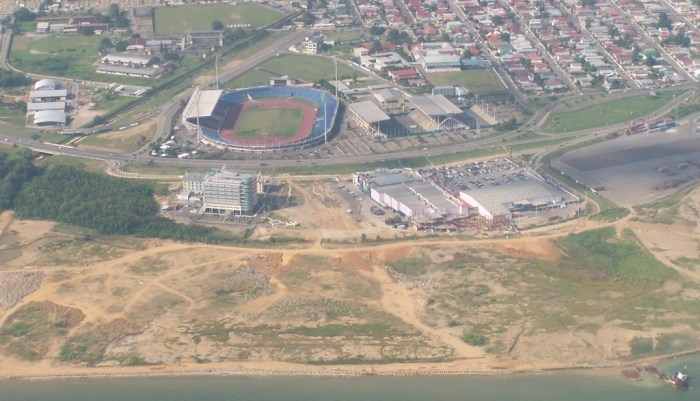
 Afra Raymond chats on the show ’Forward Thinkers‘ with David Walker on 104.7FM, dealing with the CL Financial bailout and my lawsuit against the Minister of Finance to get at the detailed information as to how the $24B in Public Money was spent. 24 October 2013. Audio courtesy More 104.7 FM
 Having written four critical articles consequent on the Appeal Court’s 27th June 2013 ruling and having been preceded by two leading commentators — Andre Bagoo & Anthony Wilson — I was intrigued by


 AfraRaymond.net