Property Matters – Tax Facts part two

property-tax
Further details on property tax are needed to understand the process and possibilities arising from its implementation. The 2010 estimate of revenue from that tax was $325M, as against a 2017 estimate of $503M, so it seems that there has been some allowance for inflation and new properties.

The innate effectiveness of this tax is that property is an immovable asset, so those persons and companies which are now evading other taxes will be unable to escape this new tax on the various properties in their ownership.

Property owners will be required to provide details of their properties to the Ministry of Finance so that the valuation process can be started. Owners who fail to provide details will have their properties valued without their input. The only efficient method of completing that number of valuations is by a mass-valuation approach which uses software to analyse details from owners, along with transaction details, to estimate the correct figures. Continue reading “Property Matters – Tax Facts part two”

Invaders’ Bay – Appeal Court ruling

ttjudiciary

REPUBLIC OF TRINIDAD AND TOBAGO
IN THE COURT OF APPEAL
Civil Appeal No. P-200 of 2014
Between

THE MINISTER OF PLANNING AND SUSTAINABLE DEVELOPMENT

Appellants

And

THE JOINT CONSULTATIVE COUNCIL FOR THE CONSTRUCTION INDUSTRY

Respondents

PRESS RELEASE

Today the Appeal Court delivered its majority ruling upholding the decision of Justice Frank Seepersad on 14th July 2014 to order publication of the legal opinions on which the Ministry had been relying.

This case began in 2013, when the JCC sought a judicial review of the refusal of the Ministry of Planning & Sustainable Development to publish legal opinions which the Ministry claimed supported its Request for Proposals (RFP) process in the proposed development of Invaders’ Bay. The JCC contended that the RFP process was being conducted in breach of the Central Tenders Board Act, but the Ministry claimed to have legal advice that its actions conformed to the CTB Act. It was that advice which the Ministry refused to publish.

Today’s Appeal Court ruling was a significant one in that it gave greater weight to the mandatory ‘Public Interest Test’ under the Freedom of Information Act, as against the Ministry’s reasons for its refusal on the grounds of legal professional privilege. The previous practice allowed the State to have discretion as to whether legal advice can be released. Had that practice been upheld at the Appeal we would have been facing a future in which any questionable project or policy could be concealed behind the screen of legal professional privilege. This ruling therefore significantly fortifies the Public Interest.

I now expect swift publication of the formal instructions and legal opinions on which the Ministry was relying in this highly-questionable matter. What is more, substantial sums of Public Money were spent in efforts to conceal these details and I am therefore taking the opportunity to ask for the details of those payments of legal fees to now be published – How much Public Money was spent on legal fees and to exactly whom did those monies go?

Another important aspect of this matter is that the Ministry’s official reason for its refusal to publish was changed during the litigation to legal professional privilege, but in this ruling the Court did not condone that change.

<–END RELEASE–>

Property Matters – Tax Facts

property-taxesThe controversial property tax is now expected to be implemented in the fiscal year 2017 and is estimated to raise $503 million. That is a mere 1.7% of the total revenue estimate of $29.93 Bn from taxation. So why is it so controversial? How will it be implemented? How much can we expect to pay?

The property tax being proposed will tax the fixed assets and income streams of persons who are currently avoiding any payments of tax to our Treasury. It is relatively tiny in size, yet it can unlock disproportionate benefits in the public interest.

Our taxation system has done a poor job at levying on the self-employed and companies, as stated so often in the past. The proposed implementation of the Trinidad & Tobago Revenue Authority (TTRA) is expected to create a structure which can effectively tackle this widespread pattern of tax evasion. The previous attempt, during 2009, met with stiff opposition, so it remains to be seen if the current economic downturn will foster a different reaction. Continue reading “Property Matters – Tax Facts”

Property Matters – Sole Selectives

sole-tendering
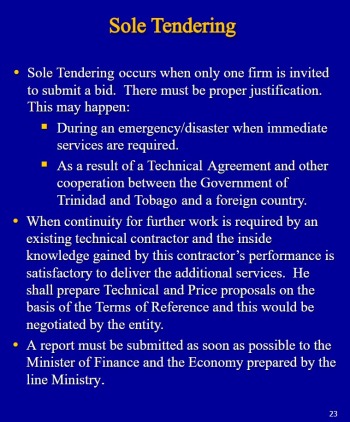
Source: “Tender/Procurement Policies and Procedures” Ministry of Finance and the Economy: Central Tenders Board Division. April 2014

It seems that the current administration intends to execute its three largest projects on the sole selective basis and in my view that is a serious concern.

Sole Selective is a non-competitive contracting approach in which a single firm is selected to participate in a commercial opportunity. I have not limited the definition to the provision of goods, works or services since there are many other ways in which commercial arrangements can operate.

The sole selective approach can be readily adopted if the provider is someone with a proven track record which has created a sound working relationship. The other side of the coin is that this approach can be difficult to justify on value-for-money grounds due to the lack of competition.

Continue reading “Property Matters – Sole Selectives”

T&T Unpacked Podcast: 18 October 2016

podcast tt-unpacked-logoAfra Raymond visits the T&T Unpacked studio to talk with Justin Collymore and Rochelle Amour about T&T’s 2017 National Budget, why criminals get away with corruption and what we can do to make a change. It gets heavy, so for more details check out Afra’s blog at afraraymond.net or follow his page on Facebook.

Property Matters – POS development prospects

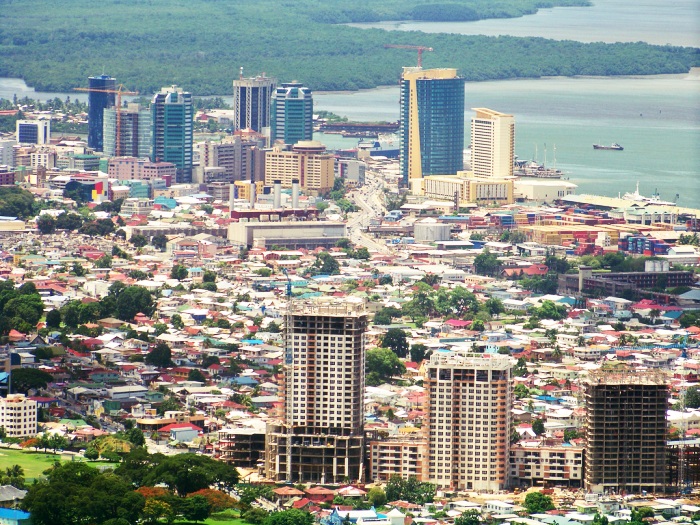
Port of Spain. Downtown in the background, One Woodbrook Place in the foreground

The state of our capital city, POS, is a serious concern to any proud citizen or even our visitors. A real nation would treat its capital with pride, but in my view Port of Spain presents a painful paradox in several respects. Despite that, there are now some real opportunities for us to reconsider just how we manage our capital city. A new approach is needed to rescue our capital city in this time of reduced financial resources.

Some of the negatives include –

Our capital has been severely depopulated in the past 50 years – as shown in the graph and table, its 1960 population was 94,000, while the most recent census in 2011 showed a figure of only 37,000. Given that there has been no natural disaster, war or plague it is sobering to consider this steady population loss and its causes during that period of relative peace and prosperity. No doubt that loss has been due to the mismanagement of the city’s planning, traffic, parking, vending, crime, homelessness and sanitation issues. That series of mishandled and interlocking growing-pains produced an increasingly dirty, unsafe and crowded city which eventually lost its appeal. Continue reading “Property Matters – POS development prospects”

2017 Budget Review

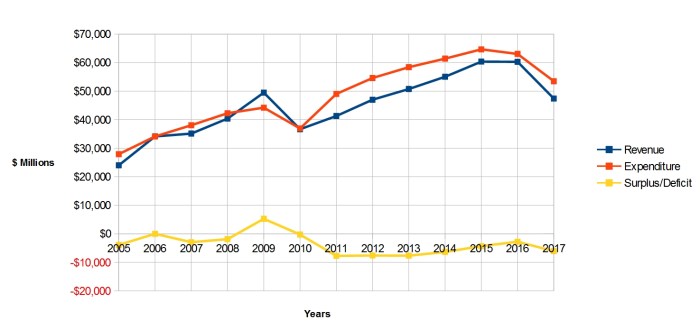
The 2017 budget was presented on Friday 30th September 2016, with the known decline in State revenue having the expected impact. As shown in the graph and table, the Estimate of Revenue is now down to $47.4 Billion, which is itself a doubtful figure as I will show, with Estimated Expenditure at $53.475 Billion. That means the 2017 budget is being deficit financed by $6.075 Billion.
05-17_budget

Year 2005 2006 2007 2008 2009 2010 2011 2012 2013 2014 2015 2016 2017
Revenue (millions TT$) $24,016 $34,129 $35,126 $40,381 $49,465 $36,664 $41,284 $47,000 $50,736 $55,041 $60,351 $60,287 $47,400
Expenditure (millions TT$) $27,918 $34,119 $38,054 $42,261 $44,206 $36,915 $49,016 $54,600 $58,405 $61,398 $64,664 $63,048 $53,475
Surplus/Deficit
(millions TT$)
-$3,902 $10 -$2,928 -$1,880 $5,259 -$252 -$7,732 -$7,600 -$7,669 -$6,357 -$4,313 -$2,761 -$6,075

Continue reading “2017 Budget Review”

Property Matters – 2017 Budget Prospects

The 2017 budget is due to be presented on Friday, 30 September 2016 to an anxious nation. Having had to endure the literally unbelievable optimistic economic claims of the previous government prior to the September 2015 general election, we were told by then Central Bank Governor, Jwala Rambaran, in December 2015, that the nation had been in recession for 6 months. I tell you. Of course that message has now been repeated after the messenger was dismissed for various alleged offenses, but that is for another column.

Our levels of public expenditure have moved sharply upward, with only a single decline in 2010, as shown in the graph and table for 2005-2016. Those totals are derived from the estimates stated in the various budget statements and do not represent the actuals. In that period, estimated revenue was $534.57Bn with estimated expenditure of $574.6Bn. That balance between revenue and expenditure yielded a combined deficit of $40.125Bn – 84% of which ($33.67Bn) occurred under the Peoples Partnership government, 2011-2015. Continue reading “Property Matters – 2017 Budget Prospects”

VIDEO: INVADERS’ BAY ISSUES on ‘The Morning Edition’ on TV6 – 20 September 2016.

tv6_logoJCC Immediate Past-President, Afra Raymond, interviewed by TV6’s Kejan Haynes on Morning Edition on Tuesday 20 September 2016 on the ongoing issues at development site at Invader’s Bay and their connection to the larger procurement public policy issues. Video courtesy TV6

  • Programme Air Date: Tuesday 20 September 2016
  • Programme Length: 0:20:45