Letter to the Editor – Public Procurement Progress?

Fri, 12 Sept 2025

The Editor,

The second Procurement Compliance Plus (PC+) Lab on 10th September 2025 was focused on Procurement Governance, so it was a strong addition to this excellent training series for this important new legal arena. Although Procurement and Purchasing are long-established essential processes for any business, this is a novel field due to the significant changes arising from the Public Procurement & Disposal of Public Property Act (PPDPPA) 2015. The PPDPPA established effective new rules to oversee transactions in Public Money, with heavily punitive provisions, its most important feature being that oversight and penalties are now applicable to both named Public Sector Officials and Private Sector Suppliers and Contractors.

The interactive sessions were hosted by a cadre of outstanding professionals, led by the estimable Dr Margaret Rose, a long-time campaigner and educator in this field. I was a panellist, but it was also an opportunity for me to learn from and engage with a range of practitioners in this multi-faceted professional field.

The PPDPPA established the Office of Procurement Regulation (OPR) as the Statutory Oversight Agency with responsibility to ensure that these transactions are conducted in accordance with that law. Public Bodies and their Private Sector counterparts will continue to contract with each other, but in this new arrangement all of those decisions are under the oversight of the OPR.

Given the importance to our Public Interest of maximising the value obtained for every dollar of Public Money, the complexity of the PPDPPA with its various intersections with other laws, the heavy penalties and the high political stakes, there is every good reason for the professionals engaged in this arena to support this outstanding series of educational conferences.

I am also told that the OPR was invited to deliver the keynote speech at the inaugural PC+ event on 2nd May 2025, so I am very disappointed that the OPR has not attended either of these pivotal conferences. I am reliably informed that the OPR declined that invitation due to a stated fear of being accused of conflict of interest, given that it is that office which would have to rule on any complaints, challenges or other disputes. I will not stand aside while the OPR becomes yet another of our ineffective Oversight Bodies, like the Auditor General or the Integrity Commission. There is simply too much at stake here.

Apart from the over-arching point that the OPR could participate in such events without any loss of its neutrality, impartiality or fairness and more importantly, would certainly gain tremendous understanding of the challenges facing practitioners. All in all, the further bonus from OPR participation in these events would be a far greater general understanding of the issues and their context. The OPR must urgently reconsider its reluctance to attend these PC+ events, especially since its reasons appear quite rickety when one considers that  the Chief Justice gave the keynote at the inaugural event and there were three Appeal Court judges in attendance at the entire second event.

Justice and its Officers should not be so cloistered and in this new dispensation that must now include Procurement Regulators.

Afra Raymond
afraraymond.net

Letter to the Editor – Freedom of Information?

Fri, 5 Sept 2025

The Editor,

The Freedom of Information Act 1999 (FoIA) is part of what I call the “RLM Suite” of Legacy Policy – reforms championed during the tenure of then-AG Ramesh Lawrence Maharaj. That suite included the FoIA, the Judicial Review law, the activation of the Integrity Commission, the Prevention of Corruption Act and the Proceeds of Crime Act. Together they represented a deliberate attempt to empower citizens and hold public institutions accountable.

I chose the phrase ‘Legacy Policy’ to denote a particular type of law which it is all but impossible to reverse, due to its manifest good sense and popularity. So, although our Courts have widely recognised the transformative concepts at the heart of the FoIA, with leading rulings now cited internationally, with approval, as examples of progressive jurisprudence, there is still a deep dis-ease with the very Freedom of Information, at the political level.

The Act requires that Annual Reports on the operation of the FoIA be laid in Parliament, so that there could be some proper record of how this important facet of our Republic was operating. Yet, notwithstanding its parentage, just after the 2010 elections, the Freedom of Information Unit was moved to the Office of the Prime Minister, then onto Foreign Affairs (?) then the Communications Ministry. So those Annual Reports were last published in 2009, and this switch took place during the PP government, within which the UNC was the leading element.

But PNM was not to be left behind in these tactics of delay and obstruction to the fundamental democratic rights of Freedom of Information, since in 2019 there was a short-lived attempt under then-AG Faris Al Rawi to dilute the Act by extending response times to six months and so on. A short sharp campaign was mounted to confront this threat, so those proposals were quietly withdrawn.

Equally damaging are the quieter, ongoing tactics of delay and obstruction. Ministries and state agencies routinely frustrate and delay requests. In terms of my own ongoing research, since February 2025 I have been dealing with an ever-retreating timeline from NGC for information on legal fees and technical/commercial details for the Beetham Water Recycling Plant (BWRP). Partners at expensive law firms are engaged to explain the delays and promise the requested details, but those were to have been delivered over 3 months ago. While deploying the delaying tactics, NGC published details of those BWRP legal fees with this astonishing quote from NGC Chairman, Gerald Ramdeen –  “There will be no secrecy under this board,” he added. “Any request for information will be met and information disclosed.” Well I tell you eh.

It is precisely at this stage that the FoIA ought to be revised and strengthened. The law must be modernised to ensure compliance, curb abuse, and enforce real-time accountability. But revision must avoid the errors of the past. If a newly elected UNC government wishes to do better, it must act differently from the PNM before it.

The promise of the “RLM Suite” was never meant to gather dust. It was meant to anchor transparency in our democratic life. Whether we advance or abandon that legacy is now the question before us.

Afra Raymond
afraraymond.net

Letter to the Editor – Repeal all Exclusions/Exemptions to the Public Procurement & Disposal of Public Property Act NOW

15th August 2025

The Editor,

Since the UNC’s election victory on 28 April 2025, we have had several official statements on allegedly excessive legal fees paid by the State during the previous PNM administration from 2015 to 2025.

Some details of those legal fees paid have now been published, which is good, since transparency on the expenditure of Public Money is essential if we are to have an informed engagement with these issues.

The ongoing ‘CEPEP case’ is also a serious concern, as the parties appear to be battling over the existence and content of various Cabinet Notes and Board Resolutions, not to mention who said what to who and WhatsApp messages and so on. At issue is the legitimacy/legality of the April 2025 renewal/award of various CEPEP contracts said to total $1.4 Billion in Public Money. Having read those articles, I am staggered that the reported defence of the ex-CEPEP Chiefs does not seem to be citing their compliance with the Public Procurement and Disposal of Public Property Act (The Act). What is more, the plaintiffs, as reported in the press, also seems to be silent on such compliance, which is what is required by The Act since April 2023. As interesting as those reported details are, the decisive point in this matter is CEPEP’s compliance with the Act in awarding those contracts.

In the ‘bad-old-days’ of the previous PNM administration we saw the then-AG, Faris Al Rawi, making a meal of the serious allegations of massive legal fees fraud against former PP AG Anand Ramlogan SC and newly-appointed NGC Chairman, Gerald Ramdeen – the sum allegedly mis-appropriated was in the $1.0 Billion region. Yet, at the very same time, the then-Finance Minister, Colm Imbert, was exempting expenditure on legal fees from the oversight of the Office of Procurement Regulation (OPR). Incredible, but that is what really happened in this country.

I am referring to the fact that on Friday 4 December 2020 our Parliament passed the third set of amendments to the Act. Those exemptions were a serious blow to the long-term campaign for proper control over transactions in Public Money and are extremely detrimental to the public interest.

The removal of legal, accounting/auditing, medical fees, and financial services, as well as Government to Government Agreements and ‘such other services as the Minister may, by Order, determine’ from OPR oversight was risible when one considers the strong and repeated statements as to concerns over the alleged legal fees and other scandals. The over-stated concerns as to speed and efficiency could have been addressed by approval limits for ‘Procuring Entities’ and an obligation to make quarterly reports to the OPR. At that time, it was remarkable that the Opposition UNC, as it then was, seemed unable (or was it merely unwilling?) to make those points or advance any counterproposals.

We now have a freshly elected government, with its AG making loud claims about excessive legal fees paid by the previous PNM administration, with a troubling silence on the UNC position on those damaging 2020 exemptions from the Act. I am not at all inspired by the disclosure of this or that legal fee, since what we need is a clear position from the UNC on the repeal of those damaging exemptions from the Act. Those detrimental exemptions must now be repealed so that the public interest could be well-served by comprehensive and independent oversight by the OPR, as intended when the People’s Partnership (PP), of which the current ruling UNC was the leading element, passed the parent legislation – Act No 1 of 2015.

We must avoid the errors of the past if we are to do better. If the newly-elected UNC govt wishes to do better, it must act differently from the previous PNM govt. It would be a serious blow to our Republic if the OPR were to become yet another toothless/ineffective oversight body, like the Integrity Commission or the Auditor General.

Afra Raymond
afraraymond.net

Keynote address to Regional Compliance Consultants Breakfast Seminar

Afra Raymond’s keynote speech at the 11th Anniversary Breakfast Seminar for Regional Compliance Consultants (RCC) held at Courtyard Marriott in Port of Spain on Wednesday, 22 May 2024. He spoke on the theme “The Importance and Ethics of the Compliance Profession”. The master of ceremonies was Kingsley Lewis of RCC.

  • Programme Date: 22 May 2024
  • Programme Length: 00:20:54
Courtesy RCC

Keynote address at launch of Call To Action for Social Change Foundation

Afra Raymond was asked to deliver the keynote address at the launch of the Call To Action for Social Change Foundation held at the CLL Auditorium at The UWI campus, St Augustine, Trinidad and Tobago. His speech was entitled, “The role of civil society and its importance in a well-functioning society.” Video courtesy Call To Action

  • Programme Date: 10 September 2023
  • Programme Length: 00:14:44
Video courtesy Call To Action for Social Change Foundation

Property Matters – Pay Day? Part Two

past-dueI previously estimated State debt to the construction industry in the $3.2-3.5 Billion range. I have since been reliably informed that construction industry claims against WASA are estimated to be in the $600M range, which of course would be subject to verification as discussed previously. My revised estimate (see table below) is now in excess of $3.8 Billion, compared to the JCC’s 27 July 2016 estimate of $2.3 Billion.

The size of my more recent estimate gives a severe picture of the State’s indebtedness to the construction industry, which is the sector that Central Bank research shows to be the largest employer in the national economy. Apart from that, the construction industry also has deep links to other important parts of the national economy such as quarrying; banking/finance/insurance; hardware stores; a range of manufacturers; transportation and so on. Continue reading “Property Matters – Pay Day? Part Two”

Private State?

In Privacy Pros and Cons, I considered the Parliamentary debate around the recent SSA Amendment Bill. Most of that debate seemed to be concerned with the limits on the rights of citizens to privacy, but my concern was that there was precious little comfort being offered in terms of the secret conduct of our public affairs.

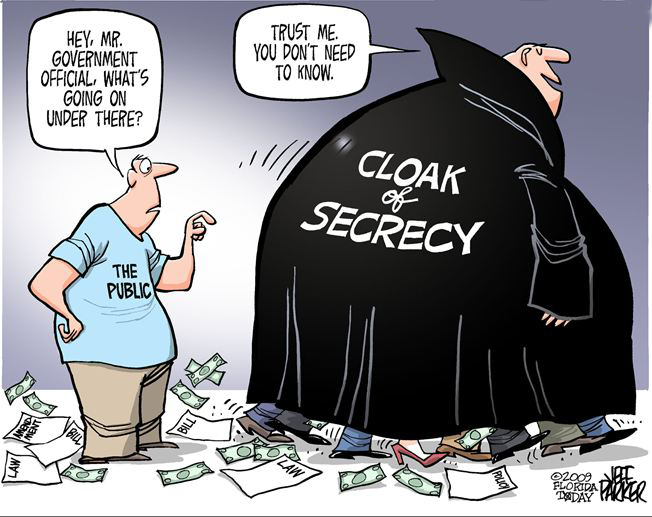
If we are to evolve to developed nation status it is essential that the State seriously reform its culture of obscurity and secrecy, that is the contention I am advancing here. Continue reading “Private State?”

Board Games – part 2

state-boards-logos

SIDEBAR: Correction on Court Case

With apologies to readers, in the previous article, I mistakenly named UTT as the SoE which had sued its Directors over allegations of a negligent 2005 investment, in fact it is eTeck which sued its Board. A lawsuit was launched by UTT on a similar series of allegations, but that was abandoned in July 2015.

Both those Boards were headed by Professor Ken Julien.

The previous article prompted a series of extremely interesting responses, so I will continue this examination of the State Controlled Agencies. That phrase includes State-owned Enterprises (such as UDECOTT, Caribbean Airlines and EFCL) and Statutory Agencies (like WASA, TTEC, CDA, PATT and HDC).

Some sharp objections were made to my comparison of the relation between the State, the Government and Citizens to a Company, its Board of Directors and its shareholders. I maintain that this is a valid comparison for us to reflect on the proper roles and responsibilities of the various public officials, but perhaps more importantly, the responsibilities of us citizens. Continue reading “Board Games – part 2”

CL Financial bailout – Duprey’s Story: SIFI vs PIFI

Artwork by NiCam Graphics

On Sunday 22nd May 2016, the front-page story in this newspaper was headlined ‘We will pay it back‘. That article featured very interesting quotes from former CL Financial Executive Chairman, Lawrence Duprey as well as the Minister of Finance & the Economy, Colm Imbert, on the prospects for repayment of the huge sums of Public Money spent on this CL Financial bailout.

Duprey claimed to have made a formal proposal to the State to repay taxpayers and all stakeholders who are owed money, while insisting that the amount owed was yet to be determined. The failure or refusal of the State to publish any audited statements in relation to this CL Financial bailout appears to be impeding the discussions as to a settlement of this massive debt. The sidebar contains a summary of how the Public Money spent on this bailout has grown from the initial 2009 estimates of $5 Billion to a 2016 figure now said to exceed $24 Billion. Continue reading “CL Financial bailout – Duprey’s Story: SIFI vs PIFI”

Board Games

demming xed out
Dennise Demming (left) was “removed and replaced” as the chair of the Tourism Development Company by Corporation Sole. Standing with Demming are Tourism minister, the Hon. Shamfa Cudjoe MP and TDC director Tonya Laing. Photo courtesy Trinidad Express.

The recent controversy over the dismissal of Dennise Demming as Chair of the Tourism Development Company (TDC) has sparked yet another round of debate on the role and operation of State-owned-Enterprises (SoEs).

Some of the issues which have arisen are –

  • What is the purpose of these SoEs?
  • How do the Boards of these SoEs get appointed?
  • Are Board Directors of SoEs required to follow directions from the line Minister?
  • Do Board Directors of SoEs have the right to get involved in managerial decisions such as hiring of staff and awarding of contracts?
  • Do Ministers and Permanent Secretaries have the right to meet with or direct staff of the SoEs without the input of the Board of Directors?
  • Given the recent Appeal Court decision in the eTeck case, what is the legal liability of Board Directors of SoEs?

Continue reading “Board Games”