Letter to the Editor on proposed restart of Tobago Sandals talks

Friday 4th April 2025

To the Editor,

Following Dr. Rowley’s statement on 15th March 2025, we now know from our newly-selected Prime Minister, Stuart Young SC, that Adam Stewart, Executive Chairman of Sandals, is scheduled to visit Tobago on Monday 7th April 2025 to resume discussions on the Tobago Sandals project.

According to PM Young, “We need to learn from the mistakes of the past, and not allow a few misguided naysayers to stop the potential development of the economy of Tobago. This is for Tobago.”

In response to Dr Rowley, THA Chief Secretary Farley Augustine remarked, ‘‘…Tobagonians rejected the Sandals project because it was undemocratic and did not make proper economic sense, that MoU that was signed by the current MP for Tobago West (Shamfa Cudjoe-Lewis) and it did not meet the environmental best practices or standards that we wanted…” (The emphasis is mine, as I entirely agree with those comments.)

This is the same Government that resisted all attempts to release that MoU, even as Dr. Rowley and Stuart Young repeatedly insisted there was no secret agreement. Sandals itself joined that refrain until my lawsuit under the Freedom of Information Act forced the disclosure of that troubling document.

If we are to truly “learn from the mistakes of the past,” we must confront the fact that the MoU contained highly unbalanced commercial terms, so advantageous to Sandals that one wonders whether proper legal and financial advice was ever taken. In my professional view, it remains the most one-sided agreement I’ve seen in this sphere. No surprise that Sandals officials were beaming in every photo until the MoU became public and I explained its implications. At the January 15, 2019, press conference announcing Sandals’ withdrawal, both CEO Gebhard Rainer and Stuart Young looked markedly less cheerful. As always, sunlight is the best disinfectant.

The MoU obligated the State to design, build, furnish, and fit-out the resort at public expense and on publicly-owned land. Beyond that, Sandals was to enjoy unlimited work permits for non-nationals, sweeping tax holidays, duty concessions, and even facilitation of transfer pricing.

Considering that the full financial burden was to be borne by the State and Sandals was to carry no financial obligations, not even local employment, it is entirely fair to ask: what was in this for us?

This was an exploitative arrangement by any reasonable standard. Any new agreement must reflect a significantly improved balance in the national interest. Unfortunately, my expectations remain low, given that the original promoters, Dr. Rowley and Stuart Young, have never defended the terms of that flawed proposal.

I have long called for an open, transparent approach to large-scale projects, including widespread public and stakeholder consultation before commitments are made. This principle remains unfulfilled.

This concern was clearly articulated as Recommendation 17 of the Uff Report (2009):

“User groups and other interest groups should be properly consulted on decisions regarding public building projects, to ensure that relevant views can be expressed at the appropriate time and taken into account before decisions are made.” (My emphasis)

In addition, projects of this scale demand open-book accounting to safeguard the public interest.

It is also important to emphasise the environmental and social risks inherent in a project of this scale. The originally proposed site at No Man’s Land is a Ramsar-listed wetland and coastal zone, which raises serious questions about ecological sensitivity. While it is unclear whether the same location is being reconsidered, there has been no public disclosure on this point. Related stakeholders — including those in environmental management and technical consultancy — have privately expressed significant concerns about the weakening or bypassing of environmental safeguards in this process. Issues such as the treatment and disposal of wastewater, the outfall from a potential desalination plant into shallow coastal waters, and the disruption to local ecosystems remain unresolved. These concerns are not peripheral, they are fundamental. A resort development on this scale must meet rigorous environmental standards, not circumvent them.

If the State is again expected to fund this mega-project, then Sandals must contribute appropriately—paying proper taxes and fair wages. Tax holidays and concessions are indefensible if public funds are underwriting the entire enterprise.

As stated at the outset, there must be extensive public and stakeholder consultation before decisions are made. That is fundamental in any democracy.

Afra Raymond
Managing Director, Raymond & Pierre Ltd,
Chartered Valuation Surveyors, Real Estate Agents and Property Consultants
VIDEO: 4th Caribbean International Tourism Conference – 11 Dec 2019

citc

Afra Raymond made a presentation at the 4th Caribbean International Tourism Conference at UWI’s Cave Hill Campus in Barbados on Trinidad & Tobago’s State-owned hotels to outline the results and provisional conclusions of his research examining the existing State-owned hotels as a way of understanding the real prospects for the large-scale Tobago Sandals proposed by the incumbent government in 2015.

Property Matters – The Show Tell Hotel

Tax transparency is the series of laws or rules to require businesses or people to disclose their income earned and taxes paid.

What re-ignited my interest in this was the recent Daily Mail article on the Florida lawsuit against Sandals Resorts International (SRI) by a former guest on allegations of tax fraud. The allegation is that the 12% accommodation tax charged to guests at Beaches in the Turks & Caicos Islands was not all remitted to the government, with a significant percentage of those monies kept by SRI (owners of Beaches).

beaches-tandc

Continue reading “Property Matters – The Show Tell Hotel”

VIDEO: Resort Development in Tobago: A Stakeholder Perspective

tobago resortsAfra Raymond talks on:

  1. the role and importance of stakeholder participation / buy-in / collaboration / information sharing,
  2. issues of transparency & accountability specifically the underlying commercial arrangements, and
  3. strategies for the way forward,

during this panel discussion: Resort Development in Tobago: Power, Politics & People organized by Department of Management Studies of the University of the West Indies.

Programme Date: Wednesday 22nd May, 2019
Programme Length: 00:16:43

Property Matters – Notes on Resort Development

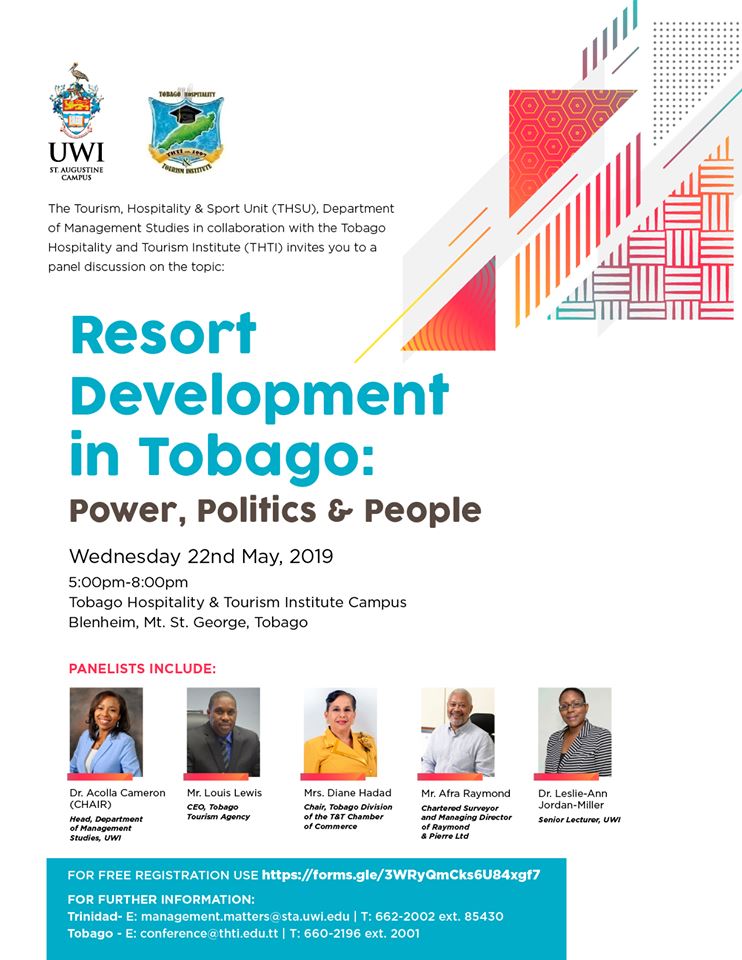
tobago resortsAt 5:00 pm on Wednesday 22nd May 2019, the ‘Resort Development in Tobago: Power, Politics and People’ seminar was held at Tobago Hospitality & Tourism Institute Campus, Blenheim, Mt. St. George, Tobago. The speakers were –

  • Dr Acolla Cameron (Chair) – Head of the Dept of Management Studies, UWI,
  • Mr Louis Lewis – CEO of the Tobago Tourism Agency,
  • Mrs Diane Hadad – Chair, Tobago Division of the T&T Chamber of Commerce,
  • Dr Leslie-Ann Jordan-Miller – Senior Lecturer, UWI,
  • and myself.

Today’s seminar emerged from a December 2018 invitation extended to me by UWI colleagues to participate in a seminar on the proposals for Tobago Sandals. The announced withdrawal of Sandals from that project lead to a widened scope for this seminar and I am pleased to work with those UWI colleagues on this important issue.

This article outlines the case I propose advancing as my notes on resort development.  Continue reading “Property Matters – Notes on Resort Development”

Property Matters – Notes on Hotel sales

3hotels

This series on T&T’s State-owned hotels has shown the lack of transparency and accountability which is all too common in the other State-owned enterprises. These hotels are some of the largest Public Private Partnerships in which our Public Money is invested, so these are important in this era of declining energy revenues.

This article will examine the prospects for privatisation of those PPPs and make the link to the Tobago Sandals MoU.

Privatisations fit readily within the ambit of the Public Procurement and Disposal of Public Property Act.

In this period of ongoing budget deficits, it is likely that apart from ‘downsizing’, the government will have to consider disposing of various assets to raise cash and reduce its expenditure. That was the underlying rationale for the significant staff cuts at TSTT and the closure/restructuring of PETROTRIN.

The recent confirmation of taxes paid by the State-owned hotels was useful, but those taxes do not in any way represent a return on our heavy investments of Public Money. Continue reading “Property Matters – Notes on Hotel sales”

Property Matters – The No Tell Hotel

What are the lessons learned in these examinations of the State-owned hotels in T&T? These are large-scale Public Private Partnerships (PPPs) and that approach is being increasingly adopted by our government in this period of deficit budgeting, so this review is a relevant one.
ppp

In this article I will set out the general arrangements, the T&T arrangements, the Tobago Sandals MoU and the closer examination of the State-owned hotels. Investment policy and the prospects for privatisation will be considered in conclusion. Continue reading “Property Matters – The No Tell Hotel”

Property Matters – Anything for a Buck

This title reflects the negotiating stance of our governments in these massive State-owned hotels as I wonder at the convenient distraction of the ‘Buck’ emerging from folklore into the modern media. A shadowy figure who is eating-out the family’s food, coming and going as they please, people have to tie-down their things but those could still go missing. No broken windows or forced locks, so somebody is letting the Buck in, like some kind of secret love affair. Well I tell you.

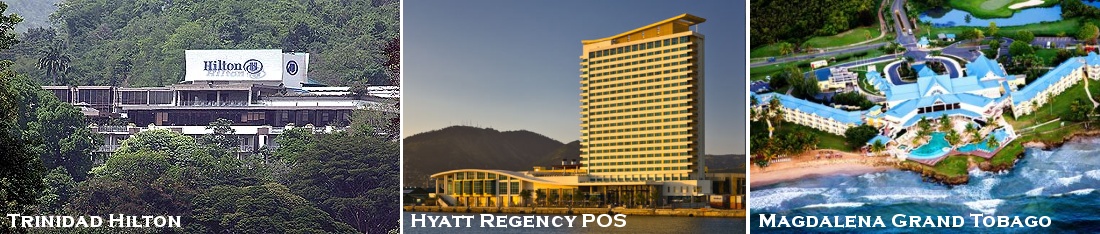
In this article, I will set out the recent disclosures by Minister of Trade and Industry, Senator Paula Gopee-Scoon, on Hilton Trinidad & Conference Centre and Magdalena Grand.

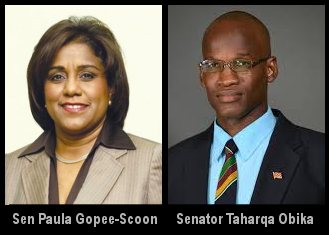
scoon-obikaOn Tuesday 19th March 2019, the Minister of Trade and Industry replied in Senate to two questions by UNC Senator Taharqa Obika –

“…Can the Minister advise as to the amount of taxes and dividends collected from the Magdalena Grand Hotel for each year during the period 2015 to 2018?…”

The second question sought the same details for Hilton Trinidad & Conference Centre. Continue reading “Property Matters – Anything for a Buck”

Property Matters – Sandals Shuffle

Property Matters – Sandals Shuffle

“…we are running a Country, not a Company…”
—Mia Mottley QC MP, Barbados PM – from her inaugural budget Wednesday, 20 March 2019


This title occurred to me due to the quiet backsliding of the main supporters of the Tobago Sandals project. This is the kind of situation where people thought they were operating safely in the dark, until someone suddenly opens the door and turns on the lights. The emergence of Sandals’ recent skirmishes have also reminded me of a shuffle.

Those shameless promoters told the public repeatedly about how satisfactory the existing arrangements were for State-owned hotels and went on to explain the special benefits of Sandals and so on and so forth. The steady exposure of the rickety arrangements for the existing hotels and the publication of the Tobago Sandals MoU have combined to end the scheme. Sunlight is really the best disinfectant. Continue reading “Property Matters – Sandals Shuffle”

Property Matters – Cycle of Consequences

This article will delve deeper into the State Enterprise sector and its role as an agent of government policy with huge transactions in Public Money. I will do so by continuing my focus on the State-owned hotels and their performance, drawn from the official record.

The poor quality of investment decisions with our limited Public Money has left us saddled with projects no private investor would have contemplated beyond an initial appraisal stage. Public Money ought to be managed to and accounted for to higher standards than those applicable to Private Money. That standard learning appears to have evaporated in our country.

ppp

The Public Private Partnerships (PPPs) in relation to our State-owned hotels are evidently beneficial to the hoteliers but of limited, if any, benefit to the Public as shareholders. PPPs here in T&T are ones in which we have privatised the profits and nationalised the losses. That is what happened at Tobago Hilton and, in significant respects, at Carlton Savannah – as detailed in ‘Carlton Savannah Swirl‘ published in this space on 15 February 2015. What is more, some of the leading beneficiaries of those arrangements, such as Arthur Lok Jack, can declare – “Government has to get the hell out of private sector business.”. Continue reading “Property Matters – Cycle of Consequences”