
Property Matters – more Property Tax FAQs part two

property-tax-logoThis week I will provide further necessary correctives on the impending re-introduction of the Property Tax, which is not a new tax. It previously existed as House Rates in the five cities and Land & Building Taxes in the other parts of the country.

Tax Evasion

Self-employed and professionals and sole traders have always under-reported their earnings and never paid the correct taxes. Those people often use property as a useful place to store their untaxed wealth. We have never really dealt with this tradition of tax evasion amongst our successful citizens and I cannot remember anyone being imprisoned or having property auctioned due to taxes owed. Whatever my doubts about the motivation of the American Imperium in pushing its ‘anti-tax haven’ agenda, some things do give cause for a pause. For instance, the Financial Times article of 28 June 2017 – ‘Trinidad & Tobago left as the last blacklisted tax haven‘. Continue reading “Property Matters – more Property Tax FAQs part two”

Property Matters – more Property Tax FAQs

The recent series of comments on this Property Tax have prompted my return to this controversial issue. Some of those comments were;
The proposed Property Tax has three main differences from the old system which ended in 2009 –

  1. Revised Valuations – It will be based on updated valuations. In 2009 $143M was raised, the 2017 estimates were for $503M to be raised – the 2018 estimate is $250M, likely due to the delay in passing the required law and the ongoing litigation which is now at the Appeal Court level;
  2. Database – It will require an open database for proper operation. This open database is the decisive element, which I welcome;
  3. Funds – The old system allocated those monies to local government, but the new system directs the Property Tax revenue to the consolidated fund. In my view that is detrimental to proper local government.

Property owners have had an unprecedented tax holiday, with no property tax paid since 2009. At a minimum, using the lower 2009 revenues, $1.287 Billion more remained with our property-owners.

I will touch on three of the most common objections – Continue reading “Property Matters – more Property Tax FAQs”

Property Matters – St Augustine Nurseries, part three

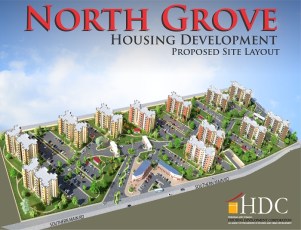
northgrove-planIn writing these articles on St Augustine Nurseries — Part 1 and Part 2 — I found my thoughts returning to those poorest of HDC’s applicants who simply cannot afford to buy. I reflected on the fact that many of our leading citizens emerged from very humble backgrounds which ought to have entitled their families to the benefits of subsidised housing. This is the final article in that mini-series, so I will be locating St Augustine Nurseries within the wider context.

rowley-bookFrom my reading of Dr Rowley’s autobiography ‘From Mason Hall to White Hall‘ it is clear that similar situations prevailed in his own early life. Between pages 32 and 33, Dr Rowley recalls his first visit to Trinidad to stay with his late mother, ‘Vassie’, at her rented home in John John – he was an eight-year-old, so this would have been 1957 or so. The crowded and unhygenic conditions he describes make it clear to me that Ms Rowley’s case was one which would have surely been worthy of public housing subsidy to obtain a better quality of affordable rented housing. Here was a decent, hardworking woman unable to do better, but having to make do, until she was able to move to an NHA home at Coconut Drive in Morvant as described later in the book. At page 35, we are told that Dr Rowley lived there in 1970, so those homes were conceived and built before the 1974 oil boom.  Continue reading “Property Matters – St Augustine Nurseries, part three”

Property Matters – St Augustine Nurseries part two

Property Matters – St Augustine Nurseries part two

The previous column detailed the ways in which this HDC project was being pursued in breach of existing land and housing policy. In this article I will go further, to specify the HDC’s statutory responsibilities, which it is legally bound to discharge. I will also examine the potential for a judicial review of the prospective decision to approve this project.

In addition to the land-use policy points made last week, the HDC is a statutory agency of the State, created by the HDC Act 2005. The HDC’s functions and duties are specified at S.13 (1) –

“…13. (1) Subject to this Act, it shall be the function and duty of the Corporation to—
(a) do all things necessary and convenient for or in connection with the provision of affordable shelter and associated community facilities for low- and middle-income persons…”

The law lists the low-income persons ahead of the middle income persons, which would conventionally denote a priority. The first item in a list taking precedence over the second and so on, but that is straight-line thinking and that is not where we are. Not at all.

HDC’s official responses to my queries stated that less than 22% of the 13,484 new homes allocated between 2003 and 2015 were given for rent. That is a scandalous misallocation of Public Money, given that 95% of the waiting-list comprises persons who cannot afford to buy a home, even on the most generous terms.

Last week, the PM announced plans for a $9 Billion investment in 10,000 new homes to be built in the coming months. That is a virtually unattainable target. Just remember that the original target in the 2002 housing policy was for 100,000 new homes in a decade, but in the 13-year period 2003-2015 only 11,788 new homes were completed. Yes, that’s right, the numbers do not match. HDC allocated 1,696 more homes than were completed in that period, but that is for another article. Continue reading “Property Matters – St Augustine Nurseries part two”

Property Matters – St. Augustine Nurseries

northgrove-plan.jpg

The previous article dealt with the Eden Gardens scandal, now before the Courts, which I termed ‘a most grievous case of Grand Corruption‘. I provided a list of ten questions for media colleagues to put to the accused and their spokespersons on this complex fraud.

Senior former Public Officials preferred the valuation advice of a civil servant, who was not professionally qualified, over that of a seasoned professional of 28 years’ post-qualification experience. I don’t think any reasonable person would adopt that approach if the health of their relatives or the wealth of their family was at stake, but some persons seem comfortable to defend that kind of decision. As David Rudder would say – ‘with a straight-straight face‘. I expect we will be subjected to less and less appearances from those persons.

This article will attempt to put the controversial “St. Augustine Nurseries project (North Grove Housing Development) into context with existing land and housing policy. This project is emblematic of what has gone so badly wrong in our state housing policy. To be entirely clear, in this case I am making no allegations of financial corruption or voter-padding. This case is one of ‘Phantom Policy‘ in which intentionally-suppressed policies, developed to advance the public interest, are either ignored or selectively invoked. As we say, is according. Continue reading “Property Matters – St. Augustine Nurseries”

Property Matters – Sandals MoU

Adam Stewart, CEO Sandals Resorts International

The Tobago Sandals mega-project has returned to the headlines with recent interviews of Sandals Resorts’ CEO, Adam Stewart, in Barbados and Stuart Young, Minister in the Office of the Prime Minister.

Stewart’s statements were widely reported in the local press (see Addendum 1 below) with an emphasis on the lack of secrecy in the entire arrangement and the fact that discussions were still at a preliminary stage. Minister Young’s CNC3 interview on Wednesday 28 February 2018 (below) was also notable for his insistence that there was no secrecy or any reluctance to engage with the public on this mega-project.

Continue reading “Property Matters – Sandals MoU”

Property Matters – Digital Transformation in our Tourism?

Property Matters –  Digital Transformation in our Tourism?

https://youtu.be/QjNve-obhT8

On 2 February 2018, the Ministry of Tourism announced its upcoming symposium – ‘Digital Transformation within the Tourism Sector‘ – as a major event on Friday 23 February 2018, in conjunction with Massy Technologies and featuring speakers from Microsoft and IBM.

This is an ambitious project intended to examine big-data, the cloud, the digital customer experience and the prospects of the hospitality industry in our country. As such, these proposals should have our principled support, but there is real cause for a pause here, given the distinct reluctance of the State’s agencies to answer our queries on the agreements and performance of the large State-owned hotels.

The three largest hotels in our country are State-owned – Trinidad Hilton; Magdalena Grand (formerly known as Tobago Hilton) and Hyatt Regency – comprising about 45% of the established hotel rooms, at the better end of the market. The amount of Public Money invested via capital outlay in those hotels is estimated, from the public record, in the first sidebar. But what is of deeper interest to me is that far larger sums of money are generated in the operations of those hotels than the capital spent to create the actual facilities. Those sums are spent on rooms, meals, drinks, rentals for functions and so on.

We almost never get any real open discussion on the actual revenues of these hotels or the arrangements for sharing those monies between the State as property owner and the hotel operator. Continue reading “Property Matters – Digital Transformation in our Tourism?”

Property Matters – State land acquisition

Property Matters – State land acquisition

Recent concerns over the State’s land acquisition process, especially in relation to the Curepe Interchange project, have virtually coincided with the appointment on 12th January 2018 of the first Board for the Office of Procurement Regulation (OPR).

The $222M contract for this project was awarded in August 2017 to China Railway Construction Corporation (CRCC) by National infrastructure Development Co. (NIDCO). NIDCO is one of the implementing agencies for the Ministry of Works and Transport, which is headed by Senator Rohan Sinanan. Twenty-Two parcels of private land have to be acquired to build this interchange between the Churchill-Roosevelt Highway and the Southern Main Road. That includes a part of the disused Kay-Donna Drive-Inn Cinema, which is at the south-western corner of that intersection.

rohan sinanan
Sen. Rohan Sinanan

Minister Sinanan has confirmed his part-ownership of the Kay-Donna property, which, together with the long-standing problems within the State’s land acquisition process, have given ground to the sceptics. In my view Minister Sinanan’s position is a direct conflict of interest, if ever I saw one. That said, it is not an irremediable conflict, indeed it must be remedied, since we ought not to either halt this project or delude ourselves to think that recusal is some kind of cure for this Executive Proximity.

This situation is a learning opportunity to re-establish some proper standards of transparency and accountability in the land acquisition process and for the OPR to issue strong regulations to assure best practices for the future. This article will outline the key issues in State land acquisitions and propose a best practice approach which could ease some of the legitimate concerns arising in relation to the conflicted situation of Minister Sinanan. Continue reading “Property Matters – State land acquisition”