In response to a full page UDECOTT advert (embedded below) in response to my article “Invader’s Bay Review” (excerpted above), also published in the Business Express.
From: Afra Raymond <afraraymond@gmail.com>
Date: Sat, Dec 14, 2013 at 9:30 AM
Subject: Letter to the Editor – UDECOTT’s failure to consult
To: Editors of daily newspapers. Email addresses withheld
The 17th recommendation of the Uff Report is –
“User groups and other interest groups should be properly consulted on decisions regarding public building projects, to ensure that relevant views can be expressed at the appropriate time and taken into account before decisions are made.”
The decisive part is ‘before decisions are made.‘
The Peoples Partnership has not implemented the Uff Report’s 90 recommendations as promised and there has never been an explanation of that failure or refusal to carry out those critical measures. The sod was turned for the Couva Children’s Hospital on 2nd March 2012, at which time the project type, location, size, budget and procurement arrangements were all announced for the first time. Plainly, no consultation took place before those decisions were made, which was the point made in my 11th December article ‘Invader’s Bay Review’.
UDECOTT has now issued full-page newspaper advertisements to attempt to label my irrefutable observation as ‘reckless and damaging’ and so on. Yet another waste of public money, given that UDECOTT provided no examples of consultation before the key decisions were made on this huge project.
That pattern of secret development is inimical to our country’s progress. We must be properly consulted before decisions are made. We strongly criticised the last administration for that pattern of development and we will continue to make the same point. We must become a learning society.
JCC President Afra Raymond interviewed on Heritage Radio 101.7FM by Hans Hanoomansingh to discuss JCC matters such as Public Procurement, Invader’s Bay and G2G Arrangements. 04 December 2013. Audio courtesy Heritage Radio 101.7 FM
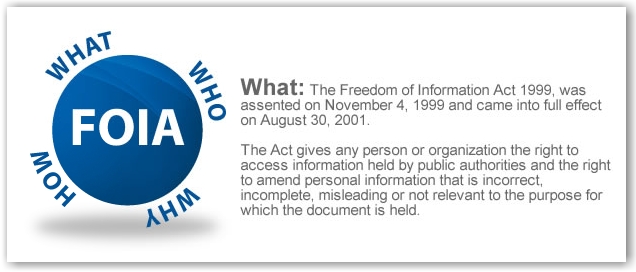
The State is the dominant agent in our national economy, which is the most vibrant in the Caribbean. It is therefore essential for us to understand how the State works so that we can better understand, or even plan, our interaction with that dominant party. Given the role T&T plays in the wider Caribbean, those concerns extend beyond our country to our region.
In order for us to understand how the State works, we must get quality information in the required quantities. We must also have the right to request further information from public bodies so that we can examine particular matters more closely – see Sidebar below.
This country’s Integrity Framework comprises elements such as –
The Integrity Commission (IC), which is responsible for monitoring the integrity of Public Officials;
The Freedom of Information Act (FoIA), which gives the right to ask for unpublished information;
The Auditor General, the Independent body monitoring the financial reporting of Public Bodies;
The Investments Division of the Ministry of Finance, monitoring the operations of State Enterprises;
The two Parliamentary Accounts Enterprises Committees, providing Parliamentary oversight of Public Bodies
This sustained examination of our country’s Integrity Framework is directed towards an enhanced level of information on how our nation’s Public Bodies are functioning. Continue reading “Secret Society”→
The sheer pace of events surrounding the Integrity Commission and the startling series of revelations demand our attention, given the critical role of the Commission as the State’s principal anti-corruption agency.
The rising tide of corruption in our public affairs has been a constant, whichever political administration is in office, seemingly increasing since the IC was established in 1987. Two general observations emerge from that – we certainly need a respected, effective agency to tackle corruption in our public affairs, so we therefore need to look soberly at how the IC can be improved. I repeat that the Commission’s 2012 Annual Report contains serious proposals to improve its effectiveness.
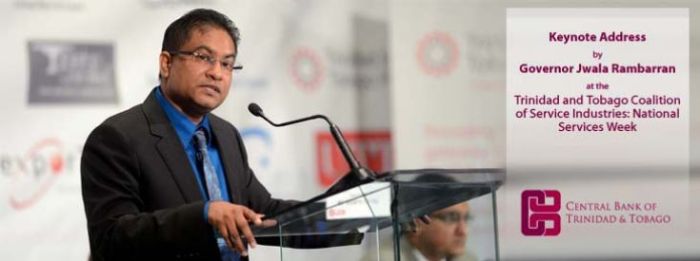
I am responding to the points made by Central Bank Governor, Jwala Rambarran, in his 6 November speech to the T&T Coalition of Service Industries.
This speech attempted to both re-affirm the Central Bank’s important role in our economy –
…as the country‟s prime financial regulator, the Central Bank has an almost fifty year record of maintaining the safety and soundness of the financial system…
and to distinguish Rambarran’s tenure as Governor since July 2012 –
…These are just a few of the initiatives the Central Bank has been working on over the last fifteen months to rebuild confidence, strengthen financial stability and to help create our future financial system…
Having completed my four-part series [1, 2 & 3, 4] on what I termed ‘The Integrity Threat‘, I was intrigued by two recent public notices on the meaning of the Appeal Court’s recent activity on these matters.
6 October – The Integrity Commission issued a Public Notice which was a clear statement by the Commission that State Enterprises were within its lawful remit, according to the Appeal Court ruling on 27 June. My reading of that ruling was that it effectively narrowed the 9th part of the Schedule to the Integrity in Public Life Act (IPLA) so that it only applies to Directors of Statutory Bodies performing public functions. I maintain that view. Even if one accepts the Commission’s reading of events, as set out in the exchange of emails in the sidebar, this ruling was a seriously retrograde step in the operation of our nation’s Integrity Framework, as I will illustrate;
5 November – the Judiciary issued a Media Release on the recent reports in other newspapers on a 28 October Appeal Court hearing on a 2006 Freedom of Information request made to TSTT. I want to read the actual ruling/findings of the Appeal Court at that hearing before writing in detail on this. Two things are clear – firstly, the Judiciary is able to set the record straight if there is a danger of the media misunderstanding important rulings. That is the behaviour of a healthy Public Institution. I am also noting here that the Judiciary has made no such efforts in respect of #30 of 2008, despite the several pointed criticisms in the media. The second point is about the subject-matter of this lawsuit, which is the 2006 letter the Commission wrote to TSTT’s Directors confirming that they did not have to submit declarations. That letter and the official efforts to conceal it, were the subject of this 7-year lawsuit. I had raised this arrangement with senior officials of the Commission in earlier discussions, since it seemed incredible to me that TSTT could have gained such a concession. I was told that the Commission had agreed to ‘hold its hand‘ since the issue was subject to the Court’s ruling – this is my paraphrasing of conversations, so of course I am subject to correction. On the one hand I was recently told by the Commission that this arrangement was ‘in order‘ and on the other, it is now emerging that TSTT expended considerable time & money to conceal those details. I am calling on the Commission to publish those details. Continue reading “The Integrity Account”→
I closed last week’s article by restating my view that all the ingredients for corruption were present at Invader’s Bay.
What are those ingredients?
Here is my list –
Extensive public assets coming onto the market, in turbid circumstances. Those assets can include property, concessions, contracts and jobs;
Questions of access to the gatekeepers – in these scenarios, some people will have unbelievable access to the decision-makers;
Conflicting and confusing versions of the project or proposal. The confusion is as persistent as it is deliberate, a part of the tangled web.
Blatant double-standards and lying is the norm in these situations;
Apart from ceremonial fluff, such as sod-turnings and ribbon-cuttings, there is no intention whatsoever to give any proper public account or statement of intentions. True transparency is evaded like taxes;
Professional Civil Servants who are unable or unwilling to insist on the maintenance of minimum standards;
Extensive Public Assets
These lands are estimated to be worth in excess of $1.2Bn at today’s priced, that means the unimproved value. Although the lands are reclaimed, a significant amount would have to be spent on infrastructure to make the property ‘shovel-ready’ for development.
As I noted in the first in this series, there were conflicting claims on this aspect, with the selected developers claiming extensive infrastructure expenses as a way to reduce what they would pay for the land. There were no estimates given for the developers’ cost of infrastructure, but I noted that the National Budget for 2014 had specified, at pg 89 of the Public Sector Investment Program, that there would be publicly-funded ‘Infrastructure Development’ at Invader’s Bay.
I have been assisted by some of the professionals in the very Ministry of Planning & Sustainable Development in identifying that item as being a $50M allocation for 2014. The actual works are unspecified, so it is difficult to be certain what is included. It certainly seems a modest sum given the size and peculiar challenges posed by the Invader’s Bay property.
In addition to the obvious public asset of the actual property, readers should note that assets in this context can include concessions. In this context that can mean maritime & docking concessions as well as tax concessions, so we will have to maintain full vigilance to safeguard the public interest.
As a first position, all the details of the overall agreements must be published for public consideration at the earliest opportunity. This is no minor point, since really huge sums of wealth can be transferred from public hands to private interests if proper transparency is not ensured. Just remember that in June this year while the President of the Peoples Republic of China was here there was the signing of a Government to Government Agreement. The JCC has lodged many strong objections to those agreements. How many readers will remember that there was an important agreement signed with respect to the Pitch Lake at that time?
…According to a release from Lake Asphalt of Trinidad and Tobago (1978) Ltd, the signing ceremony of a Memorandum of Understanding and a Confidentiality Agreement with Beijing Oriental Yuhong Waterproofing Technology Co Ltd of the People’s Republic of China is scheduled to take place at the Hyatt Regency, Port of Spain…
So, faced with a Freedom of Information Act which ensures disclosure, the new trend is to wrap-up the details in yet another layer of secrecy. We need to be alert to that trend. After all, this is the same Ministry which claims to have legal advice confirming that its actions conform to the Central Tenders Board Act, yet steadfastly refuse to publish that advice.
Access to the gatekeepers
One of the two successful proposers has been the MovieTowne principal, Derek Chin, whose confidence has been striking.
According to Mr. Chin, in an extensive interview –
…Chin has met with the Prime Minister and many government ministers seeking approval for this project.
Before Christmas 2010, he had a meeting with the Transport Minister Jack Warner, Foreign Affairs Minister Suruj Rambachan, and other ministers, at the Prime Minister’s Office. They all supported his plans. “I have been lobbying the Government for a year now, even before the elections. I sent in the preliminary sketches about the concept; I met 19 Cabinet ministers over the last six months. The next minister I am meeting is Bhoe Tewarie, Minister of Planning. He wants to see me. I also met with Jearlean John, Udecott chairman. She also loves it, but that was three to four months ago…
That interview was given in early July 2011, which is over one month before the Request for Proposals was published by the Ministry of Planning & Sustainable Development at the end of August. I tell you.
Conflicting and confusing versions
So, to return to the legal opinions, we have this swirling set of stories.
To date, Minister Tewarie has insisted that the project has been removed from UDeCoTT’s portfolio and placed within the Ministry of Planning. He claims that Cabinet approved this in 2011 and also insists that there is no tender process at Invader’s Bay. Of course it is impossible for the Ministry to proceed to invite tenders for anything without following the Central Tenders Board Act.
The first legal advice I saw was clear that there is indeed a tender process at work here and that the CTB Act ought to have been followed. Obviously, that conclusion did not ‘fit the script’, so an escape hatch had to be fashioned. Shortly thereafter another opinion was submitted by Sir Fenton Ramsahoye SC, on an entirely different set of assumptions which made UDeCoTT the central enabling agency in the entire scheme.
The approach endorsed by the Ramsahoye opinion flatly contradicts the version being advanced by Minister Tewarie.
That is the deep, intentional confusion being encouraged by public officials in this matter.
Blatant double-standards and lying
So, let us start with the role of the Ministry of Planning & Sustainable Development on the Invader’s Bay project. How does that Ministry reconcile its active role in seeking public views on the King’s Wharf project in San Fernando with its silence on Invader’s Bay in POS?
These are blatant double-standards of the worst kind. One can scarcely believe that there are professional civil servants who could condone this reckless and underhanded approach to national development. But there we have it.
When is the Ministry of Planning & Sustainable Development going to host a public consultation on Invader’s Bay? That is now an inescapable requirement. Sooner rather than later.
But that is not all. No, not at all.
This administration campaigned on the findings of the Uff Enquiry and made several public promises to implement the 91 recommendations of the Uff Report. Such was the importance of the matter in the political agenda that it formed the first item of the very first post-Cabinet Press Briefing of the Peoples Partnership administration on 1st July 2010. That is a broken promise, since those Uff recommendations have not been adopted and the JCC’s many attempts to offer our assistance to achieve that have all been rejected.
The 17th recommendation of the Uff Report is –
User groups and other interest groups should be properly consulted on decisions regarding public building projects, to ensure that relevant views can be expressed at the appropriate time and taken into account before decisions are made…
There has been no consultation at all on the Invader’s Bay proposals. Quite frankly, apart from rumours and conflicting press reports, I do not really know exactly what is going to be built or where or even when.
According to the iconic American jurist Louis Brandeis, speaking on eradicating corruption –
This is the Pre-Action Protocol letter to the Minister of Finance challenging his failure to reply to my Freedom of Information Act request of 18 March 2013, seeking details of the beneficiaries of the CL Financial bailout, particularly the EFPA holders.
Since my previous article on this controversial proposal, we have seen that certain legal advice reportedly considered by the government has been featured in another newspaper. If that is the advice the State is relying upon in advancing their Invader’s Bay proposals, we are seeing a large-scale act of intentional illegality and a worrying return to the ‘bad-old-days‘.
My main concerns are –
CONSULTATION?
Compare the lack of consultation at Invader’s Bay with what happens elsewhere. In particular, the large waterfront lands near the city centre of San Fernando at King’s Wharf, which has been the subject of ongoing public consultations over the years. The press reports that various design and redevelopment concepts were presented to and discussed with a widely-based audience.
Whatever the criticisms one might make of the King’s Wharf proposals, it is undeniable that views have been sought from the public/stakeholders and various proposals have been made for consideration.
The JCC and its Kindred Associations in Civil Society met with Ministers Tewarie and Cadiz on 26 September 2011 to express our serious concerns. Yet, when Minister Tewarie was challenged by the JCC and others as to the complete failure to consult with the public, the only example of consultation he could cite was the very meeting we had insisted on, which took place after publication of the Ministry’s Request for Proposals (RFP) and just about one week before the closing-date for proposals.
This Minister obviously does not consider public consultation to be a serious element in real development, notwithstanding the lyrics about innovation, planning and, of course, Sustainability and the Cultural Sector. Just consider the way in which East Port-of-Spain is being discussed within that same Ministry. The prospects for sustainable economic development of East POS must be linked with the Invader’s Bay lands, there is no doubt about that. What is more, to carry-on as though the two parts of the capital can enjoy prosperity in isolation from each other is to trade in dangerous nonsense. When criticising the large-scale physical development plans of the last administration, ‘dangerous nonsense’ is exactly what I had accused them of dealing in.
Public Administration must be consistent, reasonable and transparent if the public is to be properly-served. To do otherwise is to encourage disorder and a growing sense that merit is of little value. The decisive thing has become ‘Who know you’.
We need to be informed now what planning permissions or environmental approvals have been granted on Invader’s Bay and on what terms.
The Legal advice
I have seen the two legal documents reported on in another newspaper and have to say that those are remarkable documents.
A critical undisputed point, is that the evaluation rules – the “Invader’s Bay Development Matrix and Criteria Description” – were only published after the closing-date. The JCC made that allegation in its letter of 14 December 2011 and that was confirmed by Minister Tewarie in his Senate contribution on 28 February 2012. That is a fatal concession which makes the entire process voidable and therefore illegal, since the proposers would have been unfairly treated.
Note carefully that in writing to seek legal advice in response to that challenge of December 2011, the fact that the tender rules were published ex post facto does not seem to have been the subject of a query as to its legal effect.
In one of the legal documents I saw, the penultimate para is chilling in its directness –
“…A simple answer to Dr Armstrong’s question on whether the RFP conforms to the (Central) Tenders Board Act is that it does. In reality, the entire tender process was not brought under the CTB Act and the matrix and criteria were forwarded to the tenderers AFTER they submitted their initial proposals to the MoPE…”
The ‘simple answer‘, which is what Senator Armstrong got from Minister Tewarie, is that the Central Tenders’ Board Act had been conformed with. The next sentence is where we enter theother place…let us deconstruct it –
Phrase
Meaning of the phrase
‘In reality‘
The prior sentence is the official version we are going to tell Senator Armstrong, but here is what really happened.
“…the entire tender process…”
Minister Tewarie has consistently held that there was no tender process, this is the State’s senior legal adviser calling that process by its correct title, two weeks before his statement in the Senate.
…“the entire tender process was not brought under the CTB Act…”
The tender process was required to be brought under the CTB Act, since it was being done via a Ministry…but that did not happen.
“…the matrix and criteria were forwarded to the tenderers AFTER they submitted their initial proposals to the MoPE…”
The State’s senior legal adviser is confirming here that the elementary good practice rules of tendering have been violated, rendering the entire process voidable.
There are two clear findings of illegality in that single paragraph by the State’s senior legal adviser. Yet a ‘simple answer‘, which was ultimately deceptive, was suggested for Senator Armstrong.
The advice which featured in the press was from Sir Fenton Ramsahoye SC, seemingly obtained after the initial opinion just discussed.
The Ramsahoye opinion was reported to have ‘given Bhoe a green light‘ and so on, but I have serious doubts on that.
Firstly, if there had been clear-cut, solid advice which would have exonerated its actions, the government would have published that so as to silence its critics.
Secondly, having read it myself, their game is a lot clearer.
Ramsahoye’s mind seems to have been directed to the prospect of UDECOTT being granted a head-lease of the entire Invader’s Bay property and then granting sub-leases to the developers selected by the Ministry of Planning. Those developers would then carry out the proposed development/s.
If that is the way this is proceeding, then there are two serious issues arising on UDeCoTT’s involvement –
The Switch – While it is true that UDeCOTT can lawfully grant the subleases and operate outside the CTB Act, the burning question has to be when was this decision taken to give UDeCoTT that role? Minister Tewarie has been adamant, since November 2011, that Cabinet took a decision that the Invader’s Bay project be removed from UDeCoTT’s portfolio to be placed within his Ministry. When did that purported switch back to UDeCoTT take place? Has Cabinet actually approved such a move? The first advice looked at the development as it had proceeded and made the conclusions which I criticised above. The second advice, contemplated a procedure which had been vigorously resisted by the responsible Minister.
The role of the Board – One of the most vexatious issues to be probed in the Uff Enquiry is the question of to what extent can Cabinet instruct a State Board. That issue of undue Cabinet influence was also a large contention during the Bernard Enquiry into the Piarco Airport scandal. Uff concluded, at para 8, that the scope of Ministers’ power to give instructions ought to be clarified. There are several significant challenges if one accepts the formulation put onto the Invader’s Bay process in Ramsahoye’s opinion. Cabinet would have to instruct that UDeCoTT implement decisions taken by the Ministry of Planning etc. As we have seen and as the legal advice has clarified, those decisions emerged from unlawful processes. Is UDeCoTT obliged to follow unlawful instructions? In the event of litigation, which is increasingly likely, will the members of UDeCoTT’s Board be indemnified by the State for their unlawful acts? If that were the case, it would be repugnant, with deep echoes of the two earlier large-scale episodes of wrongdoing at Piarco Airport and UDeCoTT projects as cited above.
I stated earlier that this Invader’s Bay matter had all the ingredients for corruption. I stand by those views.
Afra Raymond chats on the show ’Forward Thinkers‘ with David Walker on 104.7FM, dealing with the CL Financial bailout and my lawsuit against the Minister of Finance to get at the detailed information as to how the $24B in Public Money was spent. 24 October 2013. Audio courtesy More 104.7 FM
 In response to a full page UDECOTT advert (embedded below) in response to my article “Invader’s Bay Review” (excerpted above), also published in the Business Express.
 The State is the dominant agent in our national economy, which is the most vibrant in the Caribbean. It is therefore essential for us to understand how the State works so that we can better understand, or even plan, our interaction with that dominant party. Given the role T&T plays in the wider Caribbean, those concerns extend beyond our country to our region.
 The sheer pace of events surrounding the Integrity Commission and the startling series of revelations demand our attention, given the critical role of the Commission as the State’s principal anti-corruption agency.
 I am responding to the points made by Central Bank Governor, Jwala Rambarran, in his
  Having completed my four-part series [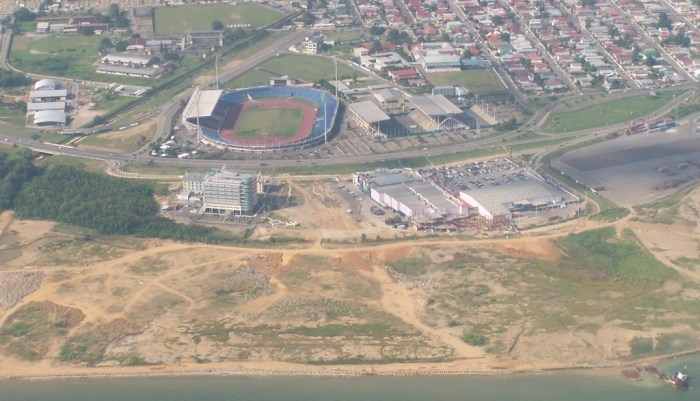
 Afra Raymond chats on the show ’Forward Thinkers‘ with David Walker on 104.7FM, dealing with the CL Financial bailout and my lawsuit against the Minister of Finance to get at the detailed information as to how the $24B in Public Money was spent. 24 October 2013. Audio courtesy More 104.7 FM
 AfraRaymond.net