Carlton Savannah Swirl

wademark-cartoon
The escalating episode of the apparent conflict between the oversight of Parliament and the Courts in this matter is a real learning experience for us all. I am clear that the Speaker spoke on Friday 23 January 2015 with the intention to convey that the High Court had sent him an official Notice which was decisive in the conduct of the business of Parliament.

Here is the contentious sentence of Speaker Wade Mark’s statement –

…I received only a few hours ago a notice from the High Court of the Republic of Trinidad and Tobago dated January 16, 2015, a matter involving Larry Howai and Azad Ali of the Sunshine Publishing Company Limited…

It seems very clear to me what the Speaker intended to say. Of course we now know that the statement was baseless and misleading. Misleading in the extreme.

The Speaker’s attempt to correct his statement only came after the Judiciary issued an unequivocal rebuff

“…While there appears to be some misunderstanding which we expect the Honourable Speaker of the House to clarify, the Judiciary can confirm that no Notice, letter or any other communication on the matter was forwarded by the Court or any of its officers to the Speaker or any officers of the Parliament…”

How many people believe that the Speaker would have attempted to clarify, for that is all it was, if the Judiciary had said nothing?

Sidebar: TIMELINE

  1. 24 December 2014 – Larry Howai’s attorneys issue a pre-action protocol letter against the Sunshine Newspaper for the article “$470 MILLION LOAN TO LOK JACK and Others”
  2. 26 December 2014Sunshine Newspaper publishes “$470 MILLION LOAN TO LOK JACK and Others”
  3. 30 December 2014 – Jack Warner MP files no confidence motion against Minister of Finance & the Economy, Senator Larry Howai.
  4. 5 January 2015 – Warner’s motion is approved by the Speaker, Wade Mark.
  5. 16 January 2015 – Larry Howai’s attorneys file suit against Sunshine Newspapers for libel.
  6. 22 January 2015 – Larry Howai wrote to the Speaker.
  7. 23 January 2015 – Warner’s motion is on the agenda for Private Members Day in Parliament. After the Speaker’s statements, the motion was abandoned.
  8. 26 January 2015The Judiciary issues a statement to deny the Speaker’s false assertions.
  9. 26 January 2015The Speaker issues a statement apologises to the Judiciary and admitting, for the first time, that the letter came from Senator Larry Howai.
  10. 30 January 2015The Speaker issues a new statement which apologised again to the Judiciary and claimed that he had not tried to censure the debate.

Sidebar: EMBA story

In November 2013, Wade Mark threatened to sue the Trinidad Expess over its articles on the controversy surrounding the award of an Executive Masters in Business Administration (EMBA) to him by the Arthur Lok Jack Graduate School of Business (ALJ-GSB). I have heard nothing more about that lawsuit.

That episode was one with very serious allegations of improper conduct of examination processes at the ALJ-GSB, which allegedly culminated in the award of the EMBA to the Speaker of Parliament, Wade Mark.

I was very concerned over that series of allegations, given the potential impact on the reputation of the UWI, the ALJ-GSB and ultimately, the very reputation of our Parliament, if they were proven to be factual. Most unacceptable was the silence coming from the Speaker on the central issues – Was it true that the Speaker had scored 91% in the Management Accounts exam? Had the Speaker been allowed more chances than usually permitted in those exams? Had the Speaker really written to the ALJGSB on his official letterhead? If so, why?

I confronted Mark directly the next time we met, which was on the grounds of the Parliament on Tuesday 3 February 2014. After a heated exchange, during which he told me that his performance in mathematics had always been weak, Mark declined my urging to clear the air on those serious concerns and took the position that his degree had been awarded by the ALJ-GSB.

It would really be useful if the ALJ-GSB could publish the range of marks for that MBA-level Management Accounts final exam, so that we could assess the frequency with which marks over 70% are achieved.

Sen Larry Howai
Sen Larry Howai

When Parliament sat on 23 January, the first item on the Agenda of the Private Members’ Day was the no-confidence motion against Larry Howai filed by Jack Warner. The Speaker gave everyone the impression that the High Court had sent an official Notice to Parliament and never mentioned that in fact he had received those documents as part of a correspondence from Senator Larry Howai, Minister of Finance & the Economy. That Notice was said to relate to the litigation between the Minister and the Sunshine Newspaper on the financing by State-owned FCB (which had been headed by the Minister during that period) of the Carlton Savannah Hotel in Cascade. That presentation was very misleading and raised the genuine issue as to whether Members facing potentially embarrassing questions in the House had discovered a novel way to seek the protection of the Courts.

Before inviting Members to speak, the Speaker issued a clear caution –

…And in those circumstances, unless the Member who is about to speak can tell this House that what he is about to say is not going to be in any way, adverse, to what is before the High Court of Trinidad and Tobago, I would have to deny this Motion although it has been approved…

Ultimately, Warner relented and effectively withdrew his motion.
The Timeline in the Sidebar sets out the sequence of events and it is a stark example of how the Parliament and the Courts have become entwined in this latest rounds of the Silly Season.

The worse part is the third statement, made on 30 January 2015, which did little to restore confidence. It seemed that the Speaker’s was attempting to reverse his earlier clear caution to the House, claiming that –

…I wish in closing to ask Honourable Members to note that after I brought to the attention of the House the existence of the said legal proceedings, in exercise of my discretion as the Presiding Officer, I permitted debate on the motion to commence. I did not deny or shut down debate on the motion. It was the mover of the motion who, of his own volition, after he commenced his contribution, decided not to proceed…

It is true that Mark did not directly rule that the debate had to be halted, but his caution effectively shut-down the debate. That caution was based on a false statement and omitted the critical fact that the party to the debate was in fact invoking the Sub Judice principle.

At this point, I am still unclear. If Speaker Mark is in fact saying that he had no objections to the motion being debated, then that debate should be reconvened at the earliest possible sitting. The stream of letters which are beneath this disturbing sequence of events must be published, the sooner the better.

The position of Senator Howai is also inexplicable. Howai and Leader of Government Business in the House, Dr. Roodal Moonilal MP both claim to have been ready to debate the motion. So why send the letter to the Speaker?

This is real mind-games with the peoples’ business, I hold no brief for Warner or any of the other Members, they are all capable of seeking their own interest. The issues of the Carlton Savannah Hotel financing seem to be serious ones and we need to insist that the debate is started at the earliest opportunity. Some points on that issue are in the Sidebar.

I am not calling on the Speaker, or anyone for that matter, to resign. The Speaker can start to restore this situation by publishing those letters and convening an early debate on Warner’s motion.

Sidebar: Carlton Savannah Hotel

carlton-savannahIt has been reported that FCB is owed over $400M borrowed for the construction of this elegant hotel on the outskirts of the Queen’s Park Savannah. That hotel is now up for sale via the receivers, Deloitte, at an asking price in the region of $120M.

The key issue evident here is the huge impact of the Hyatt Hotel on its POS rivals since its opening in early 2009. A combination of its virtual monopoly of State functions and the imperatives imposed by how it was funded have made Hyatt a unique hybrid, being at once the most elegant and most economic. Carlton Savannah seems to have been eclipsed by Hyatt and it is not the only one.

Some of the key questions would be how was the project appraised? Was sufficient security taken for this loan? What accounts for the tremendous decline in the value of this asset?

AUDIO: 95 Mandate interview on i95.5FM – 6 Feb 2015

Afra Raymond is interviewed on the ‘95 Mandate‘ show on i95.5FM with Ardene Sirjoo and Mariano Browne about the continuing impact of the CL Financial bailout on the economy and the pending Colman Commission report. 6 February 2015. Audio courtesy i95.5FM

  • Programme Date: Friday, 6 February 2015
  • Programme Length: 1:06:41

Balancing the Scale

This article is to engage the issues of falling national revenues due to price declines for fossil fuels, the ongoing commentary and the PM’s 8 January 2015 statement with its attendant criticisms. I am going to focus on the role of the real estate and construction sectors in this unfolding series of serious challenges.

This is the graph and table from my previous budget commentary ‘A Fistful of Dollars‘ to illustrate the trend in terms of how successive governments have attempted to balance revenues and expenditure.

T&T Budget overview 2005-2015
 

Year 2005 2006 2007 2008 2009 2010 2011 2012 2013 2014 2015
Revenue $24,016 $34,129 $35,126 $40,381 $49,465 $36,664 $41,284 $47,000 $50,736 $55,041 $60,351
Expenditure $27,918 $34,119 $38,054 $42,261 $44,206 $36,915 $49,016 $54,600 $58,405 $61,398 $64,664
Surplus/Deficit -$3,902 $10 -$2,928 -$1,880 $5,259 -$252 -$7,732 -$7,600 -$7,669 -$6,357 -$4,313

Continue reading “Balancing the Scale”

Integrity Strategy

ic-logoThe Integrity Commission is continuing its efforts to revise the Integrity in Public Life Act (IPLA) to give greater effect to its anti-corruption work. I fully support those efforts.

LifeSport-logoThe key challenge is to discern how Public Officials commit the corrupt acts the Commission is meant to reduce. It is therefore necessary to conduct a scrupulous examination of Commissions of Enquiry and other Inquiry (eg LifeSport) Reports & evidence; Auditor General’s Annual Reports; as well as the leading international learning on these questions.
Once the main methods of corrupt agents are discerned, it will then be necessary to consider how the existing powers of the Commission might be deployed in tackling those and if there are new powers needed.

  1. Public Money

    ‘Public Money’ is the term used to describe money due to or payable by the State, including those sums for which the State would be ultimately liable in the event of a default. Public Money is sometimes called Taxpayers’ Money. It is our Money. The leading learning from which we have drawn serious lessons in the campaign for Public Procurement reform is Lord Sharman’s 2001 Report to the British Parliament – Holding to Account – which was a thorough examination of the definition, role and need for control of ‘Public Money.’ We expanded on Sharman’s definition of ‘Public Money‘ so as to capture the full range of possibilities, but we have accepted his key finding as to the requirement that ‘Public Money‘ is to be managed to a higher standard of Accountability and Transparency than Private Money. The contemporary, best-practice position in respect of the management of and accountability for Public Money being that the private sector rules are the bare minimum. That position must be at the centre of any reform of the IPLA and should be enshrined in law.

  2. Code of Conduct

    The IPLA effectively contains two limbs – the first requires that Public Officials make declarations of their income, assets and liabilities and the second requires those officials to perform their duties in accordance with the ‘Code of Conduct’ as set out in Part IV. The majority of cases brought by or Notices from the IC are directed at Public Officials who fail to make proper declarations. Is there a single case in which breaches of the ‘Code of Conduct’ were cited in making a case or an adverse finding? It is in this failure or refusal to apply those IPLA provisions that much of the current mischief in our Public Affairs is left to flourish. Some of the largest State Enterprises are functioning in breach of the ‘Code of Conduct’ and as such the Public Officials running those bodies are liable to censure. The IPLA does not contain any penalties for breach of the ‘Code of Conduct’, so that needs to be rectified. I support the Commission’s proposals to make examination of declarations optional, as that shift would release resources for a greater focus on the ‘Code of Conduct’.

  3. Power to make recommendations

    S.36 (1) of the IPLA states –

    “36. (1) A person in public life or a person exercising a public function may, by application in writing, request the Commission to give an opinion and make recommendations on any matter respecting his own obligations under this Act.”

    The key flaw with this power is that it is limited to cases in which the Public Official first requests an investigation and what is more, the Commission can only release its findings/recommendations with the consent of that Official. That power must be extended to all cases, with the discretion as to publication of its findings/recommendations left to the Commission. The fundamental importance of the Public Interest should not be subordinated to the agenda of obstructive Public Officials. A good example of how those powers were used recently in a positive way was the Commission’s 12 September 2014 Report on the Ministry of the Environment & Water Resources with relation to issues of alleged improper conduct in relation to the grant of Saw-Millers Licences.

  4. Notification

    At present, the Commission notifies Public Officials who are being investigated. It seems counter-productive, to say the least, that the same Public Officials who are in charge of the papers which could prove their guilt are being notified by the Commission at the start of investigations. Little wonder that the Commission has had little impact on corruption. It is emblematic of the flagrant double-standards with respect to the detection and prosecution of ‘White Collar Crime’. One can hardly imagine the courtesy of ‘prior notice’ being extended to suspected rapists or murderers. The Commission needs to eliminate that practice of notifying persons to be investigated.

  5. Improving the impact of the Commission’s findings

    The Commission’s findings and recommendations must be effectively linked with other ‘gatekeeper’ regulators – eg ‘Fit & Proper’ regulations as controlled by the Central Bank, Professional bodies, T&T Securities and Exchange Commission and the Stock Exchange. The linkages need to be backward and forward, so that the Public Interest can be upheld by better-informed regulatory bodies. I have seen notices of penalties imposed by the TTSEC in relation to various Public Bodies which have issued bonds and failed to provide timely accounts. If the TTSEC fines were paid, it would have been out of Public Money, so there would be no personal cost to those Directors for their lawbreaking. Those findings would seem to constitute a breach of the ‘Code of Conduct’, but was the Commission formally notified? – examples are in the sidebar.

    SIDEBAR – Lawbreaking State Business

    The SEC has made Orders in respect of Contraventions of the Securities Industry Act 1995 and the Securities Industry Bye-Laws 1997. Those Orders are in relation to the failure of these huge State-owned Enterprises to publish their accounts –

    1. 19 March 2010 against HDC, with fines totalling $121,000 – see http://www.ttsec.org.tt/content/pub100326.pdf.
    2. 15 June 2011 against UDECOTT, with fines totalling $120,000 – see http://www.ttsec.org.tt/content/Order-for-settlement-re-UDECOTT.pdf.
    3. 25 July 2011 against HDC, with fines totalling $400,000 – see http://www.ttsec.org.tt/content/Order-for-settlement-re-Trinidad-and-Tobago-Housing-Development-Corporation.pdf.

    SIDEBAR – Public Companies, Private Business

    Some of the largest State Enterprises and Statutory Bodies are operating in breach of the ‘Code of Conduct’ in the IPLA, which requires at S.24 (3) that –

    “(3) No person to whom this Part applies shall be a party to or shall undertake any project or activity involving the use of public funds in disregard of the Financial Orders or other Regulations applicable to such funds.”

    At this time, there are no audited accounts for Caribbean Airlines Ltd (since 2008) or UDECOTT (since 2005) or Housing Development Corporation (since its inception in 2005). That is very serious since some of the largest State Enterprises and Statutory Bodies are refusing or failing to publish audited accounts as required by the published guidelines of the Ministry of Finance or their own statutes.

  6. Declarations also to be linked

    The declarations of Public Officials must also be linked to the Inland Revenue and Financial Intelligence Unit, so that they can be reconciled. With today’s information technology, that is no great task.

  7. The Judiciary

    The October 2007 High Court ruling that members of the Judiciary were exempt from the provisions of the IPLA needs to be urgently revisited. The fact is that the Judiciary has an immense amount of power and discretion which at present is being exercised outside of the framework which binds other Public Officials. It is true that judicial decisions are subject to review, but the appearance of a beneficial exemption from the Integrity Framework does not inspire confidence.

  8. Secret Shareholding

    The G20 countries recently agreed to start moves against secret shareholdings and nominee Directors. The effect of those proposed changes would be to effectively embargo Nominee Directors, Unissued shares and other ‘masking devices’ which are intended to conceal the ‘Ultimate Beneficial Owner’ of a company. Our Integrity laws need to reflect those practices.

  9. Public Private Partnerships

    The IPLA needs to restate the position that all Directors of State Enterprises and bodies under the control of the State are liable to its provisions. Of course, that would include the gigantic CL Financial.

It is critical that we get these issues right, there is no room for compromise here.

CL Financial – Bait & Switch

“They’ve got twelve Aces up their sleeve!
So who the Hell can we believe?”
—Rudder, David Michael. “Back to the Same Ole Same.” The Autobiography of The Now. Lypsoland, 2001. Used with permission

The CL Financial bailout seems to be entering its end-game, with repeated claims from the Minister of Finance that the recovery of the $25 Billion of Public Money spent is now on the cards. The consistent failure or refusal to publish any audited accounts and my ongoing research are telling. We are witness to yet another ‘Plot to Pervert Parliament’, this time it is the biggest project to ever hit this country. The CL Financial bailout.

Plots to Pervert Parliament

In January 2013, I identified the first of these, otherwise known as the ‘S.34 Fiasco’, which of course led me to the CLF Bailout Perversion, committed in January 2009 when our country was presented with its largest-ever public expenditure. The original bailout, presented to our Parliament, as a fait accompli, was the original Plot to Pervert Parliament.

I have come to the sobering conclusion, after much research and consideration, that the Colman Commission is not ever going to provide the details we were led to believe it would. I am now of the view that once again we have been misled and bamboozled by our Parliament. Yet another sick trick, a third ‘Plot to Pervert Parliament’.

The rationale stated for the Colman Commission of Enquiry is in serious conflict with the terms of reference for and consequently, the conduct of that Commission. This article will detail those assertions and show how the public interest is once again being subordinated to powerful private interests.

To understand this crime, one must take a stern view of dates and time.

  • 30 January 2009 – The bailout is announced at a Press Conference on Friday 30 January 2009 at the Central Bank. At that time, we were told that the estimated cost was about TT$5 Billion.
  • 12 June 2009 – Ministry of Finance signs the ‘CL Financial Shareholders’ Agreement’ which, for the first time, discloses that shareholders’ interests were to be specifically protected.
  • 8 September 2010Winston Dookeran’s first budget statement as Minister of Finance, following the Peoples Partnership electoral victory in May 2010, was notable since Dookeran announced a dramatic policy shift. The entire CL Financial bailout was declared to be the first of the ‘great uncertainties’ to be resolved. Dookeran outlined the problem before reducing the rate at which Public Money would be paid for this bailout. A huge storm of protest erupted, with several ‘Depositors and Shareholders groups’ emerging to represent those interests. With Dookeran isolated and the government under mounting pressure from these new protest groups, laws were swiftly drafted to stifle the protestors’ legal options.
  • 1st October 2010The PM’s historic address to Parliament on 1 October 2010  at which the Commission of Enquiry was announced. Most notable was the PM’s outrage at the mystery of the bailout – at pgs 25-26 –

    “…The $5 Billion has been spent—we are advised—to repay matured  EFPA policies in an ad hoc and unstructured manner where payment arrangements were entered into based on levels of funds invested. What criteria did you use to repay investors? Whom did you choose to pay? How were they chosen? These questions need to be answered. Because if it is today after the $7.3 Billion, all these EFPA people, the policy group and so on, they are out there, where is their money? Where is their money? Did you have a priority listing of who should be paid? Why did you go—and you are now crying crocodile tears about trade unions, credit unions, the poor man and the small man—why did you not pay them first? Why did you not pay them first? Where did that $7 Billion go? We need those answers, Mr. Speaker. We deserve those answers. The taxpayers need to know. Because when a parent  has to buy school books and bags to send his/her children to school but they have to pay tax out of the little money, they need to know where that money has gone…Where, how and why; we need to know…”

    The main argument made by the PM was that this was a case which needed serious investigation to establish what had caused this huge collapse and where had over TT$7 Billion of Public Money gone. I could not agree more.

  • 17 November 2010 – The Colman Commission with its Terms of Reference published in the Trinidad and Tobago Gazette. Those were divided into two limbs, causes and consequences. The first to examine the causes of the crisis and the second to make recommendations for prosecutions or other policy changes to prevent a repetition of the crisis.
  • In September 2011, the Parliament voted unanimously to pass two laws related to the CL Financial bailout. The first was to permit the Minister of Finance to borrow a further TT$10.7 Billion to fund the bailout and the second was to grant the Central Bank, which was administering the bailout on government’s behalf, immunity from any legal challenge. For those who consider these assertions of mine to be harsh, just look at Winston Dookeran’s closing words to the Senate on 16 September 2011 –

    “…I just want to give you the assurance which I gave to the Lower House when we debated this, that already the Ministry, along with the Central Bank and Clico, have begun the preparation of a public document—many questions that are still to be answered—to provide the necessary information. In addition to that, we did present to the hon. Senators, for those who afforded us the opportunity to accept our invitation, a document that is in the vicinity of 57 pages as of now, outlining all the necessary information that led to the story that assess what is the current challenges and why the proposals to go forward have been put forward. This document, I assure you, along with the questions and answers, will be converted into a simple, easy to read, hopefully, document for the sake of establishing that this Parliament has mandated us to put this as an anchor document for the purposes of evaluating our performance in the future…”.

    I requested that document via the Freedom of Information Act but it was not provided, which is why my litigation started.

In the course of recent research it became clear to me that the PM’s outraged demands for detailed information as to how the huge sums of Public Money spent in the bailout had been discarded, just like a flimsy Carnival Costume. At no point in its Terms of Reference was the Colman Commission required to examine the details of the actual Public Money spent on the bailout. A new species of lie is born here in T&T, once again…we used to have one called the ‘White Lie’ in those bad-old-days, now we have the ‘Bright Lie’. Right up in our face, as the Parliament is told one thing, with an entirely different thing being done. The Carnival was over, but the Ole Mas was now starting.

One can imagine the ebb and flow as these public promises were neutered in private discussions. Reasons are never given. I suspect that the influence of party financiers and voting blocks was a great element in this travesty. The public right to know how and why these vast sums of Public Money were spent is obviously of low priority for the highest public officials in this Republic.

Truth has a Power all of its own. At this point, in litigation against the Ministry of Finance for that information – the Ministry is represented by a five-member team headed by former AG, Russell Martineau SC and CL Financial is represented by three attorneys. Something resembling legal overkill to prevent publication of information which the PM told the Parliament it was her intention to unearth. Information which then Finance Minister Dookeran assured the Parliament he was compiling into a public document. Another writer has labelled the situation – ‘Afra, the Deviant‘. I tell you.

At every turn, the public interest has been subordinated to secretive private interests. The Courts are literally the last refuge to uphold the lawful rights of the public to obtain detailed information on these matters of the highest importance.

Accountability Calamity

Safeguard Status of query
Audited accounts for CL Financial? NONE
Details of Management accounts, Estimates, Drafts or any figures used by Ministry of Finance? NONE
Details of official briefing to Independent Senators in September 2011? CLAIMED TO BE EXEMPT
Details of Public Money paid out to people and institutions owed money by CL Financial? NONE
CL Financial is now under State control, so do its Directors comply with the Integrity in Public Life Act? NOT ACCORDING TO MY EXAMINATION OF INTEGRITY COMMISSION RECORDS.
Do we understand why the CL Financial group is enjoying this beneficial exemption from the lawful obligation to file declarations? NO WORD YET FROM THE INTEGRITY COMMISSION.

All of the usual integrity, accountability and transparency safeguards have been disconnected. All.

The Code of Silence rules.

Invader’s Bay – Suspicious Motives

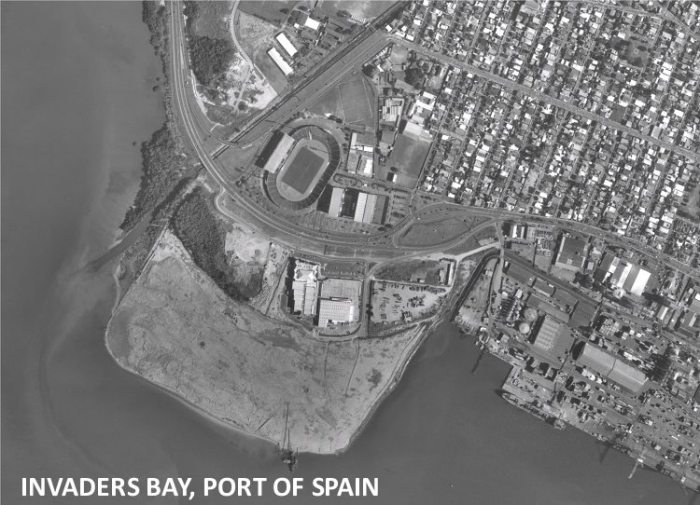
invadersbay-bwThe proposed development of Invader’s Bay will be the largest in our Capital City in living memory. The entire process is tainted by fundamental irregularities, any one of which ought to be enough to stop the development.

Some of those irregularities at Invader’s Bay include an improper and voidable tendering process; failure or refusal to hold Public Consultations; breach of the Central Tenders’ Board (CTB) Act and most recently, a wrong-sided policy on legal advice.

The State has appealed the High Court decision of Justice Frank Seepersad on 14 July 2014 to order publication of the legal opinions on which they had been relying thus far.  That hearing is now set for Wednesday 28 January 2015 at the Appeal Court in POS. At the preliminary hearing on Thursday 20 November, the State was represented by a seven-member team of attorneys, led by Russell Martineau SC.

Tender rules

Procurement_NoticMinister Tewarie has repeatedly told the public that the Appraisal rules for the Invader’s Bay development were first announced in his speech to the Annual Dinner of the T&T Contractors’ Association on Saturday 5 November 2011. That is true, I was there and heard the Minister do just as he said.  The issue here is that the closing-date stipulated in the Invader’s Bay Request for Proposals (RFP) was 4 October 2011, which was over one month before the rules were published.  Given that fact, the proposers would not have known the rules of the competition and it is fair to say there was no competition at all.  None.  Just imagine the rules for a Calypso competition being distributed the week after the singers had performed.  The RFP process for Invader’s Bay was therefore improper, voidable and illegal.

The most disturbing aspect of this nonsense, is that it raises disturbing questions as to what is fast becoming a new normal in our society.  To my mind, there are two possibilities.

The first is that the Minister was simply unaware that he was describing improper and unlawful acts.  If that is the case, one has to wonder at the quality of advice available to our Cabinet.  Are we now to accept that this is the proper way to proceed?

The second possibility is that the Minister was properly-briefed that the late publication of those rules was improper and that the entire RFP process was therefore voidable, but chose to act as if the whole process was ‘above-board’.  That Minister continues to insist that there is nothing improper taking place at Invader’s Bay and so on.  I tell you. Continue reading “Invader’s Bay – Suspicious Motives”

‘Unconquered’ discussion series

The ‘Unconquered‘ discussion series is hosted by Robert Young’s The Cloth at #24 Erthig Road, Belmont…Attilah Springer – aka Tillah Willah – is one of the livewires driving this initiative…

I was invited by Tillah to speak at the ‘Conscious Citizenship‘ meeting on Wednesday 13th August 2014, along with Dr. Kevin Adonis Browne, author of the searching new work ‘Tropic Tendencies’…the session was both heated and edifying…it was real, even when Browne ramoujayed on rhetoric!

Reality Check

Dr. Bhoendradatt Tewarie

After a flurry of attempted explanations from the Minister of Planning & Sustainable Development, Dr. Bhoe Tewarie, as to the real meaning of the High Court’s 14 July ruling on the Invader’s Bay matter, the State has now appealed that ruling and applied for expedited hearing of the matter while having the judgment stayed.

What that means is that the State is asking the Court to agree an extension of the Stay of Execution until the appeal is decided, so that the requested information could be withheld while the case is being heard.  Presumably, the State has asked for a speedy hearing so as to avoid any impression of them encouraging needless delay in this matter of high public concern.

This article will focus on the three critical findings in the judgment.  I will be examining Dr. Tewarie’s statement to Parliament on Friday 18 July, alongside the facts and the actual High Court ruling.

  1. Legal Professional Privilege

    The very first point to be made in relation to this is that the reason given by the State for refusing the JCC’s request for this information was not originally ‘legal professional privilege’.

    That reason for refusal was only advanced after the litigation started, literally arising out of the very briefcase of the State’s attorney, on his feet before Justice Seepersad on 4 December 2012.

    We contested the State’s late introduction of these new reasons for refusal, but the Court ruled at para 37 –

    1. The Court…is of the view that the Defendant is entitled to rely upon additional reasons with respect to the refusal to disclose the said information…

    The question of whether the legal opinions are privileged was ruled-upon by Justice Seepersad –

    1. It cannot be disputed that the said information requested, is information that would ordinarily attract legal professional privilege…

    So that issue is not in dispute, in the Court’s mind at least.  I continue to hold the view that it is highly-questionable to easily accept this notion of client confidentiality, given that the State ought to be acting on our common behalf.

    In fact, no evidence was tendered nor was any real case made by the State as to the difficulties which would result from publishing the requested information.  None.  It is only now, with a ruling in the JCC’s favour, that we are getting these positions being advanced.

    For the record, the JCC’s original request under the Freedom of Information Act (FoIA) was for the legal advices and the letters of instruction.

    Consider this, from Dr. Tewarie’s opening statement –

    The very first point that I wish to make with regard to the high court ruling is that there is no issue of disclosure here. There is no issue of failing to disclose or of wanting to withhold disclosures. The Government is not seeking to prevent disclosure of any matter nor is the Government fearful of making any disclosure of fact.

    The only issue we are contesting is whether the advice of an Attorney to his/her client, which is generally regarded as privileged information, is subject to the jurisdiction of the Freedom of Information Act or whether, since it is a privileged exchange of information between Attorney and Client, it is exempt from the Act…”

    If that is truly the case, with the State’s only concern being the possible adverse impact of releasing the legal advices, the question has to be – ‘Why not publish the letters of instruction now?

  2. Waiver of Privilege

    A significant aspect of the case was as to the impact of Dr. Tewarie’s statement to the Senate on 28 February 2012, in reply to a question by then Independent Senator Dr. James Armstrong – see pg 716 of Hansard –

    The answer to (c); the publication of the request for proposals was not the subject of nor required to be in conformity with the Central Tenders Board Act. Advice to this effect was received from the Legal Unit of the Ministry of Planning and the Economy, and subsequently from the Ministry of the Attorney General…

    The point being advanced by the JCC was that a statement like that one, which purports to publicly disclose the very essence of the advice, has the effect of extinguishing the State’s right to suppress the document as being exempted.

    The Court ruled clearly on this –

    1. The gist and nature of the legal advice was in fact revealed when the Minister’s response was made and this amounted to conduct that is inconsistent with the stance that the said legal advice is exempt from being disclosed under the Act by virtue of section 29(1)…

    So, the High Court found that Dr. Tewarie’s statement to the Senate neutralized the State’s ‘legal professional privilege’. That is an important aspect of this ruling, given the frequency with which legal opinions and names are brandished by our leaders, always when convenient, of course.

  3. The Public Interest Test

    This ruling is significant in that Justice Seepersad weighed the existing ‘legal professional privilege’ – making a clear ruling on that at para 41 – against the ‘Public Interest Test’ set out in S.35 of the FoIA.

    At one point it was widely reported that Dr. Tewarie was insisting that the ruling had nothing to do with transparency, but was only on the narrow issue of legal professional privilege.

    The substance of Justice Seepersad’s ruling was at paras 85 & 86 –

    1. The nature of the project in this case and the process adopted by the Defendant to pursue the Request for Proposals process without regard to the provisions of the Central Tenders Board act, requires disclosure of all the relevant information that was considered before the said decision was taken and the refusal to provide the requested information can create a perception that there may have been misfeasance in the process and any such perception can result in the loss of public confidence. Every effort therefore ought to be made to avoid such a circumstance and if there is a valid and legally sound rationale for the adoption of the Request for Proposals process, then it must be in the public interest to disclose it and the rationale behind the process adopted ought not to be cloaked by a veil of secrecy.
    2. The public interest in having access to the requested information therefore is far more substantial than the Defendant’s interest in attempting to maintain any perceived confidentiality in relation to the said information…”

    The real point here is that Justice Seepersad has carried out the Public Interest Test, as mandated at S.35 of the FoIA and ignored by the State in this matter, to find that the ‘legal professional privilege’ is subordinate to the Public Interest in this case, given all the evidence submitted to the Court.

The entire process possesses all the ingredients for corruption, I maintain that view.

Dr. Tewarie has repeatedly claimed that the process was transparent because he disclosed the assessment rules for the Invader’s Bay development at the T&T Contractors’ Association Dinner on Saturday 5 November 2011.  That assertion is perfectly tautological, in that it is entirely true that the rules were revealed for the first time on that occasion, but it does not explain anything of substance.  The decisive fact is that the closing-date for the Invader’s Bay RFP process was 4 October 2011, a full month before the rules were disclosed.  That fact alone renders the entire process voidable and illegal.

What is more, we have to consider the widely-advertised public consultations on the redevelopment of King’s Wharf in San Fernando; the South-Western Peninsula development; the issue of ‘City-status’ for Chaguanas; Constitutional Reform and of course, the latest one, the Civil Society Board.  The glaring question has to be – ‘When is the State hosting the first in its series of Public Consultations on the Invader’s Bay development?

Finally, will this development process continue, while the legal arguments continue?

Public Secrets?

It seems to me that we are entering a sustained and hard-fought Information War, global in extent, but with local flavour. The main features of this are the attempted redefinition of Privacy as a defunct notion, right alongside the State’s duty to know all about us, but tell us as little as possible of their own operations. That is the name of the game, so these issues are going to be challenged strongly as we go forward.

Dr. Bhoendradatt Tewarie
Sen. Dr. Bhoendradatt Tewarie, Minister of Planning & Sustainable Development

The High Court ruled on 14 July 2014 that the Minister of Planning & Sustainable Development must provide the legal advice which was said to have justified the development process at Invader’s Bay. This case was brought by the JCC after the Ministry refused to publish the legal advice obtained in response to our challenge that the Invader’s Bay development process was in breach of the Central Tenders’ Board Act. Given the repeated statements that the legal opinions supported the State’s actions in relation to the CTB Act, the obvious question is ‘Why the secrecy and refusal to publish those opinions?

The JCC requested the legal opinions and the letters of instructions under the Freedom of Information Act and the judge applied the ‘Public Interest Test’ in deciding that the public right to that information eclipsed the accepted point as to the existence of ‘legal professional privilege’. There have been many comments on what has been described as a landmark ruling and it appears that the question of just what is an official secret is once again up for discussion.

We are now being told that the right of the client to maintain the confidentiality of legal advice is now under threat, so the State is reportedly considering an appeal of that High Court ruling. Continue reading “Public Secrets?”

Money is the Problem

One of the big unanswered questions arising out of the recent ‘grand corruption’ cases in relation to the Public Sector remains – ‘How can we lawfully punish those wrongdoers who are looting our country?

Most discussions proceed along the lines of what I call the ‘bag of money‘ idea, in which we are looking for the actual stolen money.  The belief being that the stolen loot can actually be located and linked to the thieves, who will then face a harsh penalty.  My preferred solution is for full disgorgement of all the stolen monies as a starting-point, even if that is a remote goal.

In re-examining the issue practically, one has to ask “Why do we persist in these ‘pipe-dreams’, while ignoring the ‘low-hanging fruit’ all around us?”  So I am considering a new strategy for action on these critical issues.

‘Public Money’ is the term used to describe money due to or payable by the State, including those sums for which the State would be ultimately liable in the event of a default.  Public Money is sometimes called Taxpayers’ Money, it is our Money. Continue reading “Money is the Problem”