
Download My Book!
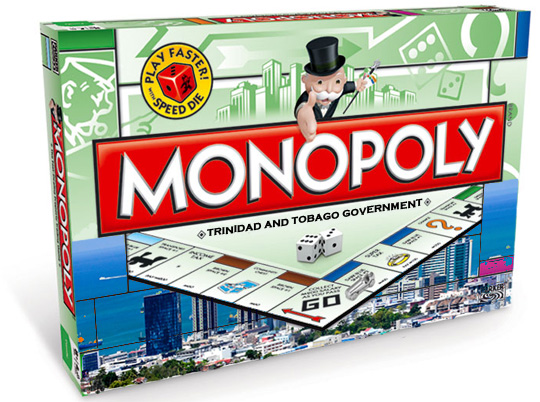 Once again, I am using this edition of Property Matters to consider the ever-controversial State Enterprises, against the wider question of the role of the State. This is no small area for examination and I start by using what seems to be the favourite quote of Trade and Industry Minister, Stephen Cadiz, “Government has no business running business“.
Given the politics practiced here, it should be no surprise that all our political parties give emphasis to the important role of the private sector in the economy and society and so on.
The line of reasoning goes like this – “The State is only here to facilitate and clear the way for Private Enterprise. The State does not intend to stand in the way of or compete with Private Enterprise” Those are not actual quotes, but they are just a paraphrasing of the sentiments expressed by various politicians over the years, whatever the party in power.
But the actual scale of the State’s involvement in the economy is in stark contrast to the political speeches. It is my view that the State is in direct competition with the Private Sector in significant areas of the economy. The large numbers of State Enterprises are inescapable examples of that.
We have to remember that it wasn’t always so. A major part of the physical development in this country took place via the Ministries and without the involvement of any State Enterprises. For instance, all the Primary Schools, Government Secondary, Junior and Senior Secondary Schools were built by the Ministry of Education. All the Health Centres were built by the Ministry of Health and the Highways etc – up to the recently-opened extension to the Diego Martin Highway – were all built by Works & Transport.
Our State apparatus is huge, expensive and mystifying.
Growing up in the 1960s and 1970s, I can only remember a few State Enterprises – BWIA, TTEC, WASA, TELCO, Caroni, NP, NHA, PLIPDECO and maybe TRINTOC. That sector grew hugely since that time. So today, for a country of about 1.4M people, we have 26 Ministries, 73 Government Bodies and 58 State Enterprises (according to ttconnect – The Government of Trinidad and Tobago portal). To me, those are staggering numbers. There is more on that in the sidebar.
Clearly the tendency is for that sector to grow, I cannot remember the last time the State disposed of any of their companies. That seems to be given serious consideration only when there is an absolute crisis of the sort which confronted the NAR government in the late-1980s downturn.
In terms of expense, just consider that the 2011 Budget has an anticipated capital expenditure for the State Enterprises of $6.725Bn. That figure is only for projects and so it excludes the salaries, rents and normal running expenses of those companies.
In this article, I am going to start asking about the State Enterprises which are in the Construction/Property field. Those are, in descending order –
Some people would include National Insurance Property Development Company (NIPDEC) near the top of that list, but that is not a State-owned company, although many times one would be forgiven for thinking so.
Given the serious allegations of corruption at UDeCOTT leading to the Uff Commission and the continued public concerns on the State Enterprise sector, we are entitled to ask some searching questions.
There has been tremendous growth in the size of the State since independence. Some doubts arise when one tries to consider why we now have so many of these State Enterprises. Even more sobering than the purpose for their existence, are the questions of what has been the real performance of these State Enterprises.
When one considers that the State Enterprises listed are required to engage consultants and enter contracts for those construction works, the question has to be – What value do they add to the process of State procurement?
In the case of both UDeCOTT and the HDC, these State Enterprises are operating without accounts for several years and therefore in breach of the elementary rules of governance. UDeCOTT’s last accounts were at the end of 2006 and NHA/HDC has had none since 2002 (I am informed that HDC recently filed its 2006 accounts). In neither case have the Directors of those companies been sanctioned in any way.
Two of the hugest State Enterprises operating as rogues in a manner which is impermissible by Private Sector norms. Even Lawrence Duprey’s CL Financial group had to publish its accounts within a year.
We have a large, subsidized State Enterprise sector, all paid for by taxing the very people against whom they are competing. That is ‘advantage with a V’.
We need to ask how compatible is this arrangement with our National Development?
I am saying that it is hardly possible to blame this administration for the errors and excesses of the last one, but the honeymoon is running out fast. Some say it is already done.
The point is that there is now an opportunity to engage in some reflection as to the purpose and performance of these huge State Enterprises.
In relation to the property and construction sector, there is also a recently-announced and large-scale national planning exercise taking place in two parts. That is also a good reason to pause to review the character and pace of the State’s activity, particularly in the construction sector.
At the strategic level, there is no clarity as to the purpose of these State Enterprises.
At the level of performance, there is little evidence of value-added, far less value for money.
At the level of Corporate Governance and the transparent management of taxpayers’ dollars, there is extremely poor performance with no apparent intention to penalise the wrongdoers.
This sector of the State is in need of urgent, public and thorough examination.
According to the Supplementary Public Sector Investment Program 2011 (p.5) – “…The State Enterprise Sector is comprised of fifty eight (58) companies of which forty seven (47) are wholly owned, six (6) majority owned and five (5) in which Government has a minority shareholding…”
But the TTConnect website shows only 38 State Enterprises on a list which excludes HDC, UdeCOTT, RuDeCoTT, EFCL, VEMCOTT and East POS Development Company. That list also includes the Securities and Exchange Commission – which had never seemed to fit the profile of an enterprise – and Trinidad & Tobago Mortgage Finance, which is only 49% owned by the State, according to their own website.
Afra Raymond sits with host, Fazeer Mohammed on the Morning Edition television show to discuss further developments in the Colman Commission into the CLICO/HCU collapse. Video courtesy TV6
 There were several important developments in the Colman Commission last week, with the widely reported appeals of Sir Anthony Colman QC for the Central Bank to change its position with respect to the presentation of accounts to the Enquiry.
From my own attendance at the opening session of the Colman Commission on Friday 11th March and the various reports, it seems that there are various moves afoot to restrict or stop the enquiry. I expected this sort of scenario in declaring the main players to be part of a ‘Code of Silence’ – it is no surprise to me.
There are three strands which are becoming evident as we move into the new phase, with the Colman Commission and several legal actions swinging into action.
“Speaking with reporters following the ruling, Harnarine said he was not satisfied with the panel’s ruling.
Harnarine said he welcomed the enquiry and would make objections “at the right time”.
Harnarine wanted the court to declare the commission null and void, that it was an abuse of the court’s process and that it was unlawful and illegal, among other requests.”
Readers need to be clear that there are three types of accounts in this matter. Given the room for error it is important to get this straight:
So, what is at stake here?
Sad to say, but this is reminding me of the actions of Calder Hart/UDeCOTT in trying to derail and frustrate the Uff Enquiry. On that infamous occasion we had the spectacle of a State-owned company challenging the Uff Commission – which had been established by the State – in the High Court. I hope that my view is incorrect.
This led to Colman’s appeal to the public as reported in the Trinidad and Tobago Guardian on 7th April and Trinidad Express of Friday 8th April. The first of those reports contained an intriguing fragment in which former AG and Law Association President, Russell Martineau SC raised objections on behalf of his clients, PWC, on grounds of confidentiality. That mystified me, since PWC’s audits seem to be confined to the first, most innocuous group, as outlined above.
According to Colman, if the Commission has to get fresh reports into these matters it will mean more delays and more expense. He said that would be a matter for the public to decide if that is in their interest, hence these efforts.
The Central Bank made a press release on 14th April which confirmed that they intend to take legal actions. Please note that the press release was silent as to the Annual Audited Accounts. For whatever reason, the Central Bank is continuing its silence as to the status of the most innocuous class of accounts.
It is unacceptable for these issues to be mixed in this misleading fashion. Simple and inescapable questions need to be answered now –
It seems that we are being given a tough choice, between –
The Trinidad and Tobago Guardian editorial of Tuesday 12th opted for the former, while the Trinidad Express editorial of the same day took the opposite view, favouring the latter.
The decisive question, for me, is whether the Central Bank has a track record upon which we can rely. The basis of their objections is the notion that prosecutions are to be mounted against the offending parties. Can we really accept that?
The Central Bank’s track-record on these matters has been doubtful and people are right to be concerned. From the CIB’s reported failure to file Corporation Tax returns for 2007, 2008 and 2009 to the continued inaction on the ‘Fit and Proper’ regulations, to the failure to recover the dividends CLF paid after the bailout was requested. A poor record of proper enforcement.
We are now being asked to believe that an organisation which is unable or unwilling to pick those ‘low-hanging fruit’, will be able and willing to prosecute ‘high-flying smartmen’.
I am being reminded of those childish spelling-games we all played –
A for Apple
B for Bat
C for yuhself!
Trinidad & Tobago Transparency Institute made a press release on the issue, which called on the Central Bank to act in an exemplary fashion. That is a welcome statement.
My vote, for what it is worth, is that we should preserve the secrecy of the forensic reports so as to remove any escape hatch for these fraudsters and their accomplices. Leave them no avenue to claim that if this or that had not happened they would have been able to prosecute. There is probably enough material in the other two classes of accounts to progress the Colman Commission.
Freedom of Information – Having had three applications under the FoI Act ignored, I have now given the Ministry of Finance ten (10) days to provide a copy of CL Financial’s letter of 13th January 2009 requesting the bailout and the 2008 Audited Accounts for the CLF group – see here . If those documents are not supplied, it is off to Court we go.
Legal Opinions – At this point in the mix, we sorely need to hear from the legal columnists as to what is the position in this heated contest – Martin Daly, Dana Seetahal, Ken Lalla and Martin George, we await.
Afra Raymond sits with host, Fazeer Mohammed on the Morning Edition television show to discuss the Colman Commission into the CLICO/HCU collapse. Video courtesy TV6
This – clfFoI-1 – is a copy of the letter sent today from my attorney to the Ministry of Finance, requesting that they provide –
The letter invites the Ministry of Finance to send the documents in 10 days or we go to the High Court.
Given the current state of play at the Colman Commission, there are no prizes for guessing which of those is going to happen.


 CL Financial Annual Returns 17 February 2009
This is the official copy of CL Financial’s Annual Return from the Companies Registry, as at 17th February 2009 – it bears the official stamps and is signed by CLF’s then Corporate Secretary, Gita Sakal.
The company had a paid-up capital of $7.5M, with that number of $1.00 shares in issue.
The 325 shareholders are listed alphabetically, as at 7th September 2008, with details of their occupations and addresses also supplied. Of course, that list shows, at #289, the then Minister of Finance – Karen Nunez-Tesheira – as Karen Tesheira, Attorney-at-Law – holding some 10,410 shares.
Another thing that is striking is that Lawrence Duprey would appear to have only three blocks of shares in his ownership –
I am taking that to mean that Lawrence Duprey had under his direct control a maximum of 3,701,313 shares – i.e. 49.35% of the group’s entire shareholding…slightly less than half.
I am leaving it to the better-informed readers to help fill in the gaps in this story.
As to Andre Monteil, the recently-retired Group Finance Director, his 337,269 shares were transferred from Stone Street Capital Limited to First Street Capital Limited on 31st March 2008, the date he retired from the CLF group. Both companies’ registered address is the same – 33b Perseverance Road, Haleland Park, Maraval.
16th March 2011
Afra Raymond’s submission seeking to be made a party to the Commission of Enquiry into the failure of
CL Financial Limited
Colonial Life Insurance Company (Trinidad) Limited
Clico Investment Bank Limited
Caribbean Money Market Brokers Limited and
The Hindu Credit Union Credit Union Co-operative Society Limited
My name is Afra Martin Raymond and I am a Chartered Surveyor, being a Fellow of the Royal Institution of Chartered Surveyors. I am Managing Director of Raymond & Pierre Limited – Chartered Valuation Surveyors, Real Estate Agents and Property Consultants. I am also the President of the Joint Consultative Council for the Construction Industry (JCC), an umbrella organisation which represents the interests of Engineers, Surveyors, Architects, Town Planners and Contractors in this Republic.
This submission is being made in my personal capacity and does not represent the position of either Raymond & Pierre Limited or the JCC.
My work on this vital issue has all been based on the public record and can be seen at www.afraraymond.com.
I am willing to give oral evidence before the Commission.
I have been conducting a campaign in the public interest on this important matter. My work is unfunded and I have no assistance. Indeed, I have no legal adviser at this Enquiry.
Having followed the issue so closely and attended the opening session on Friday 11th March, I am of the view that the parties thus far identified in this Enquiry are all seeking to advance their own interest.
I am here seeking to be made a party to this Enquiry, in seeking the interest of the silent majority, the taxpaying public, who have had to pay for this huge financial fiasco.
I am making this submission under rule 2. of the Commission’s Rules of Procedure, as a person whose “…participation in the Enquiry may be helpful to the Commission in fulfilling its mandate…”
I await your reply.
——————————-
Afra M. Raymond B.Sc. FRICS
Port-of-Spain

This is the opening statement given by Sir Anthony Colman QC at the first sitting of the Colman Commission on Friday 11th March 2011.
https://afraraymond.net/wp-content/uploads/2011/03/commission-of-enquiry-clico-sir-a-colman.pdf
 AfraRaymond.net