This is my 12th April 2016 ‘Morning Brew’ interview with CNC3’s Hema Ramkissoon on the Invaders’ Bay matter…it is also the first time I made public comments on the JCC imbroglio, albeit after a sneaky series of questions from Hema…I guess that’s what crafty interviewers do, eh? As it happens, the questions remain outstanding on both those issues.
Programme Date: 12 April 2016 Programme Length: 00:22:32
PM issues Statement on CLICO Report of Sir Anthony David Colman, QC. Courtesy news.gov.tt
“…Whilst in the last five-year administration, the management of Clico, CLF and the associated companies were shrouded in secrecy by the UNC administration, this PNM Government has no intention of operating in that manner. This Government will operate in an open, transparent and accountable manner as it has been doing…“ (The emphases are mine)
On the issue of interest due on Public Money advanced for the CL Financial bailout
I have been stating that the Public Money advanced for this CL Financial bailout was interest-free and that was a clear indication of the ‘most-favoured’ status of the borrowers. With apologies to my readers, CLICO’s 2015 audited accounts, (which were issued on 17th October 2016) disclose at its 32nd note that 4.75% was charged on the first tranche of $5Bn which was lent in 2009, so my prior claims on that item are now withdrawn. That first advance was converted to 4.75% preference shares, so interest was charged on the bailout monies but at such a paltry rate as to leave my fundamental point undisturbed, as explained below.
The Weighted Average Cost of Capital (WACC) is a metric used to show what is the average cost of the capital raised by a company. It is a vital tool in strategic management and allows the company’s leaders to make effective borrowing decisions.
If we apply this approach to the CL Financial bailout the answer is instructive. So, one can assume that the total advanced is $25Bn with only 4.75% interest on the first $5Bn and no interest on any more of the Public Money advanced to CLF. Accordingly, given that only 20% of the CLF bailout pays interest at 4.75% and the other 80% is at zero-percent, the WACC is .95%. Yes, less than 1% is the interest due from CLF for this epic loan. I tell you.
Once again, there are multiple versions of reality operating in relation to the CL Financial bailout, like some award-winning ScyFy movie. In one dimension, we have the PM accusing the previous regime of untoward secrecy while pledging to be open, transparent and accountable. In another dimension, we have a Minister of Finance promising to give us all the details of the monies spent on this bailout, while battling in the Appeal Court to overturn the High Court judgment I won to have those same details published. At the same time, Lawrence Duprey lobbies for the return of the CL Financial companies to him, while sidestepping any proper explanation of what went wrong. Both the PM and the Central Bank Governor label the CL Financial chiefs in scathing terms, while refusing to insist on proper commercial terms for the enormous financial assistance of the State. In yet another dimension, the State is said to be weathering a series of tough financial challenges, while showing stunning generosity to the wealthiest man in the Caribbean.
To paraphrase Pulitzer Prize-winning author, Junot Diaz – ‘ScyFy? What ScyFy?! The Antilles was Scyfy before there was ScyFy!‘
In July 2015, the High Court ruled in my favour that details of the CLF bailout were to be published by the Ministry of Finance, but that ruling has now been appealed.
Min of FInance, Colm Imbert, MP
The Ministry’s appeal, which was submitted on Friday 30th December 2016, has these main points –
CLF Accounts – The order to provide the accounts used by a previous Finance Minister to prepare a High Court affidavit is being contested as being a breach of legal professional privilege;
Parliamentary briefing – The order to provide the briefing to Independent Senators prior to debate on two laws on the CLF bailout is being contested as a breach of parliamentary privilege;
Who got paid? – The order to provide the names of those who were paid in the CLF bailout and the date of those payments is being contested as inimical to the confidentiality which a private person should enjoy.
Those arguments are only now being introduced, for the first time, during this appeal. That fact alone I consider to be unacceptable, but the points are being contested strongly and of course the Court of Appeal will be ruling on them.
For those readers who might consider the ScyFy comparison to be an overdone one, just consider how the Minister of Finance has approached the appeal with these further excerpts from Dr Rowley’s important address to the Parliament –
“…once the Minister of Finance has completed his on-going audit, he will come to Parliament and tell the citizens of Trinidad and Tobago the exact amount of money expended by the Government with respect to the said bailout. This will include the cost incurred by lawyers, accountants, professionals and all others. Furthermore, any and all disposal of assets from the group will be announced to the public in an open and transparent manner as well…”
At a time of economic sacrifice, the free-ticket given to CLF in January 2009, by the Patrick Manning-led Cabinet is being endorsed and renewed for further travel by the Keith Rowley-led Cabinet…this is where we are…
Afra Raymond was interviewed on Tuesday 28th March 2017 on SKY 99.5 FM on the impending Property Tax by Jessie-May Ventour, Eddison Carr and Dr Wayne Haywood. There is a lot of misleading and uninformed talk on the Property Tax at the moment, so this is intended as a corrective…
HDC Act (no 24 of 2005) – At sections 18, 19 and 20 require HDC and the Housing Minister to publish audited accounts within 6 months of the end of every financial year.
Integrity in Public Life Act – At S.24 (3) prohibits Public Officials (which would include the HDC Board) from ‘…undertaking any project or activity involving the use of public funds in disregard of the Financial Orders or other Regulations applicable to such funds…‘
Securities Industry Act 1995 and the Securities Industry Bye-Laws 1997 – These require HDC, as an issuer of bonds, to publish its audited accounts annually for the information of bondholders.
The HDC has never published its audited accounts since it was established in October 2005 to replace the National Housing Authority (NHA). The previous article highlighted the HDC’s missing accounts and made the point that their failure or refusal to publish those audits was in breach of at least three laws (see sidebar).
On 3rd January 2017, I made a Freedom of Information request for details of NHA and HDC transactions in Public Money in the period 2003-2016, during the life of the current (2002) Housing Policy. The Public Money received would include budget allocations; monies derived from property rentals and sales; bank loans and bond funding. It is important to separate recurrent and capital expenditures. I also asked for those amounts to be itemised by year so that trends can be identified for further examination. Continue reading “Property Matters – HDC Acts”→
“…There are a lot of things that did not go right in the NHA and one of those things had to do with accountability…The HDC is not going to function like that. We are required by law to have the accounts ready in a certain period of time. The CEO will be held accountable and the Cabinet will hold the minister accountable and the Parliament will hold the Cabinet accountable. That is what the HDC means…”
This week I am shifting focus from the ‘Affordability Hoax‘ to the financial aspect of our country’s large-scale public housing program as conducted by the HDC. I am therefore ignoring other agencies such as the Land Settlement Agency and other types of State funding or tax allowances such as mortgage relief etc.
S.18 – to keep the HDC’s books and accounts in accordance with proper accounting standards;
S.19 – HDC’s accounts to be audited annually to proper accounting standards, with that audit report submitted to the Minister and the Board;
S.20 – HDC’s Board to submit its Annual Report to the Minister within three months of the end of the financial year and the Minister to publish that Report to Parliament within three months of its receipt.
But the HDC has never published any audited accounts in the eleven years of its existence, spanning three political administrations, thus far. That failure and/or refusal to publish audits is in breach of those sections of the HDC Act.Continue reading “Property Matters – HDC Financing”→
The previous column labelled the repeated official statements as to the increased supply of affordable homes as ‘alternative facts’. This week, I will set out just what needs to happen for the HDC to provide more affordable housing.
Even when the definition is well established, it is notoriously difficult to deliver affordable housing to those who really need it. The challenges is far greater if there is no attempt by the responsible officials to define the goal. A degree of clarity is therefore essential if affordable housing is to be truly achieved. Continue reading “Property Matters – Achieving Affordability”→
“AFFORDABILITY IS THE MAIN PILLAR OF THE HOUSING POLICY SINCE 2002”
—Key quote from HDC’s Home Ownership webpage
“…Housing Minister Randall Mitchell says Government has made housing more affordable to low and middle-income families unlike the People’s Partnership government which catered for high-income earners…” December 2016
Randall Mitchell, MP, Minister of Housing and Urban Development
Once again, the HDC and the Minister of Housing and Urban Development, Randall Mitchell, have been in the news with strong claims based on the HDC’s program and new mortgage offerings by TTMF. The headline in this newspaper on 10 February 2017 was “More people to access affordable housing“. In my view those are baseless and misleading official claims which readily qualify as ‘alternative facts’. Bigly so.
These statements are not unique to Minister Mitchell, who is relatively new to this portfolio, but enough is enough. Given the importance of public housing in the nation’s welfare arrangements and the sheer lack of reliable information on the issues, it is now time to dismantle the myth of an increasing supply of affordable housing.Continue reading “Property Matters – The Affordability Hoax”→
‘…Doublethink is the ability to hold two completely contradictory beliefs at the same time and to believe they are both true…’
—from George Orwell’s ‘1984’
On 25 January 2017 the annual Corruption Perceptions Index report was published by Transparency International, with the results reflecting poorly on our country. T&T’s score fell from 39 in the previous year to 34 in 2016 – this scale measures greater perceptions of public sector corruption as declining scores, with the countries seen as least corrupt having the highest score. As a result of the declining score, our ranking fell from 72nd out of 168 countries to 101st out of 176. That decline in perception was a serious one and really little surprise to the attentive citizen, none whatsoever. Of course perceptions take some time to change, so the question is whether the post-September 2015 regime can improve those poor perceptions.
I believe that there is now an outbreak of tragic ‘doublethink’ within our country’s leadership, in relation to the CL Financial bailout. That must be challenged if we are to ever see any improvement in our nation’s fortunes, not to mention the slide in terms of perception of corruption. Continue reading “CL Financial bailout – DoubleThink”→
 This is my 12th April 2016 ‘Morning Brew’ interview with CNC3’s Hema Ramkissoon on the Invaders’ Bay matter…it is also the first time I made public comments on the JCC imbroglio, albeit after a sneaky series of questions from Hema…I guess that’s what crafty interviewers do, eh? As it happens, the questions remain outstanding on both those issues.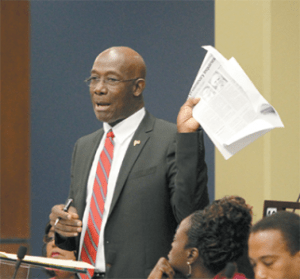

 Afra Raymond was interviewed on Tuesday 28th March 2017 on SKY 99.5 FM on the impending Property Tax by Jessie-May Ventour, Eddison Carr and Dr Wayne Haywood. There is a lot of misleading and uninformed talk on the Property Tax at the moment, so this is intended as a corrective…


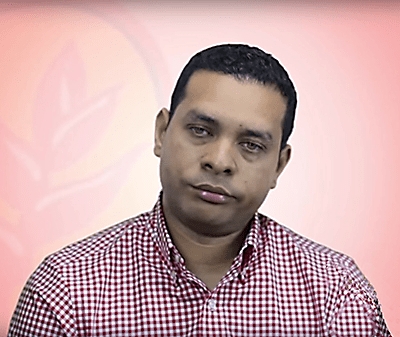
 This is my interview on the ‘CL Financial Bailout‘ on Power 102.1 FM on Tuesday, 21 February 2017 with Richard Noray.
 AfraRaymond.net