Further details on property tax are needed to understand the process and possibilities arising from its implementation. The 2010 estimate of revenue from that tax was $325M, as against a 2017 estimate of $503M, so it seems that there has been some allowance for inflation and new properties.
The innate effectiveness of this tax is that property is an immovable asset, so those persons and companies which are now evading other taxes will be unable to escape this new tax on the various properties in their ownership.
Property owners will be required to provide details of their properties to the Ministry of Finance so that the valuation process can be started. Owners who fail to provide details will have their properties valued without their input. The only efficient method of completing that number of valuations is by a mass-valuation approach which uses software to analyse details from owners, along with transaction details, to estimate the correct figures. Continue reading “Property Matters – Tax Facts part two”
 The controversial property tax is now expected to be implemented in the fiscal year 2017 and is estimated to raise $503 million. That is a mere 1.7% of the total revenue estimate of $29.93 Bn from taxation. So why is it so controversial? How will it be implemented? How much can we expect to pay?
 The
The 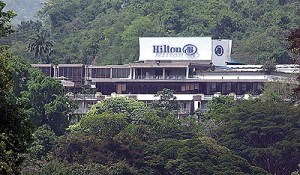 the T&T model is one in which the State paid to design, build, fit and furnish the hotel to the specifications of the hotelier. The hotel then operates via a management contract which splits the revenue between the State and the hotelier. Trinidad Hilton, Tobago Hilton/Magdalena Grand and Hyatt Regency were built by the State using this method.
 I
I 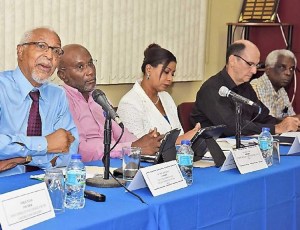
 JCC Immediate Past-President, Afra Raymond, interviewed by CTV’s Dike Rostant on Good Morning Trinidad & Tobago on Thursday 11th August 2016 on the State debt to the Construction industry. Video courtesy CNMG
 AfraRaymond.net