What is being pursued here is our right as citizens of a modern republic to the details of these huge expenditures of Public Money – the CL Financial bailout is costing some $24Bn, about $3.5Bn USD! – and the background to how critical legislative support is obtained. It is my view that S.34 was not the first time and that the spectre of ‘regulatory capture’, which underlines much of the discourse around the Great Depression 2, is in fact founded on a sinister degree of ‘legislative capture’.
Having had a series of ‘cat and mouse’ exchanges with the Ministry of Finance since my Freedom of Information Act application made on 11 May 2012, this is my pre-action protocol letter sent to them by my attorney on Thursday 7 March, seeking their proper reply in 7 days…that time expires at midnight today, Wednesday 13 March, so stay tuned, because we are going to the High Court after that…
CL Financial accounts and if those are not available, the figures on which the Minister of Finance has been relying
The presentation made to Members of Parliament in September 2011 to brief them prior to the debate on the Central Bank (Amendment) Bill and the Purchase of Certain Rights and Validation Bill 2011
Details on the composition of the creditors of the CL Financial group, in particular EFPA holders. I was asking who was owed money and who got paid. That is at the centre of this issue
Declarations filed by Directors and Officers of the CL Financial group under the IPLA – I have since established that those declarations are not being filed, so this pursuit is about the first three questions.
Afra Raymond chats with Fazeer Mohammed on the Morning Edition show giving a year end wrap up of issues including the Colman Commission and The CL Financial bailout. Video courtesy TV6
We are entering the endgame of the Colman Commission, so we need to maintain full vigilance. We must bear witness in a sober manner.
The PNM element
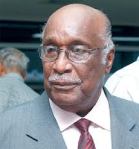
Former PNM Ministers Danny Montano, Conrad Enill and Mariano Browne were recently named by Commission Chairman Sir Anthony Colman as having declined to testify.
“It is noticeable that there has been a remarkable lack of cooperation from others, who were responsible for political decision-taking — to mention a few names: Mr. Enill, Mr. Browne and Mr. Montano in particular — have not offered to come and give evidence,” Sir Anthony said at Winsure Building, Richmond Street, Port-of-Spain.
“It is surprising perhaps that those who were the political representatives of the people of Trinidad and Tobago have not been able to provide assistance to the Commission in circumstances where it might have been expected of them,” he added.
Colman then named three former Cabinet ministers who had been previously named in testimony at the enquiry in relation to the HCU.
“To mention but a few names Mr (Conrad) Enill, Mr (Mariano) Browne and Mr (Danny) Montano in particular have not co-operated to come and give evidence,” Colman said.
That refusal to appear before a Commission of Enquiry amounts to a kind of contempt of court, since it is wilful disrespect for a lawful enquiry. These are PNM Seniors, whose testimonies would have been invaluable in unraveling this series of financial collapses.
Here is why those missing testimonies are so important –
Mariano Browne is a Chartered Accountant who left a successful career as a Banker – including a significant part of that career spent at CLF, Browne was the first head of Clico Investment Bank and CLF’s Barbados Banking arm – to become Minister of Trade and Minister in the Ministry of Finance after the 2007 general elections. In addition, he is PNM Treasurer, so he could have given a rare insight into the linkages between these collapses and the large-scale donations made by both the CL Financial Group and the Hindu Credit Union (HCU).
Conrad Enill comes from a Credit Union background, was also Minister in the Ministry of Finance up to the 2007 general elections and served as PNM Chairman up to their 2010 election loss. Enill called for an investigation into the finances of HCU as far back as mid-2002, but swiftly withdrew from that course of action after reportedly being pressured by then PM Manning.
Danny Montano is also a Chartered Accountant, who was Minister of Labour at the time of the HCU collapse (that Ministry has supervisory responsibility for Credit Unions).
“…THE Hindu Credit Union (HCU) financed Karen Nunez-Tesheira’s successful campaign to become the Member of Parliament for D’Abadie/O’Meara in the 2007 general election.
However, Nunez-Tesheira was not the only People’s National Movement (PNM) candidate who secured campaign financing from the HCU during that election.
This was revealed yesterday as the commission of enquiry into the collapse of CL Financial and the HCU resumed at the Winsure Building on Richmond Street in Port of Spain.…”
“….THE Hindu Credit Union (HCU) financed the campaigns of the country’s two major political parties—the People’s National Movement (PNM) and the United National Congress (UNC)—in the 2007 general election, former HCU president Harry Harnarine said yesterday….”
It is clear that the testimony of these three former PNM Cabinet Ministers would have been crucial to the Colman Commission unravelling this financial fiasco. I am convinced that the matter of what Cabinet knew at the time it took the bailout decision is crucial. For one thing, was Cabinet told that the beleaguered CL Financial group had paid a dividend on 16 January 2009, three days after they had written to the Central Bank for the bailout? If the Cabinet knew of the illegal dividend payout, why were no provisions made in the MoU of 30 January 2009 for the recovery of those monies? If the Cabinet were not told, then we are contemplating what might be a prior case of a senior Minister misleading colleagues to get the required result. A kind of pre-S.34 situation.
Both Browne & Montano are Chartered Accountants, so this reported refusal to give evidence seems to be a case of ‘conduct unbecoming a professional’.
The PNM is now making serious efforts to market itself as a party which stands for good values in terms of Accountability, Transparency and Good Governance. Given the PNM’s track record that is a great challenge. These reported refusals are doing great damage to those efforts.
Ironically enough, at this moment Dr. Bhoe Tewarie and Karen Nunez-Teshiera, are both looking better than these three former Ministers, given that they have appeared before the Commission. Just imagine that.
Sir Anthony Colman was reported to have issued subpoenas for certain missing witnesses in the HCU matter and held them in contempt of court when they failed to appear. I am waiting to hear whether the same treatment will apply to these PNM Seniors.
“…THREE witnesses have been held in contempt of court for not responding to subpoenas issued by the Commission of Enquiry into the collapse of CL Financial and the Hindu Credit Union.
A commission of enquiry has the same status as that of a High Court.
Those deemed to be in contempt of court yesterday by commissioner Sir Anthony Colman are former chief executive officer of HCU Communications, Gawtam Ramnanan, former HCU financial consultant Jameel Ali and Dave Jagpat…“
It seems like this is yet another episode of inconsistent behaviour which serves to reinforce my belief in this potent ‘Code of Silence’. Let me explain with these facts set out above. One group of witnesses have offered weak excuses of the familiar kind – questionable medical certificates and so on – they were served with orders compelling their attendance (those are called subpoenas) and when they failed to respond, Colman made a ruling that they were in contempt of court. That group was HCU witnesses.
Another group of witnesses took a different approach….they actually have decided not to testify and communicated that to the Colman Commission as described above. Why has Colman not issued subpoenas or made any adverse rulings against these reluctant witnesses?
They are former member of the PNM cabinet, so I have to ask myself if there is a tacit agreement as to areas which will not be ventilated in this Enquiry.
Those areas which are seemingly off-limits now seem to include serious questions as to whether the Cabinet was misled. This is a sobering example of the channels of power. We have to bear witness.
Roger Gaspard, SC, DPP“…I am particularly concerned that an otherwise credible prosecution might be stopped by the court on the grounds that a defendant’s right to a fair trial had been fatally compromised by the publicity attendant upon your enquiry. As such, I shall be issuing a press release warning the media against the publication of any material which may jeopardise the police investigation and any potential criminal proceedings…”
We also read that “…Gaspard also issued a stern warning to media houses last night to cease publication of “anything which might jeopardise, hinder or otherwise prejudice the investigation or any possible proceedings which might result from it…“.
The Colman Commission has maintained the modern standard of Public Enquiries in that the public can choose from attendance in person, live TV, streaming webcasts, online transcripts and online witness statements. It seemed to me that the position being taken by the DPP could jeopardise the public interest in having this information broadcast in the widest possible terms.
On 10 November, my mind churned as I read this – “…Meantime, the Commission of Enquiry is set to restart on December 3 with former Central Bank Governor Ewart Williams and Inspector of Financial Institutions Carl Hiralal expected to take the witness stand…”
At this stage we are expecting to hear the testimony of the Chiefs in this series of disasters – Lawrence Duprey, Ewart Williams, Carl Hiralal, Robert Mayers, Ram Ramesh, Faris Al-Rawi, Amjad Ali, Anthony Rahael, Andre Monteil. I am very concerned that we are now seeing what appears to be a detrimental development in terms of complete transparency.
“I remain mindful of competing public interest factors including the fair trial rights of potential defendants, the freedom of the press and the requirement of open justice.”
This is definitely an aspect which needs our most intense scrutiny.
The former CLICO CEO
Gene Dziadyk
Finally, we come to the matter of former CLICO CEO, Gene Dziadyk, with whom I have been in correspondence, writing and offering to tell the inside scoopon what went wrong inside CLICO.
I have read his material and he takes a completely opposite view to me as to what has happened here.
My own view is that the CL Financial group was able to use its track-record of huge political donations and other links to obtain full State support on favourable turns when the inevitable crisis emerged. The CLF group was able to use its links to take advantage of the State. Dziadyk’s view is that the State used the crisis to take advantage of the CLF group in general and the CLICO policyholders in particular.
I cannot see any way that we could both be right. The critical point is that only the publication of the audited, consolidated accounts and other details I have been pursuing will allow us to see the truth of this matter.
But the fact that Dziadyk is a trained actuary, who was at the centre of the scene for so long, makes his testimony invaluable for the insights it will allow the Colman Commission. I was therefore very surprised to read that he is not going to be called as a witness.
Readers who are interested in having the testimony of Gene Dziadyk form part of the Colman Commission to state their support for that to happen – the Secretary to the Enquiry is Judith Gonzales and her email address is comsecclfhcu@gmail.com.
These kinds of issues are exactly the ones on which the public input of Seenath Jairam, SC is sorely missed. Having decided to take the Ministry of Finance brief and later deciding to return it, any of Jairam’s subsequent public utterances will be coloured by those decisions.
That is the point I was making in the previous column on the sacrifices which leadership demands.
The last month or so has spoilt us for choice when it comes to amazing scenes being witnessed in relation to the CL Financial bailout and the ongoing Colman Commission.
As I wrote in July 2010, in criticising the appointment of Jack Warner to the Cabinet –
“…We need to be mindful of the relationship between morals, ethics, law and of course, that scarce commodity, good sense. Obviously, law is the paramount authority, because we live in a republic ruled by laws, not men. No one should break the law and there are penalties for doing that. But we also know that in life we make many important decisions without referring to any laws. Those are sound decisions, which form norms, eventually described as custom-and-practice or culture. There are many acts, which are at one and the same time both deeply offensive to right-thinking people (and I think that most people are right-thinking) and in breach of no particular law. Many acts, with no need for examples, since this is a newspaper any child could pick up and read…”
Karl Hudson-Phillips, QCSeenath Jairam, SC
The main talking point was the decision of the Law Association President, Seenath Jairam SC, to accept the Ministry of Finance brief for the Colman Commission after the dismissal of Michael Quamina and Fyard Hosein SC. Apart from our friendship, Seenath Jairam is an attorney in whom I have utmost confidence in these areas. That said, his acceptance of that brief was a serious lapse of judgment, since in my view a leader cannot behave the same as the ordinary members of an association. A leader who is unable to realize that his role demands unique sacrifices will soon exhaust his supporters’ loyalty.
The public argument between Jairam and Hudson-Phillips was upsetting for some people, but to me it showed undue preoccupation with status and mutual respect at the expense of the client’s interest. Hudson-Phillips objected to the apparent decision by Jairam to accept that brief without consulting either his clients or the dismissed attorney. It seemed to me that if all those people had been consulted, Hudson-Phillips would have been just fine. All of which Jairam proved in his reply.
The entire exchange came across as being very self-interested with scant attention being given to the major interest at stake in this sorry affair. No surprises there for a lot of us.
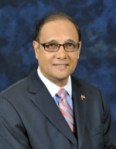
Sen. Larry Howai, Minister of Finance
The starting-point is Minister Howai’s decision to change attorneys at this advanced stage of the Colman Commission. From what I have seen, it seemed that Fyard Hosein was doing a good job in representing the Ministry of Finance, so what was the basis of that decision to change attorneys?
The largest single interest in this entire CL Financial bailout is the taxpayer and I maintain my view that they have been very poorly served in the entire process. The taxpayer is represented in this matter by the Ministry of Finance, which is in charge of the Treasury.
For one thing, the legal costs to the Ministry for the Colman Commission have increased tremendously as a direct result of that decision. The new team will have to read and digest vast amounts of complex material; all of that time has to be paid for by us.
It also seems to me that the new team will, as a result of the sheer size and complexity of the matter, be operating at a serious disadvantage. The quality of our representation is also sure to be diluted, however eminent the various new attorneys.
So, a high public official decides to switch attorneys at a very advanced stage of what is likely one of the most complex, hotly-contested and expensive matters in our country’s history. That decision immediately inflated the legal costs, with the predictable side-effect of likely diluting the quality of the representations to be made on behalf of us taxpayers.
There are serious concerns that the switching of these lawyers was an act of political revenge. When this matter came up during the Senate sitting on 15th October 2012, Howai is reported to have said “…We consulted on whom we should choose… no I don’t want to get into detail, everybody will have their own point of view but at the end of the day the client decides…”
It seems from that reported statement that the Minister is relying on his undoubted rights to switch teams. The obvious concerns and the care which that Ministry should exercise as upholders of the public interest appear to be of low priority.
Howai’s refusal to even attempt an explanation of such a major decision in a matter of this size and consequence is deplorable. The distracting argument between the two leading lights only contributed to the seriousness of our crisis. I would like to hear from the Law Association, or even some of the leading attorneys on this matter.
That refusal to explain and the distraction of the argument are elements in what I have been calling the ‘Code of Silence’.
The CL Financial bailout continues to be a major failure on any scale, both in the causes of the fiasco and especially the manner in which it has been handled.
This is my update on what has been the progress in this campaign.
The equation for our reality check is –
Expenditure of Public MoneyMinus Transparency
MinusAccountabilityEqualsCORRUPTION
In May 2009, I wrote that the Directors and Officers of the CL Financial group should be required to file declarations under the provisions of the Integrity in Public Life Act (IPLA).
According to the IPLA, the Schedule detailing those persons is at page 31 – one of the classes of person required to file declarations to the Integrity Commission is –
“Members of the Boards of all Statutory Bodies and State Enterprises including those bodies in which the State has a controlling interest.”
I have put the last part of the sentence in italics to emphasize the deliberate choice of language by the legislators. The drafting of legislation is a painstaking exercise of strategy, debate and sometimes compromise…my point being that the inclusion of that last phrase must mean that the legislators intended to go beyond merely saying ‘Statutory Bodies and State Enterprises’, which would be the obvious, to specify that the IPLA must also apply in situations where the State has a controlling interest.
The CL Financial Shareholders Agreement (the Agreement), of 12 June 2009, which I obtained by using the Freedom of Information Act, specifies at clause 3.1 that the Board of Directors of CLF shall consist of seven Directors, four of which shall be nominated by the Government. The government has been exercising its rights under this clause, so it is clear that the State’s controlling interest in the CL Financial group is effective.
Quite apart from the four companies named in the bailout Memorandum of Understanding of 30 January 2009 and the Agreement – i.e. CL Financial, CLICO, British American Insurance and Caribbean Money Market Brokers – it is also clear that CL Financial controls the other companies in the group. This effective State control therefore extends to include enterprises which are majority-owned by CL Financial, such as Home Construction Limited, Angostura Holdings Limited, Republic Bank Limited and Methanol Holdings Trinidad Limited.
This very issue of the meaning of the IPLA in relation to state-controlled companies was ruled upon by the High Court in HCA1735 of 2005, in which one of the two issues being determined was –
“…(2) What is the meaning of the expression “Members of the Boards of all Statutory Bodies and State Enterprises including those bodies in which the State has a controlling interest” in paragraph 9 of the Schedule to the Integrity in Public Life Act as amended?…”
The written judgment of Justice Judith Jones states in its conclusion –
“…Conclusion
248. In my opinion therefore the words “Members of the Boards of all Statutory Bodies and State Enterprises including those bodies in which the State has a controlling interest” as found in the Act must be taken to mean:
‘the members of the management or decision making body of:
all organisations or bodies established by Statute;
all businesses or companies controlled by or on behalf of the State’.
249. Further for the purpose of determining control by or on behalf of the State a business or company shall be taken to be controlled by the State if the State exercises or is entitled to exercise control directly or indirectly over its affairs; if the State is entitled to appoint a majority of the directors of the Board of Directors or holds at least fifty percent of the capital of that body.
250. This interpretation to my mind is in accord with the purpose and intention of the legislation as expressed by the Constitution and the Act, that is, to preserve and promote the integrity of persons exercising executive or legislative functions on behalf of the State…”
I am advised that TSTT appealed that High Court decision and that judgment is awaited since mid-2010.
I confirmed that key CL Financial Directors have not been filing declarations under the IPLA. On Monday 10 September, I consulted in person with Integrity Commission staff who confirmed to me that none of these people have filed declarations or been required to file such for 2009, 2010 or 2011 –
Gerald Yet Ming (CLF’s current Chairman)
Hayden Charles (CLICO Director)
Ronald Harford (Republic Bank’s Chairman)
Dr Euric Bobb (former CLF Chairman)
Rampersad Motilal (Managing Director of Methanol Holdings Limited)
According to the 3 April 2012 affidavit of then Minister of Finance, Winston Dookeran, the public money committed to this colossal bailout is –
Para 21         (a)      $5.0Bn already provided to CLICO;
                (b)      $7.0Bn paid to holders of the EFPA and
Para 22                  $12.0Bn estimated as further funding to be advanced.
That is a total of $24Bn in public money being paid to satisfy the creditors of the CLF group.
I wrote on Monday 10 September to both the Integrity Commission and the Minister of Finance & the Economy to report my serious concerns on this unacceptable state of affairs. It simply cannot be right that the Directors of this huge state-controlled group are allowed to escape the provisions of the IPLA. There must be proper transparency in matters of this kind, if good order is to be preserved in our society.
CL Financial accounts and if those are not available, the figures on which the Minister of Finance has been relying – The reply is to ask me to provide further information as to what I mean. The Minister of Finance is making analyses and justifying his positions in public, including proposing legislation to Parliament – he must therefore be relying on some figures or estimates to proceed in this way. When I ask for those details, the Finance Ministry is mystified and needs me to explain what I really mean. Just imagine that!
The presentation made to Members of Parliament in September 2011 to brief them prior to the debate on the Central Bank (Amendment) Bill and the Purchase of Certain Rights and Validation Bill 2011– The reply is to claim that the presentation is an exempt document which the Ministry is therefore unable to provide. The official presentation made to our Members of Parliament in this matter is deemed secret, which seems incompatible with the notion of a free, democratic society, so it will not rest there.
The recent revelations about the Plot to Pervert Parliament in relation to the S.34 debacle and the way in which the country, its significant institutions and its legislature have been misled for the benefit of political financiers have given me pause. I am now reflecting that the bailout and shareholders agreement were never debated, they were both declared as fait accompli. What is more, the new 2011 laws I am writing about here have a similar flavour of Abuse of Office in that we are being told that the contents of that presentation to Members of Parliament are secret. The S.34 fiasco involved an alleged stealing of $1Bn in Public Money and we are all now seeing the extent to which these white-collar criminals and their servants will go to cover their tracks. It is truly revolting. So, the question is ‘‘Given what we now know and the fact that the CLF bailout involves many billions of dollars in Public Money, is it reasonable to assume that our Parliamentarians and Public Officials will be responsible and honest in their dealings?’ I will be returning to this, it is turning in my mind.
Details on the composition of the creditors of the CL Financial group, in particular EFPA holders. I was asking who was owed money and who got paid. That is at the centre of this issue – The reply states that the information requested is likely to be exempt from the Freedom of Information Act. That is another aspect of this to be challenged.
Declarations filed by Directors and Officers of the CL Financial group under the IPLA – The reply points out that those declarations are secret, which is correct, but also goes on to state that this is not to be construed as an admission or denial that the IPLA applies to those Directors and Officers. Well I tell you.
The region’s largest privately-held group of companies is now under State control, in a situation of huge insolvency, with no proper accounts and no declarations being filed by the Directors.
It is as if the sheer size and power of this CL Financial event is warping all the usual rules – like a black hole or anti-matter – to the extent that it seems like the Freedom of Information Act is now being used for the Incarceration of Information!
This development is a serious peril to our Treasury. It must be a matter of the gravest possible concern to all right-thinking people that our fundamental Integrity safeguards appear to have been circumvented or ignored in a matter of this size and consequence.
These are my emails to formally raise the issue of the applicability of our Integrity in Public Life Act—which requires Public Officials to file declarations of their interests and assets as an Integrity safeguard—to the Directors of CL Financial.
This is an issue I first wrote on in May 2009 and the questions remained unanswered, so the questions have now been put directly to the relevant officials.
To – Mr. Martin Farrell, Registrar of the Integrity Commission
Dear Sir,
The Integrity in Public Life Act requires that “Members of the Boards of all Statutory Bodies and State Enterprises including those bodies in which the State has a controlling interest” are required to file returns and declare interests with the Integrity Commission.
Clause 3.1. of the CL Financial Shareholders’ Agreement of 12th June 2009 – see https://afraraymond.net/wp-content/uploads/2010/03/mou21.pdf – specifies that the Board of Directors of CLF shall consist of seven Directors, four of which shall be nominated by the Government. The GORTT has a controlling interest and it is public knowledge that the GORTT has exercised those rights, amounting to strong influence evidencing control.
It seems clear that the directors of CL Financial Ltd are therefore persons who should file declarations, and therefore also the directors of subsidiaries under their influence and control, but having visited your offices earlier today to examine the Register of Interests it seems that these Directors have not been filing returns with you.
For your information, your staff confirmed to me today that none of these people have filed declarations or been required to file such for 2009, 2010 or 2011 –
Gerald Yet Ming (CLF’s current Chairman)
Hayden Charles (CLICO Director)
Ronald Harford (Republic Bank’s Chairman)
Dr Euric Bobb (former CLF Chairman)
Rampersad Motilal (Managing Director of Methanol Holdings Limited)
I am therefore requesting, in the public interest, your confirmation that Directors of CL Financial and the companies within its control are required to file declarations or your confirmation that those Directors are not required to file or such other informative response that will satisfy this complaint of apparent non-compliance.
From: Afra Raymond <afraraymond@gmail.com>
Date: Mon, Sep 10, 2012 at 10:13 PM
Subject: Compliance of CL Financial Directors with the Integrity in Public Life Act
To: [email hidden by author]
To – Senator Larry Howai, Minister of Finance & the Economy
Honourable Minister,
The Integrity in Public Life Act requires that “Members of the Boards of all Statutory Bodies and State Enterprises including those bodies in which the State has a controlling interest” are required to file returns and declare interests with the Integrity Commission.
Clause 3.1. of the CL Financial Shareholders’ Agreement of 12th June 2009 – see https://afraraymond.net/wp-content/uploads/2010/03/mou21.pdf – specifies that the Board of Directors of CLF shall consist of seven Directors, four of which shall be nominated by the Government. The GORTT has a controlling interest and it is public knowledge that the GORTT has exercised those rights, amounting to strong influence evidencing control.
In addition, the CL Financial bailout has consumed large amounts of public money, in which connection I would invite your attention to the 3rd April 2012 affidavit of then Minister of Finance, Winston Dookeran, in which the public money committed to this bailout is detailed as –
Para 21    (a)     $5.0Bn already provided to CLICO
           (b)     $7.0Bn paid to holders of the EFPA and

Para 22           $12.0Bn estimated as further funding to be advanced.
That amounts to an estimated $24Bn of public money to be expended in bailout exercise and it is my contention that our country’s Integrity safeguards must be firmly in place to reduce any potential for improper behaviour or the suspicion of such.
It seems clear that the directors of CL Financial Ltd are therefore persons who should file declarations, and therefore also the directors of subsidiaries under their influence and control, but having visited the Integrity Commission offices earlier today to examine the Register of Interests it seems that these Directors have not been filing returns.
For your information, Integrity Commission staff confirmed to me today that none of these people have filed declarations or been required to file such for 2009, 2010 or 2011 –
Gerald Yet Ming (CLF’s current Chairman)
Hayden Charles (CLICO Director)
Ronald Harford (Republic Bank’s Chairman)
Dr Euric Bobb (former CLF Chairman)
Rampersad Motilal (Managing Director of Methanol Holdings Limited)
I am therefore requesting, in the public interest, your confirmation that Directors of CL Financial and the companies within its control are required to file declarations or your confirmation that those Directors are not being required to file or such other informative response that will satisfy this complaint of apparent non-compliance.
This downloadable document is the 3rd April 2012 affidavit of then Minister of Finance Winston Dookeran, filed as the key evidence in the government’s case in reply to the High Court challenge mounted by Percy Farrell on behalf of a group of CLICO policyholders.
It is an important document since it is the official attempt to deal comprehensively with the claims that the new laws passed in 2011 to control the bailout were unconstitutional – those laws were the Central Bank (Amendment) Act, 2011and the Purchase of Certain Rights and Validation Act, 2011. [To read the separate Bills progress in the House of Representatives, you can click here and here respectively.]
The most interesting ones are the paragraphs in which Dookeran states –
Para 16 at which CLICO is identified as holding 53.6% of the insurance industry’s total liabilities in T&T. That is a clear statement as to the extent to which this company was allowed to become literally ‘too big to fail’ and it also seems to me to comprise grounds for preventing this kind of over-concentration of risk to ever emerge again.
Para 21 which details some $12Bn of public money already spent on this massive bailout.
Para 22 which estimates that a further $12Bn of public money is needed to meet the creditors’ claims.
Para 76 which confirms that the quarterly reports on the restructuring of CLICO for December 2011 and March 2012 have been filed in the High Court as required by the new laws cited above.
This is the text of the ‘Emancipation’ column published in the Business Guardian of 30th July 2009 as my attempt to grapple with some of the the unspoken causes and consequences of this huge fiasco.
I am republishing for two reasons…
Firstly, there have been recent attempts by several people to claim that the Hindu Credit Union part of the Colman Commission is not related to ‘race’…that was surprising since some of those were people who ought to know better – Sir Anthony Colman, the Guardian Editorial-writer and of course, Andre Bagoo. In my opinion a significant part of these two interlinked stories – the CL Financial and HCU collapses – is rooted in our own issues with race. It would be a grave error to dismiss race in trying to understand these crises.
Secondly, the original column was published before this blog was launched, so this is a way of putting the point to those who missed it on the first subscribers.
I have not had the time to delve into the role of race in the HCU matter, so this is my offering in relation to CL Financial and our own African Emancipation Day celebrations…maybe readers can share with me if they see the relation between this situation and the HCU one…
Emancipation
This week the meaning of Emancipation is considered alongside the CL Financial fiasco. It is a painful, but necessary, task. Those of us concerned to commemorate the Emancipation of African people from slavery must have the courage and clarity to reflect on our past, both the distant and the recent. In reflection we can find direction and perhaps, the beginning of a solution.
How, if at all, is the CL Financial fiasco connected with the story of Emancipation? I deliberately use the word ‘story’ since it is clear that there are many versions of this period in our history. I say ‘our history’ because, whatever the race of today’s readers, the Emancipation journey is of vital concern to the progress of humanity.
There were notable and honourable African leaders who put up strong resistance to the efforts by Europeans to enslave their people. But the sad and inescapable fact is that there were others who thought of the process differently. It is a painful matter to discuss, but the fact is that some African rulers collaborated with the European slave-traders to capture and sell their people. Not all, but enough to make the difference. Without getting into the entire history, which is way beyond the scope of this column, the actions of that group of rulers were enough to ensure the success of the entire monstrous project. The Atlantic slave-trade shaped large elements of today’s world and we have been trying to build a new one ever since. Yes, an immoral and greedy group of rulers put a greater value on their personal enrichment than the well-being of those they were entrusted to lead.
The entire society paid the price for the selfish ambitions of these rulers.
One of the most striking things about the CL Financial fiasco is that Lawrence Duprey is one of us, an indigenous Caribbean man. Yes, a black man, with African blood flowing through his veins and that is something that has not formed part of our public discussion so far. One of the strangest features of these times is how, despite the over-supply of media, critical issues are not discussed. When one considers that the vast majority of the population of the region comes from an African background, it is striking that Lawrence Duprey is the only such tycoon in the region with his level of profile. But wait, I almost forgot that there is another one. Yes, I am speaking about Michael Lee Chin.
Whichever way you slice it, this is extremely telling and as a result Duprey carried a peculiar set of expectations. Because of his unique profile as a black man, the fact is that Lawrence Duprey was the recipient of widespread admiration, envy and wonder. That is our society and that is one of the ways we deal with its ugly realities.
To go further, the leading people in the CL Financial team were also black. Yes, most of the CL Financial team have African blood flowing in their veins. Yes, by now I can hear some readers saying things like – ‘But X or Y doesn’t think that they are Black’ or ‘So what?’ or ‘Exactly what is your point?’. That kind of skepticism is expected when one discusses this kind of issue. In fact it is my view that the underlying attitude is the very problem.
At the same time, let us note that the regulators are themselves black people. Yes, the picture I am painting is that the main players are virtually all black people – the Cabinet, the Central Bank and the CL Financial/CLICO chiefs.
We African people have come from far, both metaphorically and physically. We now find ourselves in a sorry place with this CL Financial fiasco. We have a particular responsibility to do better this time around. There is no escaping that fact.
CLICO was built around the ideal, by its founder Cyril Duprey (Lawrence’s cousin) that ‘Give a man service, give a man value and he will give you more business’. Simple, but strong, those were the foundation stones of CLICO. Truth prevailed and with hard work the company prospered. CLICO developed unprecedented levels of investor confidence, as a black company (indigenous) in which one could have faith. Given our history as African people, that level of investor confidence is no small or incidental thing. It could only have been the result of solid vision and diligent long-term application, to name just two of the qualities of the founder.
CL Financial was established as a holding company and rapid diversification followed, with investments in a number of areas unrelated to conventional insurance business. As a result of its success, CLICO was able to provide most of the cash to pay for the group’s unorthodox expansion.
At that stage, the activities of the group shifted to reflect the new ambitions of its new chiefs, most notably its Executive Chairman, Lawrence Duprey. Those activities ultimately undermined the stability and health of the whole.
The Emancipation story has many lessons, but the central one, from my point of view, is that many of our rulers lost sight of the balance between private wealth/privilege and the public good. Are we doing better now? For us, in this Emancipation week, it is useful to consider the extent to which we have learnt from our past.
The actual behaviour of the CL Financial chiefs and the group’s shareholders in this moment is instructive. At every turn, the public good has been shafted in favour of private wealth. From the payment of dividends while CLICO’s Statutory Fund was in deficit to the payment of dividends to CL Financial shareholders after they wrote for urgent financial assistance from the State. The pledging of assets which had already been pledged and the attempted sale of assets contrary to the original MoU. The shocking statement of CLICO’s new boss that $5.0Bn was missing from its Statutory Fund and the utter silence subsequently as to its whereabouts.
All this shocking behaviour and no sign of any reprimand, charge or censure from our rulers. Instead, we are told that our entire Treasury has been pledged to assist savers and restore shareholder value. Trinidad & Tobago is a land of many firsts, but this is a tragic one.
How did we get to the point of pledging our common wealth to restoring value to a few privileged people who are showing no proper regard for the public good?
Do we have the moral fibre to recognize what has gone wrong in our past and behave differently?
It has been virtually six months since my last commentary on the CL Financial fiasco, my silence was due to other pressing duties, but Terrence Farrell’s No Sacred Cows published in the Trinidad Express on 16 July demands a proper reply. For those of you who have not read it, this is a good time to take the chance to do so, by clicking on the link above.
The fact that there are potent questions of whether the best process was followed in making the critical appointment of the new Central Bank Governor, Jwala Rambarran, has been raised by several commentators, most notably in last week’s BG View Is Jwala’s appointment good or bad for T&T? Those questions revolve around the scope of discretion which our governments are allowed in these matters and the extent to which the public interest can be sacrificed in favour of what can appear to be political favouritism. Matters of public importance must always be open to robust scrutiny in the press.
My own view is that there is a critical series of Central Bank issues which are in danger of being obscured by the line Farrell has taken in this debate.
Email exchange with Dr. Terrence Farrell
On Tue, Jul 24, 2012, at 8:53 AM, Terrence Farrell wrote:
Dear Mr Raymond,
I took note of your article in today’s Express. I do not respond in public to comments on articles I write and I will continue that policy in respect of your comments. I merely attach for your perusal the Adlith Brown Memorial Lecture I delivered at the Central Bank in November 2010, and in particular the sections dealing with CLICO and CL Financial. That lecture was delivered before a full auditorium including Governor WIlliams and his top staff. Suffice it to say, it did not endear me to the Bank!! My name did not appear on the Bank’s invitation list for about a year afterward.
You do not know me, but I am not one who ‘puts water in my mouth’. I call a spade a spade and a shovel a shovel. Those who suggest that I leave my critiques only for this government have not read or have forgotten my article in the T&T Review on ‘Our Irresponsible Elite’, my articles in the Express on the Integrity in Public Life Act and sundry others. Re the Central Bank and CLICO, I did not have all the information then since the inquiry had not yet started and in fact up to now, the Governor and the Bank have not yet testified to the Commission. They should do so in September. But I felt I knew enough to suggest that the Bank had failed in respect of CLICO and CL Financial.
The assessment of Williams’ tenure will come (and I may well do it myself) and in that assessment the CLICO/CL FInancial debacle will not have done the Bank proud. That though is no reason to now appoint a new governor of questionable credentials and no argument to defend the ongoing assault on our institutions.
Stay well
Terrence Farrell
On Tue, Jul 24, 2012 at 9:27 AM, Afra Raymond wrote:
Dear Dr. Farrell,
Thank you for your swift, pointed response to my article in today’s Express.
I am familiar with the Adlith Brown Memorial lecture you delivered in November 2010 and it is my view that, given what was known at that time, your critique of the Central Bank was muted – space limits did not allow me to delve into all those areas, but the evidence I cited in today’s article was all available by mid-2010. You did say that you may make a full critique of the CBTT’s role in this fiasco and that would be interesting to consider. I am not surprised that you were off the CBTT ‘guest list’ for a spell, which that tells a sad story of hubris and such.
With respect to the new Governor and for what it is worth, I am all in favor of us upgrading these systems by which key appointments are made, as per the second para of my article. I will be sure to hold him to the same high standard to which our leaders should set.
From: Afra Raymond
Date: Wed, 25 Jul 2012 12:18:41 -0400
To: Terrence Farrell
Subject: Re: Your Article in Today’s Express
Hello Dr. Farrell,
I am soon going to publish onto my blog an expanded version of the Express article and would like to include our email exchange, along with your 2010 Adlith Brown Memorial lecture – I am seeking your agreement to that.
More than just this immediate request, the fact is that the decision of our educated classes to opt-out of the public debate has led us to a time which is much poorer, in all the senses of that phrase…The voices we hear are largely party-political roars which are barely-sensible, the reluctance of our thinking-class to engage in a critical discourse is really the source of the brandy being served in ever-stingier portions, with some people choosing to express it as a declining (I should have written ‘increasing‘) proportion of water…As always, these issues have more than one cause and I am inviting you to reconsider your stance of not responding to comments on articles you write…let me just say that in other places it would be a matter of professional pride and minimum editorial standards that such a response be forthcoming…Of course, we might agree that not everything foreign is to be imitated, but surely such habits which cultivate progressive discourse are to be emulated….
On Wed, Jul 25, 2012 at 2:49 PM, Terrence Farrell wrote:
Apologies for the tardy response. I am out of the country and did not have Internet access for a while.
I have no problem with you publishing the exchange on your blog. The Lecture should be on the CCMS website.
Terrence Farrell
Sent from my BlackBerry® device from…
From: Afra Raymond
Date: Wed, Jul 25, 2012 at 2:00 PM
Subject: Re: Your Article in Today’s Express
To: Terrence Farrell
Much appreciated, I do hope you can find time to ‘tune-in’ to our discourse…
Dr. Terrence Farrell
For those who do not know, Dr. Terrence Farrell is a former national scholar and a highly-educated member of the regional financial sector. Among his several top positions, he has been a Deputy Governor of the Central Bank of T&T. In addition, he has also held top-level private sector appointments in the financial industry.
In writing on the CL Financial fiasco, I have adopted the phrase ‘Code of Silence’ to describe the unspoken agreement that the entire mess is to be mentioned as little as possible. That silence is especially pronounced amongst those best equipped to analyse the issues, so the intention of the Code would appear to be to preserve the existing order of things.
Silence is the Enemy of Progress, so this crisis has exposed an abysmal showing from our most educated brethren, miserable really. Nothing from the Accountants, Lawyers, Bankers, Insurance or other professional and industry associations. UWI is only now becoming involved in the necessary discourse.
So, why am I taking precious time to respond to Terrance Farrell? A few examples to show my concerns –
Firstly, in the 30th January 2009 Central Bank Press Release – by then Governor Ewart Williams – on the first page we are told:
…In our regular monitoring of CIB, and of Clico since 2004 (when insurance supervision was transferred from the Ministry of Finance), the Central Bank has consistently focused on these deficiencies but have been stymied by the inevitable challenge of change and by inadequacies in the legislative framework which do not give the Bank the authority to demand these changes….
So we need to pause here and look closely at the three facts before us –
Ewart Williams was saying that since 2004 serious problems were identified in the CL Financial group and that he did not have the proper tools to deal with these.
Within a week of that fateful bailout date, our Parliament had debated the Central Bank (Amendment) Bill and the Insurance (Amendment) Bill, both being assented to on Friday 6 February 2009.
Farrell’s opinion is that the Governor must be “…sufficiently strong and respected to keep the financial system stable…”. In his appreciation of Ewart Williams, he clearly conferred that level of performance onto the outgoing Governor.
The burning question is ‘Where were these Draft Bills when the CL Financial crisis was gathering force since 2004?‘ Had they been prepared and never been put to the political administration or had they been submitted and rejected by the politicians? Or are we to believe that both Bills were swiftly drafted?
Of course all three facts cannot be correct and I believe that the third fact is the false one. Farrell’s inference that Williams had the necessary stature to be an effective Governor is obviously disproven by the CL Financial fiasco.
Please remember that this is the same Governor who had two investments with that ‘deficient’ group. How can one possibly reconcile a top official of acumen and strength with that investment?
But there is more. According to para 23 of the 16 April 2010 affidavit by the Inspector of Financial Institutions:
…With respect to the Creditors of the Petitioner, the Petitioner has met the statutory obligations for the Board of Inland Revenue (except for Corporation Tax Returns for 2007, 2008 and 2009 which are being prepared and remain outstanding)…
I am reliably advised that means that CIB did not pay Corporation Tax for those years. Yet CIB was able to retain its banking licence thoroughout that period, and, upon collapsing, obtain an immediate bailout on most generous terms.
Farrell also tells us that the Central Bank needs to be “…a decisive actor when action is required…”. Obviously, that standard did not obtain over the last decade.
The entire scenario reeks of corruption in the highest offices in the Republic and on the largest possible scale. We are witness to an epic swindle being carried out on our Treasury and in broad daylight.
There is plenty more evidence to discuss on this issue, including the seminal 15 July 1996 Republic Bank Letter to Shareholders which warned of the perils of the then ongoing aggressive takeover by CLICO.
At the critical turns in this crisis, we have been without Farrell’s views in terms of the rigorous scrutiny from which we ought to have been benefitting.
Farrell also adds, in relation to Williams’ impact at the Central Bank, that it was “…repaired and strengthened by Ewart Williams over the last ten years…”. That seems to be a straight case of Nearer to church, further from God’. Given Farrell’s reading of events, it seems that Ewart Williams is being treated like a ‘Sacred Cow’.
That is the root of my concern here, given Farrell’s headline ‘No Sacred Cows’, which is usually used to convey that someone is a fearless critic.
I continue to be outraged that the outgoing Governor appears to have retired with full benefits after having presided over a disaster on this scale.
The quest for better governance is not just a matter of criticising the administration, the educated commentators also have to hold to some consistent standard of rigour. Given his background, I consider Farrell’s contribution on this fiasco to be lacking that standard.
It is not too late, because I am sure that the Colman Commission would benefit from Farrell’s input in relation to the strategic view of the roots of the crisis and the sort of interventions which could have avoided this sorry situation.
For my own part, I will be looking to see how Rambarran performs on the burning issue of properly applying the ‘Fit & Proper regulations’ to the Financial Sector. Given the poor record of the outgoing Governor on this count, I am going to be calling for the new broom to make a clean sweep.
 What is being pursued here is our right as citizens of a modern republic to the details of these huge expenditures of Public Money – the CL Financial bailout is costing some $24Bn, about $3.5Bn USD! – and the background to how critical legislative support is obtained. It is my view that S.34 was not the first time and that the spectre of ‘regulatory capture’, which underlines much of the discourse around the Great Depression 2, is in fact founded on a sinister degree of ‘legislative capture’.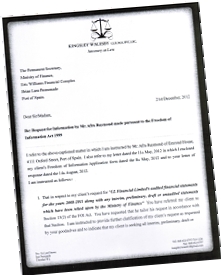



 The CL Financial bailout continues to be a major failure on any scale, both in the causes of the fiasco and especially the manner in which it has been handled.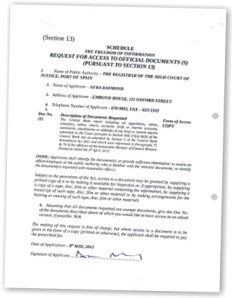
 It has been virtually six months since my last commentary on the CL Financial fiasco, my silence was due to other pressing duties, but Terrence Farrell’s
 AfraRaymond.net