After the imbroglio with NIDCO’s award last month of a $400M contract to KALLCO for a 5Km stretch of highway, we have once again been treated to a series of related high-profile announcements.
On Monday, 16 October 2017, Minister of Legal Affairs, Stuart Young MP, announced the counter-suit by State-owned Estate Management & Business Development Co (EMBD) against five contractors; former Minister of Housing and Urban Development, Dr Roodal Moonilal MP; and its former CEO, Gary Parmassar. The five contractors were:
TN Ramnauth;
Mootilal Ramhit and Sons;
Namalco Construction Services Ltd;
Fides Ltd; and
Kallco.
According to Young, there was over 18 months of investigative work to ground those counter-claims which allege collusion and bid-rigging, resulting in over $200M defrauded from the State. The most decisive allegation seems to have been that then-Minister Moonilal was making the decisions on those contract awards. I have not yet been able to read the EMBD’s court filing. Continue reading “Property Matters – Horses for Courses”→
This Season of Reflection closes with yet another Sankofa Moment in which I will contemplate our past efforts so as to better understand our future. This huge project is being promoted, at the highest levels, by highly-optimistic and quite ambiguous statements.
The entire effort is based on notions of government having nothing to hide and the huge benefits to be derived from this project, albeit on rickety estimates. My colleagues and I have been engaged in a research program on these very issues for the last year. Our preliminary results pose a serious challenge to the notion of there being nothing to hide. In my view nothing could be further from the truth, that is how serious this is.
The three largest hotels in our country are State-owned – Trinidad Hilton & Conference Centre; Hyatt Regency and Magdalena Grand – with the hotels operated via Management Agreements. Our formal attempts to obtain information were met with a type of evasion and unresponsibility which was staggering. It reminded me of the infamous ‘Code of Silence‘ which belies the CL Financial bailout fiasco. No room for surprise there, after all, ours is a small country. As one of my confidantes often quips – It is like an Eleventh Commandment – ‘Thou shalt not be found out!‘ Continue reading “Property Matters – Tobago Sandals part two”→
“AFFORDABILITY IS THE MAIN PILLAR OF THE HOUSING POLICY SINCE 2002”
—Key quote from HDC’s Home Ownership webpage
“…Housing Minister Randall Mitchell says Government has made housing more affordable to low and middle-income families unlike the People’s Partnership government which catered for high-income earners…” December 2016
Randall Mitchell, MP, Minister of Housing and Urban Development
Once again, the HDC and the Minister of Housing and Urban Development, Randall Mitchell, have been in the news with strong claims based on the HDC’s program and new mortgage offerings by TTMF. The headline in this newspaper on 10 February 2017 was “More people to access affordable housing“. In my view those are baseless and misleading official claims which readily qualify as ‘alternative facts’. Bigly so.
These statements are not unique to Minister Mitchell, who is relatively new to this portfolio, but enough is enough. Given the importance of public housing in the nation’s welfare arrangements and the sheer lack of reliable information on the issues, it is now time to dismantle the myth of an increasing supply of affordable housing.Continue reading “Property Matters – The Affordability Hoax”→
On 28 October 2016, the Appeal Court delivered its majority ruling upholding the decision of Justice Frank Seepersad on 14 July 2014 to order publication, under the Freedom of Information Act (FOIA), of the legal opinions on which the Ministry had been relying. The JCC had won its case at both the High Court and the Appeal Court, so I called for immediate publication of the requested information. The JCC made no such call, neither did any of my erstwhile colleagues.
At an Appeal Court hearing on 21 November 2016, the State obtained leave, with the JCC’s consent, to appeal this matter at the Privy Council. Whilst in Opposition, the PNM made repeated complaints against the secretive conduct of the Invaders’ Bay development by the Peoples Partnership. Now in Government, the PNM has elevated secrecy in public affairs to a new prominence.
Since Dr James Armstrong was appointed JCC President in December 2015, that organisation has been silent on the Invaders’ Bay matter. This had previously been of high importance as a major development in our capital city, which was proceeding illegally and improperly. The JCC now seems to have reversed its earlier position of pressing for publication of those vital, suppressed documents. Continue reading “Property Matters – Invaders’ Bay”→
The HDC launched its first housing Public Private Partnership (PPP) on 3 November 2016 at Mahogany Court, a 160-apartment complex at Eastern Main Road, Mount Hope. It is being designed, financed and built, at a cost of $145M, by NH International, led by my erstwhile friend and colleague, Emile Elias, with completion due in December 2018.
The PPP approach to public procurement is one in which the private sector assumes the risks and constructs a project with repayment of that investment taking place over a period of time, usually from the State’s recurrent expenditure. This a controversial public procurement method, with the detailed reviews of completed projects being heavily criticised for the fact that the private sector has not actually taken much risk. It seems that these contracts often contain provisions which shield the private sector from serious risks. The introduction of PPP into our public housing program therefore deserves careful scrutiny, if we are to avoid the serious losses experienced in more advanced jurisdictions.
This PPP uses no Public Money, the State’s only investment being the value of the land, which was not mentioned thus far. The approach was outlined at pg 31 of the 2017 budget as being one in which the contractor will provide short-term finance to design and construct new homes, which will then be purchased by approved applicants on the HDC’s waiting-list. Those purchases will be funded by TTMF and the purchase prices will be used to repay the contractor. Continue reading “Property Matters – Examining the PPP”→
The 2017 budget is due to be presented on Friday, 30 September 2016 to an anxious nation. Having had to endure the literally unbelievable optimistic economic claims of the previous government prior to the September 2015 general election, we were told by then Central Bank Governor, Jwala Rambaran, in December 2015, that the nation had been in recession for 6 months. I tell you. Of course that message has now been repeated after the messenger was dismissed for various alleged offenses, but that is for another column.
Our levels of public expenditure have moved sharply upward, with only a single decline in 2010, as shown in the graph and table for 2005-2016. Those totals are derived from the estimates stated in the various budget statements and do not represent the actuals. In that period, estimated revenue was $534.57Bn with estimated expenditure of $574.6Bn. That balance between revenue and expenditure yielded a combined deficit of $40.125Bn – 84% of which ($33.67Bn) occurred under the Peoples Partnership government, 2011-2015. Continue reading “Property Matters – 2017 Budget Prospects”→
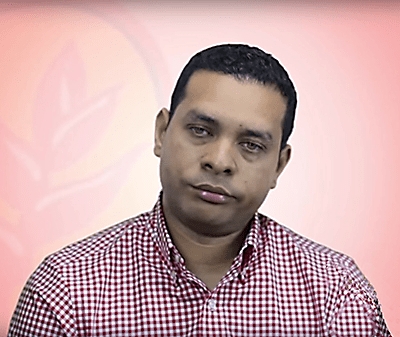
Afra Raymond is interviewed on the ‘Showdown‘ show on i95.5FM by Jennifer Baptiste-Primus and Ralph Maraj on the former PP government’s ‘Land for the Landless’ policy and bill. 7 June 2015. Audio courtesy i95.5FM
“…A small State such as Trinidad & Tobago must accord a very high priority to the judicious management and utilization of its land resources or perish. All elements of land policy must be designed to ensure that these finite resources are efficiently utilized and husbanded in such a manner as to serve the long term interests of the national community…”
—Conclusion of “A New Administration and Policy for Land” (19 November, 1992)
The PNM won national elections on 7 September 2015 by 23-18.
Two key themes emerged during the PNM’s successful campaign –
Firstly, there was a strong emphasis on the critical need to restore proper standards of Accountability, Transparency and Good Governance;
Secondly, a commitment was given to ‘keep the various promises made by the PP government’.
When one considers the various promises, policy changes and actions of the PP in relation to land and property, it seems clear to me that those two campaign commitments made by the PNM are entirely incompatible.
Our country has a very high population density and the previous Minister of Land and Marine Resources estimated that some 63% of our country’s land belongs to the State. It is therefore a cardinal State responsibility to properly manage those critical resources so that short and long term interests can be reconciled in a sustainable manner. The present situation is so serious and damaging to our collective interests that I am calling for a halt to any attempt to keep promises with respect to land and property while a fact-finding and policy review is conducted.
The opening quotation is from the National Land Policy 1992, which is now a virtually unknown document since its very existence is denied by all the relevant agencies. This Policy provides critical guidance for how this scarce resource should be best managed in the Public Interest.
The severe crisis now evident in relation to our State Lands resembles a ‘Tragedy of the Commons‘ in which this crucial resource which should offer long-term collective benefits is effectively abused by self-seeking individuals. The pattern of abuse is facilitated by gross mismanagement, in profitable partnership with deliberate obscurity in how the State Land system actually operates.
Food Security
This remains elusive since in March 2012 the Ministry of Agriculture, Land & Marine Resources published itsFood Production Action Plan 2012-2015. The major goal of that Action Plan was to halve the country’s annual $4.0 Billion food import bill. Yet in March 2014, the Food Production Minister, Senator Devant Maharaj, stated that the food import bill had been reduced by only 2% since 2010.
The significant reduction of our food import bill will require a flexible plan, with dedicated implementation and continuous monitoring. The one inescapable requirement is for farmers to have access to land of suitable quantity, quality and location. Without a good supply of land, no food security plan can succeed.
Land for the Landless
The proposed revisions to the State Lands Act 1998 were approved by the Lower House of Parliament on 3 June 2015 and withdrawn after the JCC raised certain objections. The proposed change in the ‘Land for the Landless’ policy were approved by Cabinet on 19 March 2015 with these main elements –
Occupation Date – Was moved from January 1998 to June 2014, which means many more persons would qualify.
Income Limits – Previously the maximum monthly family income was $8,000, this was now revised to $30,000.
Definition – the 1998 Act defined a landless person as one who was ‘disadvantaged’ according to the Ministry of Social Development, that word was deleted from the revised proposals.
Designated Areas – these were specified in an extensive list of over 400 areas covering the entire country.
The Numbers – The total number of persons identified was 250,000 and a commitment was given to regularise some 60,000 of those.
A policy which was originally intended to alleviate the plight of our poorest citizens has now effectively been extended to offer ‘Land for Everybody’. The existing commitment in respect of 60,000 lots will consume about 8,000 acres of land.
EMBD
https://vimeo.com/7987617 The EMBD website states that it is responsible for the development of the former Caroni lands – some 7,500 residential lots are being prepared for ex-Caroni workers as part of their retrenchment package, with a further 8,400 agricultural leases of 2-acre parcels reportedly being processed. That means about 940 acres are to be used for the residential lots, with at further 18,500 additional acres for the agricultural plots. The total land area to be used would be about 19,420 acres, which is about a quarter (26%) of the estimated area of the Caroni lands.
Caroni Lands
Caroni Lands were leased to ex–Caroni workers as part of their retrenchment compensation – they were entitled to one residential lot and a two-acre parcel for food-crop farming. The use of those lands for those purposes was intended to be controlled by the restrictive covenants in those leases. For instance, the residential lots were to be developed by a residential building within three years and the agricultural lots were to be held by the ex-workers for food-crop farming. In the 2015 budget, the restriction on sale of those agricultural lands was removed (pg 14). In addition, Cabinet Minute 3093 of 6 November 2014 approved the removal of the restrictive covenants in the leases to ex-Caroni workers – both agricultural and residential. No restriction on sale and no requirement to build on the lots.
This is tantamount to the State entirely gifting the development and transactional rights to these lessees, with no effective means of ensuring the originally desired results.
Housing Development Corporation (HDC)
The HDC sells new homes at heavily-subsided rates to middle-income families, subject to restrictive covenants which prohibit open-market sale within the first ten years. Under the terms of that clause, the owner of one of these homes is required to offer the property to the HDC at the original price. It now seems that the HDC has relinquished those restrictive covenants. I have seen several letters signed by the HDC which authorise the open-market sale of those homes within the ten-year embargo period. I am not aware of any policy decision which supports that pattern of approvals and none of the vendors I have spoken with have paid any penalties of profit-share to the HDC.
This is yet another example of the State or its agents abandoning its fundamental duty to properly manage the public property rights within its remit.
Property Tax
The proposed Property Tax would require a live, open-access database which would allow anyone to examine the details of any property in the country. Those details would include land area, building area, number of bedrooms/bathrooms and other facilities, transaction history, ownership and assessed taxes. One of the strongest sources of opposition to the Property Tax is persons who would wish to keep the details of their property holdings and dealings as secret as possible.
The new Property Tax system and the modern database is in fact a key element in unearthing the facts of our country’s property ownership and occupation.
Property Tax must therefore be a priority in this arena.
The unrealistic policy of homes with gardens consumes too much land and will jeopardise our country’s sustainable future.
This is a short video (courtesy of TV6) in which the Minister of Land & Marine Resources, Jairam Seemungal, responds to questions on the occupation of State lands in Couva by SIS Ltd, one of the main financiers of the Peoples Partnership.
The ‘Land for the Landless’ program, which is being implemented by the Land Settlement Agency (LSA), has now been redefined in such stark terms that I have decided to call it by a more appropriate title ‘Land for Everybody’.
The previous article set out the main points of the revised program. That detrimental law was approved by the House of Representatives on Wednesday 3rd June. Although we have now heard that the new law to amend the State Lands 1998 Act was withdrawn just before the close of our Parliament on Friday 12th June 2015, we are also being told that it will be approved if the Peoples Partnership is returned to office after the national elections in September.
This change to our country’s squatter regularisation law is therefore now being held out as an expansive election promise to regularise the status of some 60,000 landless people. That proposed program is a severely detrimental one which will likely lead to greater problems in the important question of our country’s human settlement policy. It is therefore necessary to highlight the dangers this new ‘Land for Everybody‘ program poses to our collective interests.
The Minister of Land and Marine Resources, Jairam Seemungal, gave several interviews which attempted to rebut my criticisms, so it is important that that these fundamental issues be properly understood. The public interest demands nothing less.
Food Security
Food security is that elusive state in which we can feed ourselves at a decent standard of nourishment and at an affordable price, without heavy reliance on imported food. The very issue of how food security is defined is hotly debated, but it is clear that we are far away from even the simple one I offered.
In March 2012 the then Ministry of Agriculture, Land & Marine Resources published its Food Production Action Plan 2012-2015. The major goal of that Action Plan was to halve the country’s annual $4.0 Billion food import bill. Yet in March 2014, the Food Production Minister, Senator Devant Maharaj, stated that the food import bill had been reduced by only 2% since 2010. That is a sobering reflection on how serious is the challenge of moving to some significant degree of food security, even for an administration with substantial links in the agricultural sector.
The significant reduction of our food import bill will require a flexible plan, with dedicated implementation and continuous monitoring. The one inescapable requirement is for farmers to have access to land of suitable quantity, quality and location. Without a good supply of land, no food security plan can succeed.
The issue is a long-term one, so it is clear from the failure to achieve the targets that a deeper commitment of resources and monitoring is needed if we are to improve our collective position. The Food Production Action Plan 2012-2015 is now up for thorough review which must include serious input from the public and stakeholders.
Shiraz Khan, President of the Trinidad United Farmers’ Association, has spoken out about the disastrous land use policies now unfolding and I have also heard Omardath Maharaj join the calls for a holistic discussion of agriculture policy.
What is the policy?
We are reliably informed that the new ‘Land for the Landless’ policy was approved by Cabinet on 19th March 2015, but there is no clarity as to whether this policy conforms to the existing 1992 Land Policy. The recently-approved policy ought to be subordinate to the wider Land Policy, which states at page 9 –
“4. LAND USE POLICY
4.2 The New Land Policy proposes:
(a) that the existing system of land use zoning be strengthened to ensure that prime agricultural land is not mis-managed or converted to non-agricultural uses except on the basis of a significant spatial or economic development rationale…”
It is imperative that our country’s human settlement policies take proper account of the need to preserve our limited supply of arable land, so that we can maintain some degree of food security.
The critical point is that our total supply of land is very limited, due to the tiny size of our country. The supply of arable land which has not been developed is even more limited, so the choices are stark. There is not enough land for us to continue with this reckless policy of land distribution or large-scale building of houses with gardens. To continue with those policies would be watching a disaster unfold before our very eyes.
I have heard occasional statements from the HDC or Housing Ministry, in this and previous administrations, but that is merely to mention a major issue. This is a serious issue with dire long-term consequences for our society and a proper, wide-ranging policy review is urgently required. That review must include the 2002 Housing Policy, the 2003 UWI Report on the future of Caroni lands, the 1992 Land Policy and the Land for the Landless policy.
How many people will be affected by this policy?
There was some dispute over numbers, with the PM claiming that 30,000 squatters were to be regularised, the Minister of Land & Marine Resources doubling that to 60,000, all while the LSA website states that there are 250,000 squatters.
At one point, the official rebuttal seemed to be that there were 60,000 households with 250,000 inhabitants, but since the three cited statements were referring to ‘squatters’, that line has now been abandoned. We are now told that the intention is to regularise 60,000 of an estimated total of 250,000 ‘squatters’.
How are the 60,000 eligible persons to be selected?
So, which 60,000 people are to be regularised out of the 250,000? How is that selection to be made? Even after all this defensive talk, I am not at all clear on that.
Will the decisive point be the date of application or the length of time a squatter community has been established? The date-based approach would have some legal weight, given that squatters’ rights have usually accrued in accordance with the period of occupation. To my mind, that would be a weak basis on which to proceed, given the shortage of land and variety in its quality.
In the alternative would the choices of communities to be regularised be based on an assessment of alternative uses or land value? What role would the fertility of the soil play in making these important decisions? If we are to have a reasonable chance of tackling the food security issue, it is critical that these factors play an important part in making these decisions. That is not negotiable.
Finally, one has to mention the elephant in the room. Could it be that the selection of those 60,000 squatters is a political one? Are marginal constituencies to be favoured? Is that a possible outcome we ought to guard against? Which are the constituencies in which the selected communities are located?
The Bill to amend the State Lands Act 1998 comprised 24 pages and we need to note that 20 of those pages was an expansive list covering at least 500 areas or districts in our country. I quipped ‘Charlotteville to Los Iros‘, but the point is that with so expansive a list of areas, just about anywhere could be eligible for regularisation. You see?
The point of how these critical selections are being made is one which must be answered as soon and as clearly as possible.
Who qualifies as ‘landless’?
SIDEBAR: The LSA’s abortive meeting with JCC
In March 2015, the LSA wrote informally to seek dialogue with JCC on this revised ‘Land for the Landless’ program and we responded by requesting an agenda and a formal invitation. Despite our constant efforts, we are still awaiting a response.
This is the most damaging part of this proposed policy shift, with the new income levels having shifted to a monthly maximum of $30,000, together with the elimination of ‘disadvantaged’ as a decisive criteria having the combined impact of making these scarce lands available to anyone. The fact is that a family with a monthly income in the $30,000 can readily qualify for a mortgage in the $1.6-1.7M range and there are plenty of good-quality homes in that price range for sale in our country.
The CSO’s 2009 data on monthly Household Income shows a national average in the $8,000 range. Yet we have a Minister, supported by his professional staff, advancing a policy which is seeking to extend a program intended for the benefit of our neediest citizens to just about anyone.
One can only wonder what was the research on which this bizarre policy was based.
This is no time for inadvisable and ill-considered electoral promises, from either side. Our children’s children will wonder just what kind of intentions did we have. History will judge us harshly if we continue with this foolhardy basket of policies.
A detrimental ‘land grab’ is almost upon our country and we all need to be alert to prevent the destruction of our patrimony and prospects.
Hon. Jairam Seemungal, MP. Minister of Land and Marine Resources
The State owns most of the land in the country – recent estimates by Minister of Land & Marine Resources, Jairam Seemungal, place the proportion of State-owned land in the 63% range – and as such those lands are critical national assets with which a progressive government could seek to address issues of poverty in a sustainable fashion. Those policies would have to be redistributive in nature if they are to effectively address the serious poverty faced by some of our citizens. That means the State using our resources to provide affordable land and housing to those who are unable to do so in the open market. It is critical to ensure that these redistributive programs operate properly so that the benefits will go to the needy persons for whom they are intended. Those are objectives which I fully support.
I quipped that the ‘Land for the Landless’ program should be re-named ‘Land for Everybody’, but recent developments have turned that quip into a growing reality.
There have been three big changes which have effectively undermined the very meaning of these important redistributive programs –
THE CARONI AGRICULTURAL LANDS
The Trinidad Express reported that the Minister of Finance & the Economy, Larry Howai, announced a significant change in the original policy in the 2015 budget, in that the ex-workers receiving agricultural leases were now free to sell these lands. Those lands which are sold will likely leave the agricultural use for which they were allocated, representing a significant and detrimental ‘alienation’ of those limited lands.
THE NEW ‘LAND FOR THE LANDLESS’ PROGRAM
This important program has been revised to now provide for an annual target of 3,000 to 4,000 lots at an estimated annual cost of $1.0 Billion. Even if one makes the most optimistic assumptions that the upper target of 4,000 lots is achieved at the estimated cost of $1.0 Billion, the cost per lot is $250,000. I do not know if the cost of the land is included in those estimates, but experience suggests that it would have been excluded, which would be a serious gap in the planning for the development of these important public assets.Most alarmingly, the income limits have now been increased in a manner which suggests that this program is no longer intended for the benefit of the disadvantaged in our society. The original ‘Land for the Landless’ program set an upper limit of $8,000 on the family’s monthly income, but that has now been increased to $30,000. A family with a monthly income of $30,000 can readily afford to buy a home with private mortgage financing. Apart from that, there are serious questions as to whether the inclusion of those upper-income applicants would force-out the poorer people this program is intended to assist.
It is just impossible to reconcile the new family income limit of $30,000 for the ‘Land for the Landless’ program, which is only for residential lots, with the Housing Development Corporation’s (HDC) $25,000 limit on the monthly family income of applicants for homes.
The main points of this proposed new law, which still has to be approved by the Senate, are –
Application date – formerly, persons who had illegally occupied State Lands up to January 1998 were entitled to be regularised – the new law would move that date to June 2014. That means that more persons will be regularised;
Who is ‘Landless’? – In the original 1998 Act, a ‘landless’ person is defined at S.2 (1) as –
“…“landless” refers to a person who falls within a category designated as disadvantage (sic) by the Minister to whom responsibility for Social Development is assigned and who has no legal or equitable interest or any other interest or claim to such an interest, in a dwelling house, residential land, or agricultural land upon which a dwelling house is permitted to be built…”
Obviously, the original law was intended to assist the most needy persons in our society.In the proposed amendment, just approved by the House of Representatives, ‘landless’ has been redefined as follows –
“…(c) in the definition of “landless”, by deleting the words “who falls within a category designated as disadvantage by the Minister to whom responsibility for Social Development is assigned and…” (the emphases are mine)
The landless class has now been expanded by our Parliament to eliminate any mention of disadvantage. I tell you.
Where is the land? – The Schedule of the new law is an A to Z list of designated areas in every district of our country, so these are really expansive proposals. All areas will be affected, from Charlotteville to Los Iros.
The rationale – Minister Seemungal stated that there are extensive aerial surveys from 2014 and other information being used to guide this process, but I think significant caution is necessary. The lack of an open process of policy review and formation in this important matter is proving very expensive for our collective interests. Have other State agencies and stakeholders been consulted? These critical policy changes must be underpinned by substantial research and consultation which can earn the required degree of public confidence.
Who benefits? – We do not have any open database on the allocation of public housing, state land or any property at all. These records must be open and searchable so that the potential for serious improper behaviour amounting to a ‘land grab’ is minimised. In the present opaque arrangement the real beneficiaries could remain unknown for too long. Of course that is a recipe for the misallocation of State lands on an epic scale, so it is important to establish some transparent mechanism to examine what is happening.
When one considers the numbers involved, there is a clear sense that these programs, which were intended to benefit the poorer class of citizen, are being systematically ‘gamed’. It is even possible that officials are assisting those elements for the advancement of their own political agendas. The numbers wrangle is beyond the scope of this column, but I will be exploring it in the near future to explain how they relate a particular story.
The degree of confusion is immense, with LSA officers denying the existence of the national Land Policy. If we are to go by his evasive response to simple questions on the SIS occupation of State lands at Couva in disputed circumstances, the very Minister Seemungal can be seen as hostile to providing essential facts. The PM told the Parliament the next day that the Minister had denied making those televised statements.
We need to be alert to protect our patrimony, particularly in relation to property.
 After the imbroglio with NIDCO’s award last month of a $400M contract to KALLCO for a 5Km stretch of highway, we have once again been treated to a series of related high-profile announcements.
 The three largest hotels in our country are State-owned – Trinidad Hilton & Conference Centre; Hyatt Regency and Magdalena Grand – with the hotels operated via Management Agreements. Our formal attempts to obtain information were met with a type of evasion and unresponsibility which was staggering. It reminded me of the infamous ‘


 Afra Raymond is interviewed on the ‘Showdown‘ show on i95.5FM by Jennifer Baptiste-Primus and Ralph Maraj on the former PP government’s ‘Land for the Landless’ policy and bill. 7 June 2015. Audio courtesy i95.5FM
 The opening quotation is from the
  This remains elusive since in March 2012 the Ministry of Agriculture, Land & Marine Resources published its
  The EMBD website states that it is responsible for the development of the former Caroni lands –
 Caroni Lands were leased to ex–Caroni workers as part of their
  The HDC sells new homes at heavily-subsided rates to middle-income families, subject to restrictive covenants which prohibit open-market sale within the first ten years. Under the terms of that clause, the owner of one of these homes is required to offer the property to the HDC at the original price. It now seems that the HDC has relinquished those restrictive covenants. I have seen several letters signed by the HDC which authorise the open-market sale of those homes within the ten-year embargo period. I am not aware of any policy decision which supports that pattern of approvals and none of the vendors I have spoken with have paid any penalties of profit-share to the HDC.
 AfraRaymond.net