Afra Raymond sits with Fazeer Mohammed and Jessie May Ventour to discuss, among other things, the “battle” between the Government & the construction industry in Trinidad and Tobago. Video courtesy CNMG
Afra Raymond sits with Fitzgerald Hinds and Jessie May Ventour to discuss an updated in-depth look at UDeCOTT subsequent to the resignation of its Executive Chairman, Calder Hart. Video courtesy CNMG
CL Financial Shareholders’ Agreement of 12th June 2009
From:
Afra Raymond <afra@tstt.net.tt>
To:
Nunez-Tesheirak@gov.tt
Date
Fri, March 12, 2010 6:26:03 PM
Madam Minister,
I am writing to thank you for sending me the CL Financial Shareholders’ Agreement of 12th June 2009, as requested in my Freedom of Information application of 16th November 2009.
I have now published this onto my website – www.afraraymond.com – for public information and to develop a better understanding of its implications.
Finally, I am taking the opportunity to point out that my second Freedom of Information application, for Mr. Lawrence Duprey’s 13th January 2009 letter to the Central Bank Governor, was filed on 1st March. It would be a positive move, in the direction of transparency and public accountability, if you were to release that document to me within the statutory timeframe of one month.
Quantum – The SA is silent as to quantum, which would seem to mean that the group will enjoy unlimited access to taxpayers’ funds. The 2010 budget statement on 7th September states an estimated allocation to the CL Financial bailout of $5.4Bn – but subsequent events have only added to the confusion. To wit, the $50M USD for the British-American Insurance recovery (as per 2nd November ECCU press release) and the ‘up to $510M’ announced to be available to meet the pensions due to ex-Caroni workers. Question being whether the $5.4Bn includes the subsequently-announced amounts or are those to be added-on?
Security–At the preamble to the SA – on page 5 – we are told that “…valuable consideration…” is being offered by CLF as per the original MoU. Of course, given the Governor’s revelations on 7th April 2009 – see http://guardian.co.tt/business/business/2009/04/08/govt-left-empty-handed-cl-financial-bailout – that is simply not so. Indeed, it seems clear that the cupboard is bare and that this CLF group has no unpledged assets of any value.
Interest–No mention of interest at all. We are therefore now advancing an unlimited quantum of taxpayers’ funds, for which no security has been provided and those funds are being advanced at ZERO interest. Given the well-established rule that late payment of taxes makes a taxpayer liable to 20% interest and the interest rate the Federal government charged AIG for their bailout funds – it was 8.5% above the benchmark LIBOR, which was at 3.0% – it is clear that this represents a massive concession to the CL Financial group. Quite apart from the bailout itself, the 325 shareholders of this group are also benefiting from this unprecedented and unexplained facility of ZERO percent interest rate.
Accounting–Section 4 of the SA sets out the procedure for a proper system of accounts, culminating at 4.4.5 – “…shall ensure that an annual report of CLF is prepared and dispatched…in manner consistent with standard corporate practice…” The accepted interpretation of this language informs us that the word ‘shall’ denotes an obligatory, non-voluntary duty. If that is the case, when can we expect publication of the 2008 annual report, accompanied by audited accounts, as per ‘standard corporate practice’?
The role of the Shareholders–The MoU of 30th January, at Para (c) of its preamble, spells out its aims as “…to protect the interests of depositors, policyholders and creditors of these institutions…” According to the second sentence of the Ministry of Finance press release of 12th June 2009 – this is the penultimate document in the ‘Quick-Guide’ in the CL Financial bailout section of this website – “This new agreement is designed to give substance to the Memorandum of Understanding (MOU) of January 30th 2009.” The SA of 12th June 2009 was the subject of that press release. The SA, at Para A. of its preamble, states the intentions of the parties as having been set out in the MoU of 30th January 2009 and ends by “…their stated understanding, inter alia, that certain steps be taken to correct the financial condition of CLICO, CIB and BA in order to protect the interest of depositors, policy holders, creditors and shareholders of these institutions…” (These two words are put in bold as my own emphasis). I questioned that official version in ‘Fit and proper?’, ‘Party of parties’ and ‘Figuring it out’ – all available on this blog. Now that we have the actual SA to work with, it is clear that the statement in 12th June press release is extremely misleading. The SA does not just ‘…give substance to…’ the original MoU, it in fact is an entirely different species of agreement. The SA constitutes a written guarantee to protect the 325 shareholders of this CLF group.
Assisting the incoming Management–Clauses 2.3.3 and 2.3.4. of the SA, require the outgoing CL Financial chiefs to render all assistance to the incoming Board and Management in terms of all records and accounts etc. The question here is ‘Have the new Board and management been receiving the full assistance of the previous CLF chiefs?’ If not, what is being done about it? If yes, where is the $5.0Bn missing from the CLICO Statutory Fund?
Analysing the lacunae–The events in the interregnum and their consequence are extremely important aspects of this matter. I say so because the intervening period – i.e. between 30th January and 12 June 2009 – was one in which several important and shocking facts came to light. Some of these were –
Payment of Dividends – $3.00 per share paid on 16th January – i.e. three days after Duprey wrote to the Central Bank Governor for urgent financial assistance.
Over-pledging of assets – As cited above, the Central Bank Governor revealed that CL Financial’s assets were all fully pledged.
$5.0Bn is missing from CLICO’s Statutory Fund – According to the newly-appointed CEO of CLICO, Claude Musaib-Ali (he has since resigned, effective 14th February 2010) the CLICO Statutory Fund had $5.0Bn missing – see http://guardian.co.tt/news/general/2009/03/01/where-money-gone.
Attempted sale of assets as per CLICO Energy – Also, CL Financial attempted to sell its shares in CLICO Energy, which was in breach of the terms of the MoU. At clause H. and 6.1, the outgoing CL Financial Directors agree to use their best endeavours to reverse the sale of those shares.
With the exception of the last item, none of these other three serious matters are addressed at all in the SA. Silence on the payment of dividends. Over-pledged assets are described as being ‘valuable consideration‘. Silence on the missing $5.0Bn from CLICO’s Statutory Fund.
Those four events, having been revealed in the gap between the MoU and the SA, should have informed the stances taken by the parties. To my mind, these actions by CL Financial are indicative of insincere behaviour intended to outwit and cheat the taxpayer. The Ministry of Finance press release describes the SA as ‘…giving substance to…‘. Nothing could be further from the truth, since the SA in fact creates new levels of entitlements and protections for the CL Financial shareholders.
As taxpayers, we ought to have been able to rely on the State negotiators to propose terms which would have extinguished the equity of the CL Financial owners and taken other steps to restore the correct position. Instead, the SA has not sought to address their assaults on good faith and ‘fit and proper’ behaviour. We have now been bound into a long-term arrangement to restore the fortunes of one of the Caribbean’s riskiest adventurers.
Readers, please take note. In terms of its size, timing and terms, this CL Financial bailout is a grievous attack on the very integrity of our Treasury.
SIDEBAR: Heads we lose, tails they win…
The EQUITY position
In a situation like this, where a company is effectively both illiquid and insolvent, the incoming investor/lender has enhanced rights. Effectively, such a company is dead – just like someone whose heart has stopped beating – and any assistance or lending is usually on very onerous terms. The only exception would be in the case of related-parties who are able to agree special terms which no one else could accept.
That seems to have been the case here, since we had the CL Financial group out of cash, with its assets fully pledged, but yet able to get the full financial assistance of the State, without being forced to relinquish the rights of its shareholders.
One is reminded of the telling statement by the Governor at the press conference to announce the bailout on 30th January 2009, as to the fact that one of the main reasons for the collapse of the CL Financial group was ‘…excessive related-party transactions…’. It seems to me that this is exactly what we, the entire nation of Trinidad & Tobago, have now entered into.
The capacity to learn from the past is one of the main signs of maturation, but we are not displaying those qualities here at all, at all.
We do not seem to have learned from the central lesson of that tragic collapse.
The PUBLIC position
Another troubling aspect of this SA is that it does not properly allocate risk and reward between the parties. Again, readers are asked to remember that the mis-matching of risk and reward was also one of the elements which brought down the CL Financial group.
First example, let us use an Optimistic Modelin which the State intervention in CL Financial is successful. That would look like this –
All policyholders’ and depositors’ claims are satisfied;
All asset values are restored;
Republic Bank Limited and Barbados National Bank continue to thrive as leading banks in their sectors;
CLICO, British-American etc are restored as dynamic companies with healthy market share;
Angostura, Methanol Holdings, Home Construction Ltd and the other non-financial parts of the CL Financial group are also restored to health;
Overall, the CL Financial group returns to profitability.
If that happened, the State investment in CL Financial would have been beneficial to the 325 shareholders, but all the State would be entitled to receive, for having risked its own capital, would be a repayment of those sums, with no interest.
In this situation, the SA has allocated to the State all the risk, a massive injection of capital, responsibility for management, yet even in the case of a successful outcome there is no return either by way of interest on the funds advanced or equity in the rejuvenated enterprises.
Second example, let us use a Pessimistic Modelin which the State intervention in CL Financial fails. That would look like this –
Many policyholders’ and depositors’ claims are frustrated;
Assets are sold by mortgagees and decline in value;
Republic Bank Limited and Barbados National Bank are disposed of to meet the demands of creditors;
CLICO, British-American etc fail to regain their place in the markets;
Angostura, Methanol Holdings, Home Construction Ltd and the other non-financial parts of the CL Financial group are adversely affected by the group’s troubles and also decline or are disposed of;
Overall, the CL Financial group is slowly broken up.
If that happened, the State investment in CL Financial would have been a loss for the taxpayer, since it would be impossible to recover our funds.
In this situation, the SA has allocated to the State all the risk, a massive injection of capital and responsibility for management. The only thing the State has to look forward to here is the blame and the losses.
The resignation of Calder Hart as Executive Chairman of UDeCOTT and all four other major Boards he chaired is no surprise to me. None whatsoever. I had already noted in this space the consistent false claims and bogus rationales emerging from that individual.
One of the main ones is the ‘Anancy-story’ that all these new buildings would reduce the rents paid by government for offices. Those false claims of savings to the public purse were often repeated by the PM and his then Minister of Planning and Development, Camille Robinson-Regis, but they were withdrawn when challenged to let us have some figures. By my calculations, the UdeCOTT offices will cost this country about 3 times MORE per square foot than the space now occupied. Hart has consistently declined/refused or ignored my several requests for information on the touted savings.
We need to locate this moment firmly in context, so that we are not fooled, again, into seeing these issues too narrowly. Some main issues are –
Rationale – If we are to do better with our limited resources, we need to behave differently. Before we can behave differently, we need to think differently. This entire UDeCOTT/Calder Hart/JCC/Imbert/Rowley/Uff scene has been useful in that huge areas, previously hidden, have now been revealed. It is an opportunity for us to learn from our mistakes. In my view, the weak spot in the link is that we have no proper system for project origination, selection and ranking. We need to start asking the essential questions – ‘What are we proposing?’ and ‘Why are we proposing that?’
Cabinet-Approved? – We need to be mindful of the PM’s address to the Senate on 13th May 2008 – see http://www.ttembassy.org/051308.htm – in which he emphasised that all UDeCOTT’s projects were carried out with proper Cabinet approval – after a thorough process – and that that organisation enjoyed his full confidence. One is now bound to reflect on the implications of the doctrine of Cabinet solidarity – one for all and all for one. Does the Cabinet as a whole share in the political cost of Mr. Manning’s vote of confidence? If Mr. Hart’s actions were indeed Cabinet-approved, why the need for him to resign? If he is guilty of ‘going too far’, does the doctrine of collective responsibility apply here? Do his fellow Board Directors share in that responsibility? How far does the stain spread? Are the other companies Hart chaired OK?
UDeCOTT’s procedures – For example, UDeCOTT was shown at the Uff Commission to have separate tendering rules from those applicable to other State Enterprises. Even with that special approval in hand, UDeCOTT found it necessary to breach its own tender procedure. Other shocking evidence of improper practices emerged at the Uff Commission, so one can understand their strong attempts to derail that enquiry. The public should brace for a critical report with many unpleasant revelations. The report of the Uff Commission must be published without delay or dilution.
UDeCOTT’s board – On Monday morning, I was disgusted, but not surprised, to read about the flat refusal of the other UDeCOTT directors to step down. Some real predictable alibis there – ‘Innocent until proven guilty’, ‘needing more information before a statement could be made’ and, of course, the classic one, ‘squeaky-clean’. The most worrying aspect of UDeCOTT’s shambles is the steadfast silence on its audited accounts. I published End-notes on the Uff Commission in this space on 17th December 2009 – that article highlighted Hart’s opaque explanation for the lack of accounts for UDeCOTT. UDeCOTT is the largest State Enterprise and, at the Uff commission, its attorneys stated it to be a $20Bn + company. We have all heard over and over from the PM that it is the best-performing State Enterprise. The lack of audited accounts since 2006 is shocking. No accounts for 2007, 2008 or 2009 and that could never be exemplary or squeaky-clean. It is obvious, to anyone with a shred of sense, that a company which was unable or unwilling to publish audited accounts for three years has serious issues, none of them likely to be positive. I doubt that the Unit Trust would buy, or continue to hold, shares in a company which had failed to publish accounts for three years. I doubt that any prudent or proper investment house would do so. What is worse, UDeCOTT has offered no cogent explanation for its failure to publish accounts. The difference with UDeCOTT is that we are constitutionally unable to divest ourselves of those shares. It seems to me that the contemptuous attitude of those at the top is informed by this reality.
Hart’s testimony – Calder Hart, under oath, denied the allegations made by Carl Khan as to the link between the owners of CH Limited and himself. Given what has transpired here, is Hart guilty of lying to the Commission? Is that a criminal offence? Readers need to note that the instant Calder Hart’s and UDeCOTT’s attorneys refused to question testimony of Carl Khan, it was tantamount to an admission of the truth. That refusal to cross-examine Carl Khan was almost 6 months ago, so this trusted civil servant was given time to prepare before his resignation. Not everyone is offered that sort of courtesy and consideration, as Dr. Rowley’s case shows. It is a clear case of double-standards. Calder Hart appears to have enjoyed a most favoured status, for whatever reason.
Manning’s judgement – This entire sorry episode casts a shadow of doubt over the quality of judgement exercised by our Prime Minister. Consider that since Carl Khan filed his evidence in May, Calder Hart must have known that his days were numbered. Did Hart tell Manning that there was truth to the accusations? Yes or no? Did Manning ask him? Did they just keep on with the relationship long after a wise person would have broken it off?
Finally, we need to deal with the widespread belief that after all is said and done, the country is better off as we have gotten many new buildings for our money, even if a few things went wrong, or too far. I do not support those views, for three reasons –
Firstly, none of the UDecott projects make any commercial sense. Even NAPA, which is supposedly of some cultural or artistic importance is now being seriously questioned by many responsible groups.
Secondly, what we are hearing is a version of ‘the ends justify the means’ and that is not an acceptable path to developing any modern country. Every time we have tried that, the costs far outweigh the benefits. That is the strategic and moral bankruptcy which took us to this sorry place.
Lastly, we need to remember that most of UDeCOTT’s projects were paid for with borrowed monies, which we are only now starting to repay.
Afra Raymond is interviewed on the “High Noon” show on Power 102 Fm in Trinidad and Tobago, hosted by Larry Lumsden, on the CL Financial bailout and its possible ramifications for the the society.
As we move forward into the deep waters of the CL Financial bailout, the picture becomes murkier and less encouraging. It seems to me that we have never had a government which spends more on PR and advertisements, yet on this most important issue, the picture is nothing but baffling.
This week I will focus on three of the main areas which need urgent explanation –
THE LEADERSHIP QUESTION – The old leadership of CL Financial appears to have departed the bright lights, which is a far cry from the very visible positions taken when the bailout was announced. Lawrence Duprey spoke at the press conference on 30th January 2009 and photographs of him, together on that day with his colleague, Andre Monteil and the Central Bank Governor have been published in this newspaper. The said Mr. Monteil, former Finance Director of the CL Financial group up until his retirement in March 2008, is now turning his interests to farming – see http://guardian.co.tt/news/general/2009/06/07/my-integrity-can-t-be-impugned-monteil. As to the new leadership, that has now been scattered to the winds, with the rapid-fire resignations of Steve Bideshi as CL Financial CEO, Michael Carballo as group Finance Director and Claude Musaib-Ali as CEO of CLICO.The picture is truly confusing, especially when one considers the official statements, apparently made to provide information. We are being asked to believe that the departures of Bideshi and Musaib-Ali were both anticipated, but there is no explanation as to who is to replace these top-level officials. Who is really in charge of these huge, troubled companies? Is that an unreasonable question?
A MATTER OF INTEREST – Several critics of this series have asked why am I against the bailout? They go further to ask, isn’t the same thing happening in the USA and UK? Well, I think that the resemblance is only coincidental and superficial. I have been reading ‘Too big to fail’, Andrew Ross Sorkin’s bestselling account of the Wall Street meltdown. One of the most interesting points in that book is the terms of the Federal government bailout granted to AIG. At a time when the benchmark LIBOR was 3%, AIG was offered finance at an extra 8.5% – a punitive interest rate of 11.5% for the use of US taxpayers’ funds. Those funds were secured by all of AIG’s assets and there was also a government veto over any AIG dividend payments. In short order, the company was owned and controlled by the US government. That episode can be read as a message from the Bush administration that they would only bailout in extremis and on punitive terms. Another point to consider here is that our own laws specify a rate of interest due on any taxes owed – that rate is 20%.So what is the interest rate being paid by CL Financial to the State for the massive financing they are benefiting from? The first MoU is silent as to interest and the second MoU has apparently been deemed confidential. Why the silence on the interest rate for this bailout? There needs to be a statement on this urgently.
SALE OF ASSETS – The first MoU had, at its centre, a financing arrangement which required CL Financial to dispose of assets, in a listed sequence, to refund the funds advanced by the Treasury. We then learnt, in between the first and second MoUs, that all of CL Financial’s assets were fully pledged. The source for this is none other than the Central Bank Governor – http://guardian.co.tt/business/business/2009/04/08/govt-left-empty-handed-cl-financial-bailout – and we are bound to wonder at the way in which this new information influenced the negotiations for the second MoU. It seems that in the first place, the State thought it was to recover the funds it advanced to CL Financial by disposal of its assets. That belief now appears to have been misplaced and one has to wonder what influence that had on the second MoU. Did that 12th June document call on the private assets of the CL Financial chiefs? Given that the CL Financial assets are fully pledged and there is a suspicious silence on whether any interest is being charged and the shareholding is apparently to remain in private hands, one is bound to wonder how exactly and when is the State to be repaid for this massive loan?
When British American Insurance Company, a key part of the CL Financial group, was declared insolvent at the end of October 2009, that was after the international firm of accountants, KPMG, had examined their books. The governments of the Eastern Caribbean Currency Union issued a press release – http://www.normangirvan.info/wp-content/uploads/2009/11/eccu-clico-statement.pdf – which included this sobering statement – “In the event of a liquidation of BAICO, policyholders will not be paid in full. Indeed, it is probable that if BAICO was liquidated, policyholders will only get 10 cents on their dollar. This means if you have an annuity of $1000, you would only receive $100.”
I just wonder what are the real figures for the entire CL Financial group, given the sheer refusal, by all the responsible officials, to discuss the 2008 audited accounts for the group.
It seems to me, based on the available information, that the interests of the taxpayer have been subordinated to those of policyholders, depositors and most odious of all, the 325 private shareholders of CL Financial.
SIDEBAR: Devilish details
The first MoU was signed on 30th January and is published by the Ministry of Finance at http://www.finance.gov.tt/documents/news/mr03183E.pdf. The second MoU was signed on 12th June 2009 and, although certain details were set out in the Ministry’s press release, it has never been published. That is odd, to say the least, if one considers the second sentence of the press release – “This new agreement is designed to give substance to the Memorandum of Understanding (MOU) of January 30th 2009.”
Michael Carballo was emphatic that the shareholding had not been affected by the new MoU – “Carballo said the government was in control of the management and running of the Caribbean conglomerate, but what has not changed is the ownership.
“The shareholding hasn’t changed. There is no intention to change the shareholding. It’s an agreement for about three years whereby the assets are managed and restructured and then the company will be returned to the shareholders,” he said.” That was in the Jamaican Gleaner of 17th June 2009
As we enter the wrong side of the boom, it is a little like traveling to the dark side of the moon. Familiar navigation points fade from view and we are forced to use bearings that are new.
Karen Nunez-Tesheira, MP, Minister of FinanceThe quality of our political rulers has now joined in unholy matrimony with the sheer recklessness of their anointed deal-makers to put our economy into an entirely new and perilous place.
At these moments of turmoil and impending crisis, it is always interesting to observe closely what key people are not saying. Yes, the pauses and silences can be very instructive in these situations.
I do believe that our national appetite for melodrama, bacchanal and commess is being played upon to distract us from the seriousness of the situations facing us.
The main example is the CL Financial bailout, which was announced a little over a year ago when the first Memorandum of Understanding (MoU) was signed on 30th January 2009. Given the subsequent revelations as to the withdrawals of funds by important people and the shareholdings of the Minister of Finance in CLF, it is impossible to say exactly when the actual bailout began. All we can say for sure is that we, the public, were told of a bailout on 30th January 2009.
There has been a cascade of bewildering and disturbing events – those are set out at my blog, www.afraraymond.com – and we are now at a position of deep confusion. The resignations of three top-level executives of the group and the subsequent bald press releases are most disturbing. They speak of disputes and jostling taking place in terms of this huge group we are now committed to rescue. For the record, those resignations were –
12th January – Steve Bideshi, CLF Group CEO, effective 31st January
19th January – Michael Carballo, CLF Group Finance Director, also effective 31st January
3rd February – Claude Musaib-Ali, CEO of CLICO, effective 14th February
The growing sound we are hearing is that the Bob Lindquist forensic report into the dealings of CLICO etc. is to be completed at the end of February. Many people for whom I would normally hold some respect are anxiously awaiting that report to see what possible wrong-doing might be revealed.
In my view it is an error at this time for us to be awaiting the publication or selected leaking of such a document.
We need to press for the Audited Accounts of the CL Financial group as at 31st December 2008. Those accounts should be signed-off by the same professional firm which did the 2007 audit, the internationally-renowned PriceWaterhouseCoopers.
That is the most important single document, since it will fix an asset value at the end of 2008. That is –
Lawrence Duprey. 13 days before Lawrence Duprey, the group’s Executive Chairman, wrote to the Governor of the Central Bank to request urgent financial assistance. That letter was accompanied by a table setting out the group’s asset values – totaling $23.9Bn – and was read into the Hansard by the Minister of Finance on 4th February. See – http://www.ttparliament.org/hansards/hh20090204.pdf at page 628.
16 days before a dividend of $3.00 per share was paid to the CL Financial shareholders.
30 days before the historic press conference to announce the bailout, at which it was repeatedly stated that the CL Financial group had $100Bn in assets.
Despite its obvious importance in the mystery of the missing money, there is complete silence as to the progress of the 2008 audit. It is almost a full year overdue and the only accounts we hear of are the forensic and confidential ones. The CL Financial group’s audited accounts were always published anyway, so why can we not have a clear, official statement as to when the 2008 audited accounts will be published? What is the mystery?
This country is now bailing-out a group which has failed and/or refused to provide its annual audited accounts and that is unacceptable in terms of the proper expenditure of our taxpayers’ funds.
Let us mark this moment well, because if the 2008 audited accounts are allowed to fade into obscurity, please do not think that we, the citizens, will be treated any better with the 2009 accounts. Please take note that this is a recipe for even greater levels of corruption than what besets us now.
There are also other facts, now in the record, which cry out for early attention, without need for special reports or melodrama.
Was the payment of a dividend to CL Financial shareholders, after writing to seek urgent financial assistance, an illegal act by its Board of Directors? Yes or no? If yes, then what actions are to be taken to both a) recover those sums of money and b) punish the Directors of CL Financial for their illegal act? If no, we need to hear how that could possibly be the case. If that dividend payment were legal, our tiny Republic would once again be setting a new precedent for the world to observe. Is it possible, as incredible as it might seem, that the Board of CL Financial did not know that Duprey’s letter had been sent to the Central Bank?
The State is in control of the CL Financial group and ought to be able to present a picture as to who broke their deposits in the last 90 days. That is guaranteed to be an interesting read and no need for any forensic report there, either. Maybe more importantly, who borrowed from the floundering group in its last days and on what terms. Another piece of the puzzle which is easily within grasp, but the mysterious silence is persistent.
The Governor of the Central Bank has, on several occasions, publicly and clearly stated his deep concern at the actions of the CL Financial chiefs – look at these 2 examples –
Speaking on 10th November 2009, at a conference on The Global Financial Crisis – “I prefer, however, to focus on the governance issues because, without doubt, the failure of Clico was a failure of Governance … it was absence of controls from the Board of Directors.” See – http://www.central-bank.org.tt/news/speeches/2009/sp091110.pdf.
The Central Bank issued updated regulations as to the qualities of person considered to be fit and proper to serve as Directors or Senior Officials of Financial companies – that is at http://www.central-bank.org.tt/news/releases/2005/mr050510.pdf. At 3.1, it states –
“In accordance with governing legislation a person is considered to be fit and proper if the person essentially is of good character, competent, honest, financially sound, reputable, reliable and discharges and is likely to discharge his/her responsibilities fairly.”
The Governor of the Central bank has spoken, in unmistakable terms, about the conduct of these CL Financial officials – so what is the delay in exercising his powers under the fit and proper regulations? If we are to believe his statements, and I have no reason to doubt the Governor’s word, there is no lack of evidence that the CL Financial chiefs were not operating in accordance with the official rules as to fit and proper conduct.
We do not need to wait for any forensic report to be leaked or any opinion from expensive foreign lawyers. Sweet as the melodrama can be, it is a most dangerous distraction in this case.
SIDEBAR: The UDeCOTT element
As per the CL Financial fiasco, we are all waiting on the completion of the report of the Uff Commission of Enquiry into the Public Sector Construction Industry, with particular attention to UDeCOTT and Cleaver Heights. That report is due to be presented to the President at the end of this month and, as important as it no doubt is, the primary issue is in danger of becoming conveniently obscured. I have raised the question before, is UDeCOTT insolvent? Why the inordinate and unexplained delay in publishing their audited accounts? The last time UDeCOTT published audited accounts was in 2006 – so no account for 2007, 2008 or 2009. State guidelines require that State Enterprises publish their audited accounts by the end of April of the next year.
There is no good reason for the non-publication of any of these accounts. They are bound to help us solve the mystery of the missing money.
PODCAST: RICS Americas Interview – 14 January 2010
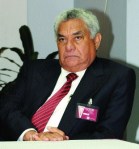
This is a podcast Afra Raymond did while in New York on Thursday 14th January at the offices of RICS Americas, the regional HQ of the international professional body, the Royal Institution of Chartered Surveyors.
As you will hear, Afra Raymond was speaking from his positions as a Chartered Surveyor, Managing Director of Raymond & Pierre Limited and of course, President of the Institute of Surveyors of Trinidad & Tobago. He focused on 2 matters
the new Property Tax recently passed by our Parliament and,
the Uff Commission of Enquiry into the Public Sector Construction Industry.
He concluded by reminding listeners that the RICS’ principal cause was that of “serving the public interest” and that that was one of the main engines for him as a campaigning surveyor.
This is to be published on the last day of 2009 and it is intended to do two things – firstly, to provide an overview of the CL Financial bailout and secondly, to start a critical conversation on our work as writers and analysts.
The timeline of the events over the last year or so on the CL financial bailout is set out for ease of reference. The detailed material can be found in the earlier part of this series at www.afraraymond.com. In doing some other reading, I came across a valuable part of the story and that is the first item in the timeline.
TIMELINE – November 2008 to December 2009
Michael Carballo6th November 2008 – The Guardian publishes ‘Surviving the Storm’, an extensive review by Sandra Chouthi on the prospects for our local businesses on surviving whatever the global situation throws at them – see http://legacy.guardian.co.tt/archives/2008-11-07/bussguardian1.html. The first person interviewed for that article was Michael Carballo, Group Finance Director of the CL Financial group. Some of his quotes are remarkable, given the imminent collapse –
“Luckily, the group has not been impacted in any way via securities in any banks we have had to write down.”
Carballo said CL Financial, with $100 billion in assets, could weather any storm.
“We are not exposed in any one particular industry. That is our business model,” Carballo said.
18th November 2008 – Publication of CL Financial’s 2007 Annual Report ‘The Next Wave of Growth’, which includes audited accounts showing profits after tax of $1.74Bn, with ‘cash and cash at bank’ of $9.486Bn.
2009
13th January – CL Financial’s Executive Chairman, Lawrence Duprey, writes to seek financial assistance from the Central Bank.
16th January – CL Financial pays dividends of $3.00 per share, as per their Annual Report.
23rd January – CL Financial holds its Annual General Meeting at Trinidad Hilton.
30th January – The massive and unprecedented bailout is announced at a press conference at the Central Bank. A Memorandum of Understanding is signed.
12th June MoU – A new Mou is crafted and shareholder agreement is obtained at a special meeting. There is a change of Boards and government takes control of the CL Financial group for 3 years. The terms of that agreement, beyond what is in the Ministry of Finance press release, are deemed ‘confidential’.
18th November – My previous attempts at questions having been ignored by the highly-paid public servants at the Ministry of Finance, I applied, using the Freedom of Information Act, for a copy of that second MoU to be published. The time limit on that application expired on Friday 18th December without any reply from the Ministry of Finance. I will be pursuing my other options to bring that information into the light.
30th November – In response to a motion by Basdeo Panday, seeking parity of treatment for HCU depositors, the Minister of Finance gave a stupefying rationale for the actions of the government in the entire bailout scenario. explanation – see http://guardian.co.tt/business/business-guardian/2009/11/12/duprey-s-fate.
24th December – 2 other newspapers carry reports that Caroni workers are to receive their entitlements (said to total some $400M) under the terms of a CLICO pension plan.
The ‘Express element’
It is common to criticise governments on the basis that they are out of touch and seem to operate in silos. Meaning that various departments of our governments often operate without taking account of each others’ plans and actions. That is indeed so, but we also have to be willing to change if we are to have a chance of changing our world.
In saying so, we in the media have been existing in a similar place where cross-linking and critical discourse is almost extinct. If we are not able or willing to start a critical, public conversation amongst ourselves, there would also be severe limits on our own growth and effectiveness. The times are very challenging and they pose a caution for us all in the media. Our country needs a quality media of integrity.
It is clear from that series of articles that Ms. Marajh has access to private documents and Michael Carballo. Is it that readers will have to remain in suspense as to the key mysteries of the CL Financial fiasco? In my view, those would have to be –
‘How could CL Financial assets have declined in value from over $100 Bn to $24Bn in less than 13 months?’
‘How could CL Financial chiefs sign that MoU to pledge assets which had already been pledged?’
‘Did CL Financial ever comply with the Court Order to provide a sworn statement detailing the location of all its assets?’
Of course, one could maintain that the focus on the other aspects of the story are of greater importance and public interest. I am just wondering, in public, whether those questions have ever been put to Carballo and if so, what did he reply. It would be a real piece of investigative tonic if Ms. Marajh were to use her access to ask these burning questions.
It also needs to be said that Ms. Marajh’s last set on the Angostura purchase of the Lascelles Mercado group in Jamaica opened two aspects for further investigation.
I do not have the kind of space the Express affords my colleague, so this will be brief.
The first of these was the fact that Home Mortgage Bank seems to have guaranteed a transaction in which Angostura took over Jamaican rum manufacturer, Lascelles Mercado at a cost exceeding $600M USD. It seems that the HMB guarantee was set out in a December 2007 document. That sum was also said to be in excess of the financing headroom available to HMB, but that is not something I am going to pursue here. My concern is that the Home Mortgage Bank was established by an Act of Parliament to provide liquidity to the secondary mortgage market. How come a mortgage company, established to provide finance for the benefit of homeowners, could issue a guarantee to a conglomerate to buy a liquor company? How come? To my mind, that seems to be well outside the intended scope of the HMB as per its own company information – http://www.homemortgagett.com/loadpage.cgi?company_info. There is also the interesting point that this huge deal, with all its possible implications for the stability of the HMB, was not disclosed in the audited accounts (where it ought to have appeared as a Contingent Liability) or Chairman’s Review of their 2007 Annual Report – see http://www.homemortgagett.com/AnnualReport2007/HMBAnnualReport2007.pdf.
The second point is that the expose mentioned that the Angostura purchase was made at twice the listed price of the Lascelles Mercado shares. It is one thing for a company to take strategic decisions, using its own shareholders’ funds and paying ‘over the odds’ for assets, if that acquisition satisfies its objectives. That is one thing, but what we seem to have here is a mortgage bank guaranteeing a massive purchase of shares at twice the value. Was a due-diligence of the transaction done? If there was none, this would be a case in which shareholders’ and depositors’ monies were put needlessly at risk.
As far as I can tell, this is the kind of behaviour which led to the collapse of the entire CL Financial group. We in the media have a responsibility to do better.
 VIDEO: First Up Interview – 17 March 2010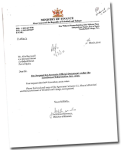

 AUDIO: High Noon Interview – 26 February 2010


 PODCAST: RICS Americas Interview – 14 January 2010

 I do not have the kind of space the Express affords my colleague, so this will be brief.
 AfraRaymond.net