Afra gets CLICO data…End corbeaux capitalism, he says

cobocapitalism

This interview appears in the Business Express Newspaper on Wednesday, March 28, 2018.

LAST week, nearly six years after he first requested the data under the Freedom of Information Act (FOIA), the Ministry of Finance sent Afra Raymond a compact disc with information on all individuals and institutions who received payments from the State for their investments in CLICO, the insurance company that collapsed in January 2009. The matter went to the Court of Appeal before the parties agreed on an out-of-court settlement with the ministry agreeing to most of Raymond’s demands.

For Raymond, an Express Business columnist, property expert and transparency campaigner, it has been a long but ultimately rewarding road, which began with the May 8, 2012 filing with the ministry. As to cost, he will receive 70 per cent of the cost of the litigation in the High Court.

He answers questions on the issue below:

Q: What in broad terms is the importance to governance and government in T&T of last week’s release of information on the State’s payment to CLICO

A: The need for eternal vigilance is greater than before, with our reduced national resources and I should never have had to make that kind of effort to get these details. Three administrations, between 2009 and now, felt it was proper to hide this huge public spending. Good sense seems to have arrived – for the while anyway! How much Public Money was spent on lawyers’ fees in this sorry affair? Is that a secret too?

This bailout was done via the Central Bank and the CL Financial parent company which formally came under State control by virtue of the June 21, 2009 Shareholders’ Agreement. The State then created new laws to further inoculate the Central Bank from the oversight of the Courts via judicial review and so on. What is more, our Integrity Commission also seems to have lost its way in failing to recognise that CL Financial is a company under State control. As a result, the Commission has sought no Directors’ declarations from the largest of the State controlled companies. I tell you.

Contrast T&T with the Bajan approach to the related 2009 collapse of CLICO in Barbados – The High Court there appointed Deloitte as Judicial Manager in April 2011 and a far more transparent process is taking place – see clicolife.com for an example of how we could have done it better.

If one analyses the data, do you agree that the majority of holders of the investments were individuals who were looking to maximise the return on their investments?

Yes, there were several wealthy investors, but a great many of the accounts and most of the larger ones, were held by companies, including state enterprises! We all know that the EFPA was approved as an individual pension product, yet it was sold to companies, which were later able to obtain repayment.

What do you think accounts for the large number of institutional investors who were able to invest in investment vehicles that were first marketed as being for individuals?

The sheer size of the returns being offered by the EFPA eclipsed good sense and it was the ‘best deal in the country’, quite literally ‘Too Good to be True’, grew and grew until it was ‘Too Big to Fail’ and as we now know, everyone is so closely related that it is now a case of ‘Too Big to go to Jail!’

What, in your view, are the long-term lessons of your fight for information on this state expenditure?

What is sorely needed is for the media and the academy to take their proper role as wellsprings of enquiry, research and debate. The mainstream media (MSM) have not embarked on a sustained campaign to get this information released. The UWI has taken no formal position on this serious issue as far as I am aware. This is a huge expenditure of scarce public money to repay wealthy risk-takers at a time when basic needs are unfulfilled. Chronic shortages in our public health institutions, so how can we find money for this?!

The process by which this outrageous bailout request made its way to the Head Table, was approved by Cabinet, with the sitting Minister of Finance being a shareholder of the beneficiary company, with the public being the last to know.  [CORRECTION: The ‘sitting Minister of Finance‘ referred to here is not the incumbent, Colm Imbert.  That was an awkward and inaccurate choice of words on my part and I apologise for that error.  The ‘sitting  Minister of Finance‘ to whom I was referring was the holder of that office from November 2007 to May 2010, Mrs Karen Nunez-Tesheira, who was recorded as the owner of 10,410 shares in CL Financial Ltd, being the 289th of 325 shareholders listed in its filing with the Registrar General’s Department of 17th February 2009.] Well I tell you. Never again. It is like a recipe for a failed marriage in which the husband is the last to know…

What are the long-term lessons of the CLICO collapse and the length of time resolution has taken?

Publication of the Colman Report into CLF…The need for financial education…We need a Regional Financial Regulator as the late Norman Girvan proposed in the wake of this fiasco…most importantly, the key players must be arrested and face the courts on serious charges…The State locks up ‘suspects’ in various lockdowns to then go look for the evidence and pay damages, after! All that is to send a message, we are watching you, we know who you are. The question is why won’t the State take the same firm action against the financial criminals? Until we see the State being very serious with white collar criminals, as is now happening in so many other countries, we are going to have more of this ‘Corbeaux Capitalism.’

CL Financial bailout – the Eleventh Commandment

thoushaltnotbefoundout

‘…When we were growing-up, the Ten Commandments were drummed into us, in an effort to impart certain values…the way things are in T&T these days, it looks like we all have to live with the Eleventh Commandment…Thou shalt not be found out!…’

Today is eight weeks after the Appeal Court made its Consent Order on 24th January 2018 in this protracted litigation between the Ministry of Finance & The Economy and I. Since then, we have been chasing the information which the Ministry agreed to provide. We have had not one item or detail delivered and it is my view that had we not been chasing this continuously, the matter would have simply died.

That is what we are dealing with here. I am constrained to recite the misunderstood phrase, born out of frustration, but it looks like we are dealing with yet another ‘recalcitrant minority‘. Some readers may find that choice of phrase to be going too far in what might be simple inefficiency, rather than any deliberate obfuscation. Of course everyone is entitled to their view, so I am going to set out a few of the key event so that readers can decide.

This matter has gone well beyond a Freedom of Information request, as I am now holding an order from the High Court and another from the Appeal Court. Given those facts, the delays of the various public officials involved are serious, seeming to show a lack of haste which verges on contempt of court. Of course, the key officials with which my attorneys are engaging are also attorneys. I tell you. Continue reading “CL Financial bailout – the Eleventh Commandment” →

VIDEO: Webinar featuring Caribbean Economist Marla Dukharan and leading Trinidadian Transparency Activist Afra Raymond

VIDEO: Webinar featuring Caribbean Economist Marla Dukharan and leading Trinidadian Transparency Activist Afra Raymond

This is the video for the recent webinar in which we discuss the recently-released Corruption Perception Index:

  • The current state of corruption in Trinidad & Tobago
  • From accountability to enforcement: What is missing?
  • Specific steps that need to be taken to improve transparency

Programme Date: 6 March 2018
Programme length: 57:12

Property Matters – Sandals MoU

Adam Stewart, CEO Sandals Resorts International

The Tobago Sandals mega-project has returned to the headlines with recent interviews of Sandals Resorts’ CEO, Adam Stewart, in Barbados and Stuart Young, Minister in the Office of the Prime Minister.

Stewart’s statements were widely reported in the local press (see Addendum 1 below) with an emphasis on the lack of secrecy in the entire arrangement and the fact that discussions were still at a preliminary stage. Minister Young’s CNC3 interview on Wednesday 28 February 2018 (below) was also notable for his insistence that there was no secrecy or any reluctance to engage with the public on this mega-project.

Continue reading “Property Matters – Sandals MoU” →

AUDIO: Interview on Business corner on Power 102 FM – 5 March 2018

power102fmPower 102.1 FM interview with Ms Sandrine Rattan on e-tendering within the new Public Procurement system with Afra Raymond, Moonilal Lalchan, Chairman of the Office of Procurement Regulation and Keino Cox, Chairman of TSTT’s Tenders Committee. Audio courtesy Power 102 FM
  • Programme date: Monday 5th February 2018
  • Programme length:  00:09:06 and 00:16:16


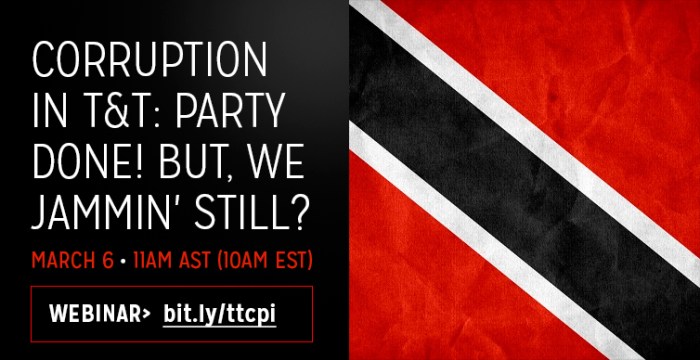
WEBINAR – Corruption in T&T: Party Done! But, We Jammin’ Still?

webinar-6mar2018
Click image to register for Webinar

Caribbean Economist Marla Dukharan and leading Trinidadian Transparency Activist Afra Raymond will discuss the recently-released Corruption Perception Index via an interactive webinar:

  • The current state of corruption in Trinidad & Tobago
  • From accountability to enforcement: What is missing?
  • Specific steps that need to be taken to improve transparency
  • Q&A

webinar-participants

Tuesday, 6 March, 2018 • 11:00 AM AST (10:00 AM EST)


CLICK TO REGISTER NOW!

or click here

Board Games – the eTeck case

Two significant events in the previous week heralded a fresh round of Board Games, as we strive for higher standards of governance and accountability in our State Enterprises.

  1. The first of those events was the Privy Council ruling on Monday 19th February 2018, in the case which eTeck brought in 2011 against its former Board, chaired by Professor Ken Julien, related to alleged negligence for a US$5M investment gone awry.

    To watch hearing, click on image
  2. The second event was the publication of Transparency International’s 2017 Corruption Perception Index on Wednesday 21 February 2018, in which T&T improved its score from 35 to 41 and moved up the scale from 101st out of 176 countries in 2016 to 77th out of 180 countries in 2017. The average country score in the 2017 CPI was 43, so T&T is still below average, but the improvement in that perception has already been welcomed by the current administration.

Continue reading “Board Games – the eTeck case” →

Property Matters – Digital Transformation in our Tourism?

Property Matters –  Digital Transformation in our Tourism?

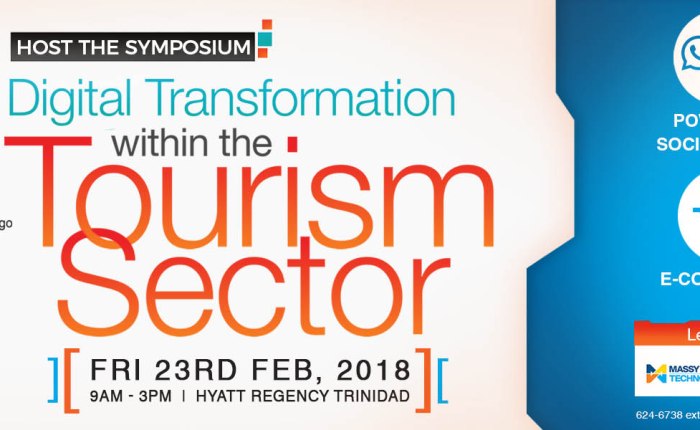
On 2 February 2018, the Ministry of Tourism announced its upcoming symposium – ‘Digital Transformation within the Tourism Sector‘ – as a major event on Friday 23 February 2018, in conjunction with Massy Technologies and featuring speakers from Microsoft and IBM.

This is an ambitious project intended to examine big-data, the cloud, the digital customer experience and the prospects of the hospitality industry in our country. As such, these proposals should have our principled support, but there is real cause for a pause here, given the distinct reluctance of the State’s agencies to answer our queries on the agreements and performance of the large State-owned hotels.

The three largest hotels in our country are State-owned – Trinidad Hilton; Magdalena Grand (formerly known as Tobago Hilton) and Hyatt Regency – comprising about 45% of the established hotel rooms, at the better end of the market. The amount of Public Money invested via capital outlay in those hotels is estimated, from the public record, in the first sidebar. But what is of deeper interest to me is that far larger sums of money are generated in the operations of those hotels than the capital spent to create the actual facilities. Those sums are spent on rooms, meals, drinks, rentals for functions and so on.

We almost never get any real open discussion on the actual revenues of these hotels or the arrangements for sharing those monies between the State as property owner and the hotel operator. Continue reading “Property Matters – Digital Transformation in our Tourism?” →

Property Matters – Trinidad Hilton Improvements

Property Matters – Trinidad Hilton Improvements

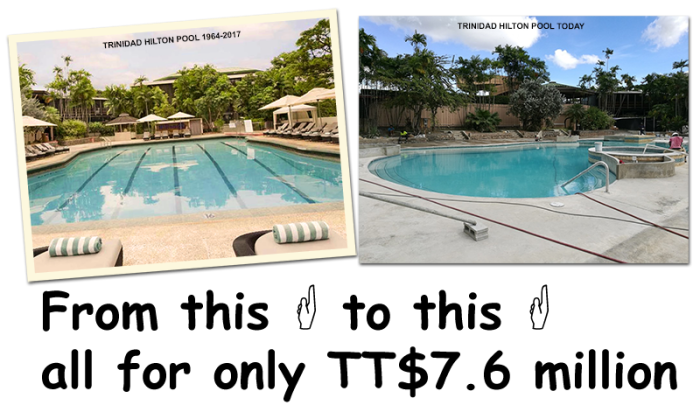
At the end of January 2018, the Ministry of Trade & Industry and its implementing agency, Evolving Technologies & Enterprise Development Company (e TecK), announced the completion of a $7.6M project for the renewal of the Trinidad Hilton Pool. According to the official statements, that project was completed on time and within budget, as part of the State’s long-term obligations at that 418-room hotel. Despite those assurances, there was a series of condemnations which need to examined.

hilton-pools

Trinidad Hilton Management Agreement

Three of its interesting details –

  1. Hilton pays e TecK a rental of 76% of the ‘Annual Gross Operating Profit’ which is defined in the lease;
  2. e TecK is responsible for doing replacements, renewals, extensions or improvements to the Trinidad Hilton at its expense. That means that e TecK was acting within the lease terms in paying for those pool improvements;
  3. Hilton is required to prepare detailed accounts of the hotel’s operations and submit those to e TecK.

Please note that Trinidad Hilton is undergoing a hugely expensive improvement program since 2008 (see Sidebar).

I am not making an issue of the decision to do these improvements or making allegations of cost or time over-runs. There may be issues in those aspects of the project but I am not engaging those.

My issue has been and remains, that despite all the smooth press releases and so on, we are unaware of the underlying commercial arrangements by which these hotels exist. The three largest hotels in our country are State-owned – Trinidad Hilton; Magdalena Grand (formerly known as Tobago Hilton) and Hyatt Regency. Those hotels are operated by foreign entities under management agreements with the State agencies which hold the ownership interest. They can therefore be classed as Public Private Partnerships (PPPs). Since PPPs are currently being promoted as a development approach, those arrangements certainly ought to be closely examined, looking beyond the Hilton pool. Continue reading “Property Matters – Trinidad Hilton Improvements” →