Afra Raymond’s first submission to the Commission of Enquiry into the failure of CL Financial Limited, Colonial Life Insurance Company (Trinidad) Limited, Clico Investment Bank Limited, Caribbean Money Market Brokers Limited, and The Hindu Credit Union Credit Union Co-operative Society Limited.
My name is Afra Martin Raymond and I am a Chartered Surveyor, being a Fellow of the Royal Institution of Chartered Surveyors. I am Managing Director of Raymond & Pierre Limited – Chartered Valuation Surveyors, Real Estate Agents and Property Consultants. I am also the President of the Joint Consultative Council for the Construction Industry (JCC), an umbrella organisation which represents the interests of Engineers, Surveyors, Architects, Town Planners and Contractors in this Republic.
This submission is being made in my personal capacity and does not represent the position of either Raymond & Pierre Limited or the JCC.
My work on this vital issue has all been based on the public record and can be seen at my blog www.afraraymond.com.
I am willing to give oral evidence before the Commission.
The TV/Radio Shows – I have done seven TV interviews on the CL Financial bailout and those are available at the ‘Multimedia’ page of my blog.
Up Next! TV interview with Brian Branker, former Executive Chairman of British American Insurance Company Ltd (BAICO) – This is the first time, to my knowledge, that one of the CL Financial chiefs has gone onto the record to speak about these events. The interview is available at http://vimeo.com/15145888.
The 12th June 2009 CL Financial Shareholders’ Agreement – this is the subsequent agreement, erroneously described by the Ministry of Finance as ‘giving substance to’ the original MoU, but later found to have enshrined a decided shift in favour of the shareholders – https://afraraymond.net/wp-content/uploads/2010/03/mou21.pdf.
I do believe all the items in this submission to be true and correct, save and except for the Up Next! Interview, which comprises the views and observations of Brian Branker.
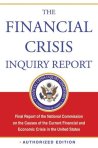
I have been preparing my submissions for the Colman Commission and took some time-out to start reading the Report into the USA’s financial crisis. Of course I am referring to the Financial Crisis Inquiry Report, which was published at the end of last month, about a year after its first hearings.
Even though I have barely scratched the surface of this 662-page work, it has already been a deeply fascinating read, filled with cautionary insights. The first conclusion of that Report is worth citing –
“We conclude this financial crisis was avoidable.
The crisis was the result of human action and inaction, not of Mother Nature or computer models gone haywire. The captains of finance and the public stewards of our financial system ignored warnings and failed to question, understand, and manage evolving risks within a system essential to the well-being of the American public. Theirs was a big miss, not a stumble. While the business cycle cannot be repealed, a crisis of this magnitude need not have occurred. To paraphrase Shakespeare, the fault lies not in the stars, but in us.
Despite the expressed view of many on Wall Street and in Washington that the crisis could not have been foreseen or avoided, there were warning signs. The tragedy was that they were ignored or discounted…”
It is an epic failure in that the world’s strongest and most diversified financial system was brought, literally, to its knees by a tidal wave of greed. Some of the main features were –
Slack regulators, who had looser and looser control of market activity, yet did little or nothing to propose the need for better controls.
Corrupt politicians, who accepted huge political donations from the financial institutions – yes, both parties – so that there was an absence of real debate on major policy shifts and consequences
A sheer overdose of hubris in an atmosphere in which it seemed, against all good sense, that tangible risk had been abolished. The catchphrase among market players was ‘IBGYBG – I be gone, you be gone’ – denoting a total abandonment of the notion of customer service. In many cases the salespersons knew what they were selling was of such poor quality that their own firms were betting against it.
If any of this sounds familiar, yes, you are right; it is almost the same as our own crisis. The old aphorism ‘When Uncle Sam catch a cold, the Caribbean get pneumonia’ comes to mind.
I have to say that the reading is a sobering experience as one starts to reflect that the deep and broad USA economy has been crippled by these ‘smartmen’ and their political minions. So what hope do we have of resisting those elements? That is the question we need to grapple with in this rounds.
But for all the parallels, there are two important differences –
Firstly, the guilty actors are not going to own-up. This is one pie they won’t want a piece of. They may try to seek exoneration in a version of the truth which locates blame somewhere on Wall Street. Those assertions need to be strongly challenged; they represent a piece of pure mischief.
Secondly, the US crisis is far smaller, proportionally, than our own. The Minister of Finance stated in the 2011 Budget (pg. 8) that the CL Financial bailout was costing our country more than 10% of its Gross Domestic Product (GDP). In comparison, the US bailout was estimated, in December 2010, by their Treasury Secretary to be costing about 1% of that country’s GDP. These facts show the double-mischief of these bold-faced people trying to tell us that this is just like in America.
According to those sources, this crisis is costing us 10 times more than the Wall Street one we keep on about. The relevant Ministry of Finance Press Release of 17th January 2011 states, “…With the Government’s planned bailout of CLFG (CL Financial Group), Standard and Poor’s expect net general government debt will rise to 28% of GDP in fiscal 2011 from 15% in fiscal 2010, though it will remain below the 36% median for ‘A’ rated sovereigns…” That is a difference of 13%. Yes, that is 13 times more than the USA…
This crisis will require us to properly compare and contrast those situations.
It has been two years, but at last the Commission of Enquiry into the T&T financial collapse is about to start its hearings. For the first time and against all their schemes and plans, the main agents of the Code of Silence are going to be forced into the direct sunlight to face questions and of course I mean the several court cases and the Colman Commission as discussed in ‘Testing the Code of Silence‘.
Sir Anthony Colman
The final date for submissions to the Colman Commission is Monday 14th February, which means that all written evidence must be filed by then. I am not sure if electronic evidence, like the 55-minute interview Brian Branker (former Executive Chairman of British American Insurance Co.) gave on Up Next! in September 2010 is allowable, but it seems worth it to try. So this is my call for the producer of that show, Jerry George, to please do submit it. If you are interested, it is at http://vimeo.com/15145888.
I expect that by now the main actors in this Code of Silence are all rehearsing their lines and agreeing who will speak on which piece and in fact which parts to be silent on. In my opinion we can expect nothing but self-serving and defensive statements, if not outright lies, from the main actors in this mess – the CL Financial chiefs, the wayward Regulators and of course, the auditors. The burning question is therefore how is the public interest going to be defended and advanced? By whom? On what terms?
To make the obvious comparison with the Uff Enquiry, we are looking at the same kind of procedure. The decisive difference is that, in this case, the balance of forces is entirely different.
You see, in the Uff Enquiry there were the forces of the State and its agents all lined up to defend their way of operating – that included UDeCOTT, Calder Hart, National Insurance Property Development Company (NIPDEC), Housing Development Corporation (HDC) and of course the State itself was in the Enquiry in the person of the Attorney General. On the other side there were the Joint Consultative Council and Dr. Keith Rowley, MP. All those parties were strongly represented. There were also independent forces at the Enquiry – the Trinidad & Tobago Transparency Institute (TTTI), Carl Khan and myself – the only two witnesses whose testimony stood without hostile cross-examination.
Due to the balance of forces in that forum, the Uff Enquiry was satisfactory in that all versions were strongly contested under cross-examination and also by conflicting testimonies – the Enquiry was forced to decide on the veracity and relevance of evidence…there was no easy middle road or settling for a version because no one had spoken against it.
Here, in the Colman Commission, we face an entirely different order of challenge. Let me explain –
Firstly, the quantities of money involved are several times larger – at least ten times more, in my estimation.
Secondly, the entire establishment seems to have capitulated to the ‘Duprey Dream’. That is a state in which no serious questioning of the actions of the CL Financial chiefs is undertaken. In the USA experience, this phenomenon is described as Regulatory Capture. It is one in which regulators are actually ‘occupied’ by forces who are the people they are supposed to police. That is not unfamiliar to us here in Trinidad & Tobago, but that is why we must fight against it. It is a true nadir of absolute corruption. A roaring silence of the formal and informal regulators.
Finally, based on that record, the Colman Commission will be dominated by these people, the ones who caused the entire mess. If that is the case, there is a real danger that the truth could be compromised or even sacrificed. That peril is what we have to work against.
Some of us have insisted on this Enquiry as a necessary step in preventing a repetition and further looting of the society. The facts and the versions of the facts are about to be tested in the crucible of the Colman Commission.
The only way we can avoid the US fate, and possibly worse, is by doing our very best to learn from the bitter experience. Those of us, who have insisted on this crisis being a real turning-point, must make the most of this moment. In my opinion, that can take place on two levels –
The publicity level, with lobbying to ensure that the process receives the maximum possible exposure, generally, and spot-lobbying to ensure that the key players in the mess are spotlighted when it is their turn to testify. The sole Commissioner was reported to have said that the hearings will be televised. How can we check on and ensure that takes place? Also, we should be insisting on a similar arrangement to Uff with the transcripts being on-line.
The evidential level, at which we need to make submissions to contend with the rotten and dishonest discourse from the utterly unresponsible parties who are ultimately responsible. We not only have to contend with and destroy the ‘Anansi-stories‘, we also have to advance our own arguments into the spaces and places they do not want us to go into.
Trevor Sudama, former MP
The key person from whom I would like to see a submission is the respected former MP and economist Trevor Sudama, who was the first person to put onto the public record these serious concerns over the health of the CL Financial group. That was in the 2001 Budget debate and of course we all know that Sudama and his colleagues – Ramesh Lawrence Maharaj and Ralph Maraj – were strongly attacked, ostracized and ultimately forced from the political Head Table. All by their own party colleagues.
Mr. Sudama, we need your input in this vital matter. The background for your intervention in this matter, your debate on it and the political attack must form part of the record in this Enquiry.
Some of the key commentators who should put in written submissions are Camini Marajh of the Express, Andre Bagoo of Newsday and Anthony Wilson, the Ag Editor-in-Chief of this newspaper.
Our professional Institutions have been pointedly silent and I would hope to see submissions from –
Association of Trinidad & Tobago Insurance Companies,
Our institutions of higher education should join in with their perspectives –
Arthur Lok Jack School of Business, part of UWI
School of Business and Computer Studies
School of Accounting and Management
Caribbean Centre for Monetary Studies, also a part of UWI
UWI’s Economics Department
UWI’s Government Faculty
I am going to close by sketching just one parallel.
To go back to the main points of the Wall Street experience as outlined above, we hear of these complex debt swap instruments and their toxic consequences. The fatal flaw of these instruments, according to the reports I have read, seems to be that they seemed to be a good way to invest with high returns and little or no risk. The truth turned out to be just the opposite.
It all seems remote from our own situation, but that is not the only way to look at it. The most controversial single item in this entire situation here has been the EFPA, an annuity duly approved by the Supervisor of Insurance. When we consider the promotional literature for that product, it is nothing less than scandalous that a leading company should have been allowed to advertise an investment product with exceptional rates of return and the repeated phrase ‘guaranteed investment’. There is absolutely no such thing as a guaranteed investment. It is a complete contradiction in terms, but yet it went out to tens of thousands of people, who suspended their disbelief and went along for the ride. That is the Trini parallel with those complex debt swap instruments.
The audited accounts for CMMB for 2006, 2007, 2008 and 2009 were obtained from the SEC. They allow a view of CMMB’s financial affairs for the 5-year period 2005 to 2009. I have included some selected ratios drawn from those accounts.
There has been a challenge to my assertion that CMMB failed, reaching to the stage of my having been requested to provide the Business Guardian with an indemnity against possible legal costs and damages. I was unable to persuade the Editor to accept my conclusions and agreed alterations to my prior column on this matter. Regular readers will know that my concern was triggered by reports in the pages of the Business Guardian that some of the key people in CMMB have now opened a new investment house, KSBM.
Since 22nd October 2010 I have been trying to obtain the official Terms of Reference for the Colman Inquiry into this financial fiasco, but those several enquiries were fruitless until the Secretary to the Inquiry faxed me the requested document on the first working day of the New Year. Thank you. The Terms of Reference were published in the Trinidad and Tobago Gazette of 17th November 2010 – No. 144 in Volume 49. Here is the first sentence in the second paragraph, for any of those who still have doubts –
…And whereas the President on the advice of the Cabinet has deemed it advisable and for the public welfare that a Commissioner be appointed to enquire into the failure of CL Financial Limited, Colonial Life Insurance Company (Trinidad) Limited, CLICO Investment Bank Limited, British American Insurance Company (Trinidad) Limited, Caribbean Money Market Brokers Limited and the Hindu Credit Union Cooperative Society Limited with a view to ascertaining why such events occurred…
So there we have it – the President on the advice of the Cabinet – but there is more, if anybody needs more signs of a failure. The Central Bank issued a Press Release on the day of the Bailout – 30th January 2009. The first objective stated in that document is –
To stem the increasingly serious liquidity pressures being faced by the financial services companies within the Group – i.e. CLICO Insurance Company Limited (CLICO), CLICO Investment Bank (CIB), British American Insurance Company Limited (BAICO) and Caribbean Money Market Brokers Limited (CMMB)…
I am not going to spend any more time stating the obvious, but it would be interesting for the other side to give a public opinion on all this. Can anyone seriously claim that CMMB did not fail? Well, I guess we will have to wait and see. The sheer boldfaced attitude of certain people knows no bounds and with the Carnival Season starting-up, anything could play.
In my view, there are substantive issues beyond the obvious failure and those would include –
CMMB’s role in the CL Financial group. In the 5 years I examined, there was a very low rate of profit earned by CMMB.
Year
2005
2006
2007
2008
2009
Return on Assets
1.22%
0.97%
0.0015%
0.0043%
0.0094%
Given the very low profits earned during CMMB’s operations, there are two inescapable questions arising – What is the real reason for the CL Financial group to hold onto this company? and What was in it for them?
It was certainly useful for the parent company to be able to secure advances of $1.8Bn from CMMB on what were no doubt good terms. So CMMB was a useful subsidiary for CL Financial to be able to draw on when there was the need.
The JMMB (Jamaica Money Market Brokers) element. But then also we need to consider the sidebar item on the acquisition by CL Financial of the JMMB block of shares in October 2008. What could have been the rationale for CL Financial to spend $262M on securing its ownership of a company that was about to fail? No doubt that would have been a period of considerable cash-flow pressure within CL Financial itself, so it does seem to be a bizarre decision. Given all of those elements, why would CLF pay such high multiples to buy the remaining shares in a failing subsidiary? This is one of those intrigues which makes me wonder whether there was more in the mortar than the pestle, so to speak. Given that the purchase of the JMMB shareholding was only 3 months before Duprey wrote that fateful letter requesting financial assistance,what was CLF’s rationale? Could there have been a prior agreement as to the price to be paid for those shares? Was a valuation of those shares ever done? If so, by whom, on what assumptions and with what result?It seems that a huge sum of money (over $260M, by my calculations) was drawn out of the collapsing parent company, on what was virtually the brink of the meltdown, to buy the remaining shares in yet another collapsing company. It is staggering to conceive of a situation in which a financial company could spend over $260M without such elementary due diligence, which is why this aspect is an important one. At the very least, the quality of judgment of the CL Financial chiefs seems suspect. Could it be that the reporting systems of the group were so poor as to be unable to foresee the impending collapse at either the group or CMMB level?
The First Citizens’ Bank purchase. The FCB price of $1.00 shows the evaporation of CMMB’s shareholders’ capital. The apparent request by FCB’s auditors for a specific confirmation of the State guarantee is important since it is reasonable to assume that PwC, also CL Financial’s auditor, would have been aware of the fragility of the imputed security for those massive advances.
Ramcharan Kalicharan
Kalicharan’s explanation. The former CMMB Managing Director, Ramcharan Kalicharan gave a version of events in these pages on 16th December 2010? He was trying to contend that the liquidity pressure on CMMB developed as a result of the bailout of the parent company. Of course the fact that they were both in trouble at the same time – hence their being mentioned repeatedly at the time of the bailout – lends the lie to that one.
Leveraging. One of the features of the failed firms elsewhere has been the extent to which they were over-leveraged i.e. the amount of capital they had borrowed greatly outweighed the amount the firm’s owners had invested from their own money. The conventional thinking is that an over-leveraged firm would be likely to act in a more risky fashion if a smaller proportion of the partners’ own money is likely to be lost. Some of the findings of the ongoing global meltdown are causing those formerly settled principles to be re-examined. In the case of the Wall Street firms which were bailed out in the US crisis, the leverage ratios were in the 35 to 40 times range. That means that those firms had borrowed 35 to 40 times more than the capital they had committed out of the shareholders’ funds.
Year
2005
2006
2007
2008
2009
Leverage (Gearing ratio)
28.7
20.1
36.4
34.5
240.8
So, the CMMB gearing ratio exceeded the 20-times range since 2005, with that startling 240-times as at the date of collapse. It seems that CMMB was run far over the ‘redline’ for a substantial period and what is worse, that this steep level of risk was disclosed in their filed audited accounts. Which leads right into the second point, which is, of course, the role of the regulators in all this. To return to the issue I raised in writing about AIC a few months ago, this speaks to the question of the proper role of the regulators of our financial system. Are they to fulfill a virtually clerical function, to ensure that statements and accounts are filed on time and in the correct fashion? Or do they have a more pro-active and forward-looking role and responsibility in identifying firms which may have all their filings in order but, by virtue of their actual behaviour in the market, may be posing serious risks to the entire system?
The medium-term implications for FCB. Finally, when I consider the levels of volatility and the cost of ‘fixing-up’ CMMB for FCB to take it, this,together with FCB’s exposure to Home Construction Limited (as evidenced in FCB’s 2009 Annual Report in which they disclosed that 9% of their entire loan portfolio (an amount in excess of $1.0BN) had been advanced in a single instrument at favourable rates to Home Construction Limited) would have the combined effect of the FCB group itself now being significantly exposed, seemingly more so than other banks, to an element of CL Financial risk.
SIDEBAR: Jamaica Money Market Brokers (JMMB)
JMMB and CL Financial established CMMB in 1999. In October 2008, CL Financial purchased JMMB’s 45% share in CMMB at a price of $41.37M USD ($262.7M TTD). That equates to a value for the entire enterprise in the range of $580M and given that CMMB’s Total Profit in 2008 was $35M, that is an earnings multiplier in excess of 16-times. See – http://jamaica-gleaner.com/gleaner/20081015/business/business1.html
KSBM directors, Brent Salvary, Ramcharan Kalicharan, Robert Balgobin and Robert Mayers
The headline was an arresting one – ‘Investment pros set up new business‘ at page 10 of the Business Guardian of 9th December. It was reported that a new investment house, KSBM, was launched and it seemed that they were profiling.
Given that all four of KSBM’s Executive Directors are ex-CMMB chiefs, there is an inescapable question… ‘Did CMMB collapse, or did they not?‘
Our society’s level of development will be limited by our capacity to reason and learn from that reasoning. The Code of Silence must be destroyed if we are to progress. It is necessary to probe this question most soberly and this is my attempt.
As is my practice, I am proceeding from the published record –
If we refer to the MoU signed on 30th January 2009 there are only two references to CMMB, in which, at clauses 1 c) and 6 b), the CL Financial group agrees to sell its shares in CMMB, along with a list of other assets.
…Today, the Government, the Central Bank of Trinidad and Tobago, and First Citizens Bank (FCB) became part of a bail-out package for CLICO Investment Bank, CLICO and British American Insurance and Caribbean Money Market Brokers (CMMB)…
The Governor’s statement made that day goes a little further, by referring to the transfer of third-party assets and liabilities of CIB and CMMB to First Citizens’ Bank.
…This is the first in a series of media conferences that the Central Bank intends to schedule to update the national community about progress with respect to resolving the financial difficulties in CLICO, CIB and CMMB…
It is reasonable to ask why it became necessary to transfer CMMB’s third-party assets and liabilities (which would have included depositors) to another financial institution. More to the point, it would seem from the events that only a State-owned financial institution was willing to partake. In my view, if CMMB were healthy and whole, it would never have been even mentioned in all of this.
But, wait, there were conditions –
The fourth reference of course was the revelation that the previous administration had created a $1.8Bn guarantee to cover CMMB’s advances to its parent company, CL Financial. First Citizen’s Bank had made that guarantee a condition of its acquiring CMMB.
On 1st October, 2010, which was the fateful Friday on which our Prime Minister discussed the CL Financial matter at length in Parliament, First Citizen’s Bank wrote to the Minister of Finance to get confirmation that that guarantee was properly in place.
…First Citizens Bank CEO Larry Howai yesterday confirmed the bank’s request and revealed that it was made in relation to the bank’s acquisition of Caribbean Money Market Brokers (CMMB) under the terms of a supplemental agreement drawn up subsequent to the Memorandum of Understanding (MOU) of January 30, 2009. CMMB had racked up a substantial debt due to loans to parent company CL Financial.
“What happened is when we acquired CMMB, CMMB was owed money by the CL Financial Group,” Howai said. “We had told the government at the time that we would only acquire CMMB if they guaranteed the debts…
It seems to me that the guarantee First Citizen’s Bank was confirming had been made in conditions of great privacy, for it was the first time I was reading about it. A Supplemental Agreement to the published MoU – one can only wonder when that is to be published.
…The terms of reference of the Commission of Enquiry include looking into the causes, reasons, and circumstances leading to the deterioration of the financial conditions at CLICO, CLICO Investment Bank Ltd, British American Insurance Company (Trinidad) Ltd and Caribbean Money Market Brokers and HCU which threatened the interest of depositors, investors, policyholders, creditors and shareholders and the circumstances, factors, causes and reasons leading to the January 2009 intervention by the Government for the rehabilitation of the companies…
Some other views have been put to me, most notably by the editor of a leading newspaper, to challenge my assertions on CMMB, so one needs to go further.
Yes, it is now time to consider First Citizens’ Bank’s (FCB) 2009 Annual Report.
As to the post-bailout events, I am considering page 77 of FCB’s 2009 annual report and Note 1 to the accounts ‘General Information’ is giving me pause – the relevant paras are cited –
…The CMMB Group comprises CMMB Limited, CMMB Trincity and CMMB Barbados…Effective 2 February, 2009, the Bank assumed control of CMMB Securities and Asset Management Limited (CSAM)…
The meaning of that series of statements is unclear to me…FCB assumed control of the CMMB Group (which we are told has 3 parts) on 2nd February 2009. Ditto for CMMB Securities and Asset Management (CSAM)…is that part of the CMMB group or not? I am not at all clear on what, if any, is the difference in these companies.
But, apart from that note, the real meat of the matter is found at Note 39 on page 131 – ‘Business Combination’ – the opening para of which, in reference to CMMB, reads –
…The acquired business contributed revenues of $369.9 million and net profit of $91.9 million to the group for the period from 2 February 2009 to 30 September 2009…
The acquired business is obviously CMMB and that profit rate, at just about 25% of turnover, is below FCB’s overall 45.5% profit rate disclosed at page 73, in the Consolidated Income Statement.
The CSAM performance, disclosed on the next page of the same note, is less impressive –
…The acquired business contributed revenues of $3 million and net loss of $0.16 million to the group…
But the body of that Note is contained in its details of Net Asset Values, to quote –
…The details of the fair value of the assets acquired and arising from the acquisition are as follows…
The Fair Value of Net Assets for the two acquisitions is disclosed as being:
CMMB Fair Value
CMMB Carrying Value
CSAM Fair Value
CSAM Carrying Value
($187,444,000)
$74,949,000
$14,219,000
($14,218,000)
I abbreviated the table to show its headings and totals only.
Fair Value is the estimated market value of the assets and liabilities, with an adjustment for any ‘special purchaser’ advantages or disadvantages.
Carrying Value is what used to be called ‘Book Value’ – i.e. acquisition cost less any depreciation.
The largest negative entry in that accounting is Other Funding Instruments, disclosed at $5.464Bn. What were these?
Point being, that, even if we ‘net-off’ the two companies, these figures disclose a negative Net Asset Value of about $173M.
More to the point – which was CMMB’s state at the date of the bailout – the table in Note 39 also discloses CMMB’s cash and cash equivalents to be NIL at the time of the bailout. CSAM’s are disclosed to have been about $7.3M.
….The Group’s total assets were $27.8 billion as at the end of September, 2009 up $11.9 billion or 75%. This increase was mainly as a result of the acquisition of CMMB which accounted for just over $7.6 billion of the Group’s total assets…
I am unable to reconcile the contents of Note 39, which specify a negative Net Asset Value of at least $173M, with this statement as to the additional $7.6Bn in total assets.
The conflict in the narrative is evident even in the very CEO’s statement –
At page 13, we read –
…During the year, the most significant event for the Group was the acquisition of Caribbean Money Market Brokers (CMMB), the largest brokerage house in Trinidad and Tobago. The acquisition contributed to growth in assets, profits and funding…
Then, at page 14…
…we were called upon by the Central Bank to assist with the payments to depositors of CLICO Investment Bank (CIB) and to acquire CMMB, both of whose customers were seriously affected by the necessary interventions made by the authorities to stabilize the system…
How were the CMMB customers ‘seriously affected by the necessary interventions’?
Nothing in FCB’s 2009 Annual Report leads me to doubt my original conclusion as to CMMB’s collapse. I am sure more details will emerge during the Colman Commission, the Terms of Reference for which were again requested from the AG’s office this week.
But in fact more details emerge in the Business Guardian column of 16th December ‘First Citizens profits from Duprey’s CMMB‘. Two quotes from the First Citizens CEO will suffice –
“As far as First Citizens chief executive officer, Larry Howai, is concerned, the bank and the government together saved CMMB – ‘They would not have been able to continue in business much longer’”
“CMMB had serious impairment of between $1.6 and $1.8billion which would have had to to have been written off or provided for in some other way”
It would really be refreshing to have one of those CMMB chiefs (Ram Ramesh or Robert Mayers, maybe?) assist us in gaining a clearer picture of the events.
In summary, we have CMMB
reportedly with NIL cash balances as at the bailout
reportedly with a negative Net Asset Value
with its customers stated to be ‘seriously affected’
acquired by the State-owned bank
The terms of which acquisition include a secret guarantee for $1.8BN of presumably irrecoverable advances to its parent company
The subject of the oncoming Colman Commission
The big question for me is how come the chiefs of CMMB, a financial institution which is known to have failed on this scale, can be permitted to open another one? We are acting as if we have no capacity to learn from our errors. Just carrying on as though nothing happened. What is the role of the SEC and the Central Bank in all this? Have we learned nothing?
I certainly hope that my colleagues in the press are going to be as insistent and detailed on this matter as the circumstances demand.
The new situation is charged with peril and one is reminded of Naipaul’s father, the intrepid journalist from A House for Mr. Biswas whose favourite tagline was “…amazing scenes were witnessed…”
Finance Minister, Winston Dookeran, addressed Parliament on the Finance Bill (No. 2) 2010 on Wednesday 24th November. It was a lengthy and detailed statement, which put things into a necessary perspective. For me, it was important that Dookeran gave priority to the claims of the contractors and of course, the last item being the claims being made by the various groups representing Clico policyholders.
The Finance Minister held his position as set out in the 2011 budget, which was no surprise when one considers his statement that the various submissions received from the policyholders’ groups did not withstand scrutiny. I only had two significant concerns in terms of outstanding items which require proper attention.
The first of those was the continuing failure to produce the audited accounts for the CL Financial group – by now the 2008 and 2009 accounts are long overdue. The absence of those important figures means that the many heated discussions taking place, in the media and privately, are all uninformed. The questions are simple – Are the 2008 and 2009 audits for the CL Financial group completed or not? Yes or no? If they are, when are they to be published? If not, what is the problem with completing these?After all, as I wrote about the 12th June 2009 CL Financial Shareholders’ Agreement in this space on 1st April 2010 –
…Clauses 2.3.3 and 2.3.4. of the SA, require the outgoing CL Financial chiefs to render all assistance to the incoming Board and Management in terms of all records and accounts etc. The question here is ‘Have the new Board and management been receiving the full assistance of the previous CLF chiefs?’ If not, what is being done about it?…
The second concern I had was with the special window being opened to assist the Credit Unions, some of whom had invested in excess of 10% of their funds in the EFPA, an annuity approved for individual investors. We need to know just which Credit Unions took those imprudent investment decisions. There is no way we can merely legislate or pay our way out of this crisis, the problem runs deeper, into fundamental matters such as the attitudes of the leadership group in the society. Some of those details might emerge during the upcoming Commission of Enquiry, but it would be to Dookeran’s credit if he released the names of those Credit Unions and the amounts to be refunded.
The immediate statements of the Clico Policyholders’ Group (CPG), which targeted Dookeran, are a perturbing sign. For whatever reason, the CPG is ignoring the settled principle of Cabinet’s collective responsibility. That stance seems to be detrimental to effective negotiation and I am beginning to wonder if some person or persons in the Cabinet is ‘giving them basket’.
The threatening statements from the CPG as to the damage their proposed lawsuit can do to our country’s economy are nothing less than scandalous. We are now witness to a grim game of brinksmanship.
We have all heard the arguments and rumours surrounding this bailout, so no point repeating those. It certainly seems that those are going to be ventilated in a high-profile series of lawsuits. I only hope that the hearings remain open and do not take place in a sealed Court. That is what happened in the very first lawsuit after the bailout, in which the Central Bank was attempting to get CL Financial to comply with the terms of the bailout. The stakes are too high now for any concept of privacy to prevail in this matter.
The Minister of Finance also announced that the conditions under which the financial relief would be offered were being considered and it is good to know that there is to be no unconditional relief at our collective expense.
My thoughts on that aspect are that the State must conduct itself in an exemplary fashion and not be placed at any further disadvantage, having already shouldered this enormous, exceptional payout.
There are now anti money-laundering (AML) laws which require depositors to make declarations as to the Source of Funds, all in an effort to prevent the proceeds of crime from entering the legitimate economy. In my view it is necessary for the government to be satisfied that the various sums being claimed by these policyholders were properly declared under the AML laws. We have had shocking reports about the elementary management controls which were either absent or awry in the CL Financial group, so it would not surprise me if their AML-compliance was lax. That needs to be thoroughly checked. It would not be acceptable for our taxpayers’ monies to be used to rinse ‘dirty money’.
Also, the claimants who owe on their taxes – VAT, PAYE, Corporation Tax, Income Tax and so on – should not be refunded. As Dookeran said in that address, if everyone paid the taxes due, our budget would not be in deficit. We cannot go deeper into deficit without these elementary precautions being taken.
Finally, there is the issue of the many borrowers from Clico, British-American, Clico Investment Bank (CIB). In the case of CIB alone, we are told that about $1.0Bn of those loans are ‘non-performing’ – which means that the borrowers are not repaying their loans. It would be perverse for some of those non-performing borrowers to receive refunds from the State. This is a live part of this situation, since in the case of CIB itself, the very Inspector of Financial Institutions swore in his affidavit filed in the winding-up action for that failed bank –
…With respect to the Creditors of the Petitioner, the Petitioner has met the statutory obligations for the Board of Inland Revenue (except for Corporation Tax Returns for 2007, 2008 and 2009 which are being prepared and remain outstanding)…
That is a glaring example of the kind of wanton wrongdoing at the heart of this mess. CIB fails to file its Corporation Tax returns for three years, yet keep their banking licence and arrange for the taxpayer to bail them out when it all goes sour.
Some claimants may try to invoke the ‘corporate veil’ to shield themselves from various breaches committed by their companies, but this is an exceptional situation in which the State is making an offer. In my view, the corporate veil ought properly to be ignored, so that the long-standing commercial principle of ‘set-off’ can be applied to the claimants.
The Colman Commission of Enquiry and its effects on the Code of Silence will be my next topic.
 I have been preparing my submissions for the Colman Commission and took some time-out to start reading the Report into the USA’s financial crisis. Of course I am referring to the
 The audited accounts for CMMB for
  The JMMB (Jamaica Money Market Brokers) element. But then also we need to consider the sidebar item on the acquisition by CL Financial of the JMMB block of shares in October 2008. What could have been the rationale for CL Financial to spend $262M on securing its ownership of a company that was about to fail? No doubt that would have been a period of considerable cash-flow pressure within CL Financial itself, so it does seem to be a bizarre decision. Given all of those elements, why would CLF pay such high multiples to buy the remaining shares in a failing subsidiary? This is one of those intrigues which makes me wonder whether there was more in the mortar than the pestle, so to speak. Given that the purchase of the JMMB shareholding was only 3 months before Duprey wrote that fateful letter requesting financial assistance,what was CLF’s rationale? Could there have been a prior agreement as to the price to be paid for those shares? Was a valuation of those shares ever done? If so, by whom, on what assumptions and with what result?It seems that a huge sum of money (over $260M, by my calculations) was drawn out of the collapsing parent company, on what was virtually the brink of the meltdown, to buy the remaining shares in yet another collapsing company. It is staggering to conceive of a situation in which a financial company could spend over $260M without such elementary due diligence, which is why this aspect is an important one. At the very least, the quality of judgment of the CL Financial chiefs seems suspect. Could it be that the reporting systems of the group were so poor as to be unable to foresee the impending collapse at either the group or CMMB level?


 …The CMMB Group comprises CMMB Limited, CMMB Trincity and CMMB Barbados…Effective 2 February, 2009, the Bank assumed control of CMMB Securities and Asset Management Limited (CSAM)…
 The new situation is charged with peril and one is reminded of Naipaul’s father, the intrepid journalist from A House for Mr. Biswas whose favourite tagline was “…amazing scenes were witnessed…”
 AfraRaymond.net