TSTT Inquiry

The Trinidad & Tobago Parliament is now conducting an Inquiry into TSTT and this article is an edited version of my submission to that Inquiry.

The Joint Select Committee’s (JSC) ‘Invitation for Written Submissions‘ was published on the TT Parliament website on Wednesday 23 April 2014, with the deadline for submissions set at 4:00 pm on Friday 2 May 2014. Only ten (10) days.

When one considers the far-reaching scope of the Inquiry as specified in its ten (10) objectives; the size and role of TSTT and the recent published reports as to the proposals for the State to relinquish a critical 2% of its share in TSTT, it is clear that these matters are of the utmost, long-term public importance. Placed in that context, the JSC decision to Inquire into these matters is commendable, but the time-frame is so short as to raise serious doubts as to the quantity and quality of submissions which could comply.

The deadline for submissions to this JSC Inquiry should be extended to allow a greater degree of public and stakeholder participation.

This submission is focused on the third of the Inquiry’s ten objectives –

  1. “ To determine the adequacy and effectiveness of the Company’s policies and procedures as it pertains to ensuring accountability, transparency and sound Corporate Governance in its operations and to determine whether these are being adhered to…“

It is my considered view that TSTT has engaged in a series of determined and long-range legal manoeuvres to place itself outside two of our Republic’s principal accountability and transparency laws. Those two laws are the Integrity in Public Life Act and the Freedom of Information Act.

The Integrity in Public Life Act

ictt-vs-tsttThe Integrity in Public Life Act established the Integrity Commission, which states its role to be “…to promote integrity, particularly among “persons in public life” – from the level of Ministers of Government and Members of Parliament to Permanent Secretaries, Chief Technical Officers and members of the Boards of Statutory Bodies and State Enterprises…

In 2005, the Integrity Commission applied to the High Court for an interpretation of its remit, the particular aspect of that matter which has a bearing on this Inquiry was specified at para 1. (2) of the Court’s ruling in that case –

“(2) What is the meaning of the expression ― “Members of the Boards of all Statutory Bodies and State Enterprises including those bodies in which the State has a controlling interest” in paragraph 9 of the Schedule to the Integrity in Public Life Act as amended?”

TSTT was granted leave to be heard on the application, according to paras 3 & 4 of that ruling.

In 2007, the High Court ruled, in relation to that aspect that the IPLA applied to Directors of State Enterprises and bodies in which the State had a controlling interest. The plain meaning of which was that TSTT’s Directors were required to comply with the provisions of the IPLA.

TSTT appealed that ruling, once again seeking to place its Directors outside the remit of the IPLA. That appeal was part of the deliberate, long-term series of legal actions by TSTT to challenge the stated intent of the Integrity Commission in relation to its Directors. The fact that the legal action proceeded that far is ample testimony to the support extended by the government (the Executive) to TSTT in this endeavour.

On 27 June 2013, the Appeal Court ruled that –

CONCLUSION

  1. TSTT is not a State Enterprise. The members of its Board are not subject to the Integrity Provisions.”

That ruling marked the successful completion of the TSTT campaign to remove itself from oversight by the Integrity Commission.

One could view these events as being the lawful exercise of various parties’ rights to seek the Courts’ interpretation of the law and the result as being the product of due deliberation.

That view is too limited, since the wider constitutional question is begged as to the true intent of Parliament in creating the IPLA. This situation represents nothing less than an open dismantling of the clear intentions of Parliament by the concerted actions of the Executive and its agents, together with the independent Integrity Commission.

On 6 October 2000, the Parliament passed the IPLA, but on 13 October 2000, the Parliament passed an amendment to the Schedule of the IPLA. The clear intention of the Parliament in approving that amendment was to include members of the Boards of State Enterprises and those bodies in which the State has a controlling interest.

The intended result of this TSTT litigation was to remove its Directors from Integrity Commission oversight and that was achieved. The intended will of the Parliament was effectively frustrated by these legal manouevres.

The Freedom of Information Act

The Freedom of Information Act 1999 is intended to give the public the right to obtain information about Public Authorities. The Freedom of Information Unit (within the Office of the Prime Minister) provides a list of Public Authorities which are subject to the provisions of the FoIA. TSTT is listed as the 145th on that list of 199 No. Public Authorities.

On 17 January 2006, Magdalene Samaroo filed suit against TSTT under the Freedom of Information Act to obtain publication of a copy of “…the letter from the Integrity Commission to the Directors of the Board of TSTT informing them that they are not required to give annual declarations…in accordance with the IPLA as amended…”.

The requested letter is itself astounding, given that it would appear to be a formal undertaking from the Integrity Commission intended to subvert the law requiring that Directors of State Enterprises submit declarations to the said Commission. As far as I know, the existence of that letter has never been officially denied.

On 19 July 2010, the High Court ruled that TSTT is a Public Authority (para 18) and further, that it was required to provide the requested documents (para 25).

TSTT filed an appeal against that ruling, which ended in a final hearing before the Appeal Court on 28 October 2013.

The appeal was compromised by consent, meaning that the parties agreed to end the litigation, so costs were not awarded by the Appeal Court. The Court, having accepted that the matter was at a close, went on to set aside the 2010 ruling by the late Justice Carlton Best. To cite the transcript of that final hearing

“…we can say that the appeal is compromised, we can set aside the decision of Justice Best and enter the Order that there be no Order to costs which does three things, or two things, at least: it meets your agreement; it removes the precedent that is creating some difficulty for you…” (emphasis mine)

The action of the Appeal Court in removing the difficult precedent facilitated TSTT in achieving its desired outcome of no transparency or accountability in relation to these issues.

Here again, we are witness to another determined effort by TSTT to seek the assistance of the Courts to frustrate the proper intentions of the Parliament.

I asked the Inquiry to recommend to Parliament that it –

  • Rectify the contradiction arising from the Appeal Court judgment in #30 of 2008 with respect to TSTT’s obligations under the IPLA. The Parliament must ensure that TSTT is formally and conclusively brought within Integrity Commission oversight, as is the case for all State Enterprises.
  • Ensure prompt publication of the Integrity Commission’s letters to the TSTT Directors exempting them from compliance with their obligations under the IPLA.
  • Ensure TSTT’s compliance with the provisions of the Freedom of Information Act, as lawfully required for all Public Authorities.

There is now the unacceptable contradiction of a JSC of our Parliament convening this Inquiry into TSTT’s operations, in the proper exercise of its supervisory responsibility for that State Enterprise, while the Appeal Court has ruled that TSTT is not a State Enterprise for the purposes of the IPLA. As I complete this column, TSTT officials are live on the Parliament channel giving evidence to this Inquiry on Friday 9 May.

To add to the brew, Cable & Wireless, the 49% shareholder in TSTT, is proposing that the State relinquish 2% of its shareholding into an arrangement which would effectively end State control of this important national asset.

How can we find out what is the true position of TSTT in our nation’s affairs if our lawful rights to accountability and transparency into its operations are being eroded in this fashion?

This unacceptable situation is a challenge to the Parliament to reassert its proper authority in this matter.

Submission to Joint Select Committee Inquiry into the administration and operations of TSTT

In response to an invitation for written submissions to the Joint Select Committee of Parliament on Ministries, Statutory Authorities and State Enterprises (Group 2) Inquiry into the administration and operations of the Telecommunications Services of Trinidad and Tobago, I delivered the following:

From: jscgroup2 <jscgroup2@ttparliament.org>
Date: Mon, May 5, 2014 at 9:32 AM
Subject: RE: Public Enquiry into TSTT
To: Afra Raymond <afraraymond@gmail.com>
Cc: Candice Skerrette <cskerrette@ttparliament.org>Dear Mr. Raymond,

On behalf of the Committee, I extend sincere gratitude for your response to the Committee’s request for submissions regarding its inquiry into the operations of TSTT. The Committee will consider your comments and if necessary, may seek to engage with you further.

In addition, the Committee is expected to convene a Public Hearing with officials of TSTT on Friday May 09, 2014 at 10:00am. This hearing will be aired LIVE on the Parliament Channel.

Best regards,

Julien Ogilvie
Secretary to the Committee

Parliament of the Republic of Trinidad & Tobago
G-7 Tower D, Port of Spain International Waterfront Centre
1A Wrightson Road, Port of Spain, Trinidad
PBX: +1 (868) 624-PARL(7275) Ext 2277 FAX: +1 (868) 625-4672 EMAIL: jogilvie@ttparliament.org

ttparliament.org | facebook/TTparliament | twitter/TTParliament

Disclaimer: This email, any file(s) it may contain or have attached and transmitted with it are the property of the Office of the Parliament of the Republic of Trinidad and Tobago and therefore deemed private and confidential. It is intended solely for the use of the individual(s) listed in the address. If you have received this email in error please immediately notify the sender and permanently delete the email. Further, as you are not the intended recipient, you are hereby notified that any review, dissemination, disclosure, alteration, printing, copying or transmission of this e-mail or any file(s) contained is strictly prohibited and might have legal implications if treated with, in any other manner than stated prior.

Guarding the Guards

Our country continues its perpetual grappling with the question of conduct in public office, but at this time we are faced with particular threats and opportunities in respect of the Public Interest.

Before getting to the present particulars, some critical facts and concepts must be stated. Trinidad & Tobago is a leading nation in the Caribbean region, so progress made here will be to the wider benefit of the region. That said, the particular shape of our economy is such that the State is easily the dominant player in the country’s commercial affairs. Given that reality, the question of illegal or improper conduct by the State and its Agencies, goes far beyond principled assertions. The State must be exemplary in its conduct, not just because that is a principled position, but because its regular misconduct and illegality will continue to distort the behaviour of non-State players.comics-elephantthere-big

The size and wealth of the State makes its control and oversight a continuing and seemingly-insurmountable task. Like the old proverb – ”…Where does an Elephant sit? Wherever it wants to…” It is essential that the State be subject to ongoing and timely oversight, so as to preserve the society’s stability and progressive development.

The State’s power emanates from its unique legal powers and the fact that it has more money than any other element of the society.

These two streams of power work together in a special relationship to which we must be most alert. We rely on the State to seek our collective interests, so we have a special duty to be most vigilant as to its operations.

That is the background against which the current threats and challenges must be viewed.

The main element driving the episodes of State misconduct and illegality is the ability to transact in Public Money, which is money due to or payable by the State, to include any money for which the State will be ultimately liable in the event of a default. Public Officials transact in Public Money, on our behalf. Those Officials are defined in the Schedule to the Integrity in Public Life Act (IPLA) – that list includes politicians, Permanent Secretaries and Board members of State Enterprises, Statutory Bodies performing a public function and bodies in which the State has a controlling interest.

Public Money must be managed to a higher standard of accountability and transparency than Private Money, because it is raised by coercion (taxation) and mostly spent in a manner which does not allow for real competition. Residents and companies are therefore obliged to pay taxes and consume public services with no real choice, hence our entitlement to that higher standard of accountability from the State in the delivery of public services.

Our country’s Integrity Framework is outlined in the sidebar.

SIDEBAR: The Integrity Framework

Our Republic’s Public Bodies and their officials act on our collective behalf, so it is fundamental that those operations are under the oversight of a series of legal requirements to ensure their proper functioning. I have called that series of arrangements and legal requirements, The Integrity Framework.

Our country’s Integrity Framework comprises these basic elements –

  • The Integrity Commission (IC), which is responsible for monitoring the integrity of Public Officials;
  • The Freedom of Information Act (FoIA), which gives the right to obtain unpublished information;
  • The Auditor General, the Independent body monitoring the financial reporting of Public Bodies;
  • The Investments Division of the Ministry of Finance, monitoring the operations of State Enterprises;
  • The two Parliamentary Accounts Enterprises Committees, providing Parliamentary oversight of Public Bodies
  • The Judiciary – The courts exercise a supervisory jurisdiction over the rest of the society to ensure that illegal acts do not prevail.

Obviously, those bodies which are part of the Integrity Framework are performing important public functions, so it is ironic that those bodies are not always accountable in the same way that the others are. For instance, the members of the Integrity Commission do not have to declare their assets, income & liabilities as do other Public Officials. Also, as a result of a 2007 High Court ruling the Judiciary do not have to provide declarations to the Integrity Commission.

The triple threat we face at this time is –

  1. The NHIC 2006 case – This is a disturbing Appeal Court ruling that UDECOTT, which is a State-owned company registered under the Companies Act 1995, in executing a large-scale project on State lands with State funds is not under the higher level of supervision which obtains in Public Law. UDECOTT was therefore able to proceed with that public project without the offended tenderer having the opportunity to obtain a Judicial Review of its actions in assessing those tenders. Of course, courts and boards have procedures to allow the recording of dissenting views in cases where unanimity is not achieved, but what is truly remarkable about this matter is that the dissenting judgment came from the then Chief Justice, Sat Sharma JA. This is an obvious loophole in that the ruling allows State Enterprises to function without the necessary high level of judicial supervision. That ruling attracted adverse comment from the late Karl Hudson-Phillips QC in 2008 and the 2010 Uff Report at its 55th recommendation “…There should be a review of the decision in NH International (Caribbean) v UDeCOTT and measures, if necessary legislative, put in place to ensure that bodies making decisions involving public money are open to challenge by Judicial Review…”. Despite the several promises, the Uff Report recommendations remain unimplemented, for whatever reason.
  2. TSTT’s exemption from the IPLAThe Appeal Court ruled in 2013 that TSTT was not a State Enterprise, with its Directors therefore exempted from the obligation to file declarations with the Integrity Commission. Quite apart from the damaging decision which appeared to exempt all Directors of State Enterprises, which I have covered extensively in this space, the Appeal Court made the ruling that indirect control of a State Enterprise amounted to an effective avenue for exemption. The fact that a State Enterprise is held via a holding company, such as National Enterprises Limited (NEL) was held to be good grounds for that exemption. This limb of that Appeal Court ruling jeopardises the public interest, since virtually all the profitable State Enterprises are held in NEL.
  3. TSTT exemption from the Freedom of Information Act – In 2010, the High Court ruled that TSTT was a ‘Public Authority’ and therefore subject to the FoIA. In 2013, the Appeal Court, in its final hearing on that matter – having agreed that the matter was compromised, since the parties were no longer proceeding – set aside the 2010 High Court ruling. The effect of that, it seems to me, is to further innoculate TSTT from public scrutiny.

All three of these positions effectively undermine the country’s Integrity Framework and all three are endorsed by our Appeal Court. The three, taken together, taste terrible.

The impending and long-awaited Public Procurement & Disposal of Public Property Bill, the continuing convulsions at the Integrity Commission and the deep hostility to the truth at the highest levels of our country’s rulers are the main elements which require our utmost vigilance at this time.

The Public needs to be on alert to the detrimental effect of these rulings. The Judiciary is now challenged to act in the Public Interest in these testing times.

The thing must not only be done, it must be seen to be done.

Secret Society

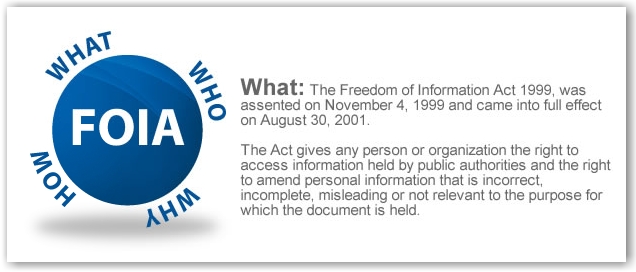
foiaThe State is the dominant agent in our national economy, which is the most vibrant in the Caribbean. It is therefore essential for us to understand how the State works so that we can better understand, or even plan, our interaction with that dominant party. Given the role T&T plays in the wider Caribbean, those concerns extend beyond our country to our region.
In order for us to understand how the State works, we must get quality information in the required quantities. We must also have the right to request further information from public bodies so that we can examine particular matters more closely – see Sidebar below.

This country’s Integrity Framework comprises elements such as –

  • The Integrity Commission (IC), which is responsible for monitoring the integrity of Public Officials;
  • The Freedom of Information Act (FoIA), which gives the right to ask for unpublished information;
  • The Auditor General, the Independent body monitoring the financial reporting of Public Bodies;
  • The Investments Division of the Ministry of Finance, monitoring the operations of State Enterprises;
  • The two Parliamentary Accounts Enterprises Committees, providing Parliamentary oversight of Public Bodies

This sustained examination of our country’s Integrity Framework is directed towards an enhanced level of information on how our nation’s Public Bodies are functioning. Continue reading “Secret Society”

Integrity Omission?

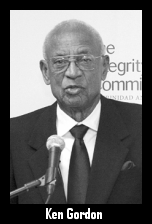
kengordonThe sheer pace of events surrounding the Integrity Commission and the startling series of revelations demand our attention, given the critical role of the Commission as the State’s principal anti-corruption agency.

The rising tide of corruption in our public affairs has been a constant, whichever political administration is in office, seemingly increasing since the IC was established in 1987.  Two general observations emerge from that – we certainly need a respected, effective agency to tackle corruption in our public affairs, so we therefore need to look soberly at how the IC can be improved.  I repeat that the Commission’s 2012 Annual Report contains serious proposals to improve its effectiveness.

My reading of these recent events is that there are two fundamental issues arising. Continue reading “Integrity Omission?”

The Integrity Account

icttHaving completed my four-part series [1, 2 & 3, 4] on what I termed ‘The Integrity Threat‘, I was intrigued by two recent public notices on the meaning of the Appeal Court’s recent activity on these matters.

  1. 6 October  – The Integrity Commission issued a Public Notice which was a clear statement by the Commission that State Enterprises were within its lawful remit, according to the Appeal Court ruling on 27 June.  My reading of that ruling was that it effectively narrowed the 9th part of the Schedule to the Integrity in Public Life Act (IPLA) so that it only applies to Directors of Statutory Bodies performing public functions.  I maintain that view.  Even if one accepts the Commission’s reading of events, as set out in the exchange of emails in the sidebar, this ruling was a seriously retrograde step in the operation of our nation’s Integrity Framework, as I will illustrate;
  2. 5 November – the Judiciary issued a Media Release on the recent reports in other newspapers on a 28 October Appeal Court hearing on a 2006 Freedom of Information request made to TSTT.  I want to read the actual ruling/findings of the Appeal Court at that hearing before writing in detail on this.  Two things are clear – firstly, the Judiciary is able to set the record straight if there is a danger of the media misunderstanding important rulings.  That is the behaviour of a healthy Public Institution.  I am also noting here that the Judiciary has made no such efforts in respect of #30 of 2008, despite the several pointed criticisms in the media.  The second point is about the subject-matter of this lawsuit, which is the 2006 letter the Commission wrote to TSTT’s Directors confirming that they did not have to submit declarations.  That letter and the official efforts to conceal it, were the subject of this 7-year lawsuit.  I had raised this arrangement with senior officials of the Commission in earlier discussions, since it seemed incredible to me that TSTT could have gained such a concession.  I was told that the Commission had agreed to ‘hold its hand‘ since the issue was subject to the Court’s ruling – this is my paraphrasing of conversations, so of course I am subject to correction.  On the one hand I was recently told by the Commission that this arrangement was ‘in order‘ and on the other, it is now emerging that TSTT expended considerable time & money to conceal those details.  I am calling on the Commission to publish those details. Continue reading “The Integrity Account”

Integrity Commission Public Notice

ic-response2013Having written four critical articles consequent on the Appeal Court’s 27th June 2013 ruling and having been preceded by two leading commentators — Andre Bagoo & Anthony Wilson — I was intrigued by this Public Notice published at p. 49 of the Sunday Express of 6 October 2013.

It does not mention any particular articles and purports to clarify the ruling. I will be continuing this examination in my reply.

Integrity Threat – Part 4

icttI am fully in support of a vigorous and conscientious Integrity Commission (IC).  I do not want to see the IC abolished or sidelined.  The IC must realign its limited resources to ensure a decisive impact on the conduct of Public Officials.  The proposals contained in its 2012 Annual Report show clearly that the Gordon Commission has started to seriously grapple with that challenge.

The derailment of the IC between 2004 and 2009 is a clear example of what can happen to an Independent Commission if we do not maintain vigilant oversight.

This matter is of the greatest interest for those of us campaigning for Public Procurement reform so as to get effective control over all transactions in Public Money.  The arrangements we are proposing include new Independent Commissions/Officeholders.  It is therefore critical that we learn the lessons from this debacle so as to safeguard the bodies we are proposing.  The stakes are very high for our nation’s Integrity Framework, which must be strengthened, with swifter resolution of allegations.

To continue in the current manner is to drag the system into further disrepute, encourage even more bold-faced thieves, more reckless public officials and we can expect complete loss of the residual respect for the post-independence civilization we have tried to grow.  That would be an ugly and violent future for our society, so this episode requires stern and conscientious examination. Continue reading “Integrity Threat – Part 4”

Integrity Threat: Part 2 & 3

The previous column discussed the Appeal Court judgment in #30 of 2008, in which both TSTT and the Integrity Commission sought to challenge the High Court ruling in #1735 of 2005.  That High Court ruling found that the phrase contained at para 9 of the Schedule to the Integrity in Public Life Act (IPLA) was to be taken ‘as read’ to define those people who are subject to its provisions –

  1.  “Members of the Boards of all Statutory Bodies and State Enterprises including those bodies in which the State has a controlling interest.”

The Appeal Court – comprising CJ Archie, together with Mendonca JA and Smith JA – ruled that –

“CONCLUSION

  1. TSTT is not a State Enterprise. The members of its Board are not subject to the Integrity Provisions.
  2. It is only the members of the Boards of those Statutory Bodies which exercise public functions that are subject to the jurisdiction of the Commission.“ Continue reading “Integrity Threat: Part 2 & 3”

Integrity threat from the Appeal Court

ictt-vs-tsttOn 27th June 2013 the Appeal Court ruled that –

  • TSTT is not a State Enterprise. The members of its Board are not subject to the Integrity Provisions.
  • It is only the members of the Boards of those Statutory Bodies which exercise public functions that are subject to the jurisdiction of the (Integrity) Commission.

Telecommunications Company of Trinidad & Tobago (TSTT) is a company established between the T&T State and the British-based multinational, Cable & Wireless. C&W holds 49% of the shares in TSTT, while the State holds about 42% of the shares together with the right to nominate 5 of its 9 Directors.

That unanimous ruling has serious consequences for the viability of our nation’s integrity framework.

The intended purpose of that framework is to ensure a satisfactory level of transparency and accountability in the way Public Money is transacted and Public Functions are discharged.  There is still a strong case for this Integrity Framework as a necessary ingredient in the Good Governance of our nation. The Integrity Framework includes the Auditor General; the Integrity Commission; the Investments Division of the Ministry of Finance and the two Parliamentary Accounts Enterprises Committees.  Ours is the most vibrant Caribbean economy and the State is clearly the largest player, so the proper management of that sector is critical. Given the continuing rise in the waste and theft of Public Money, there will always be a need for an improved, more effective Integrity Framework to oversee these huge, controversial operations.
Continue reading “Integrity threat from the Appeal Court”