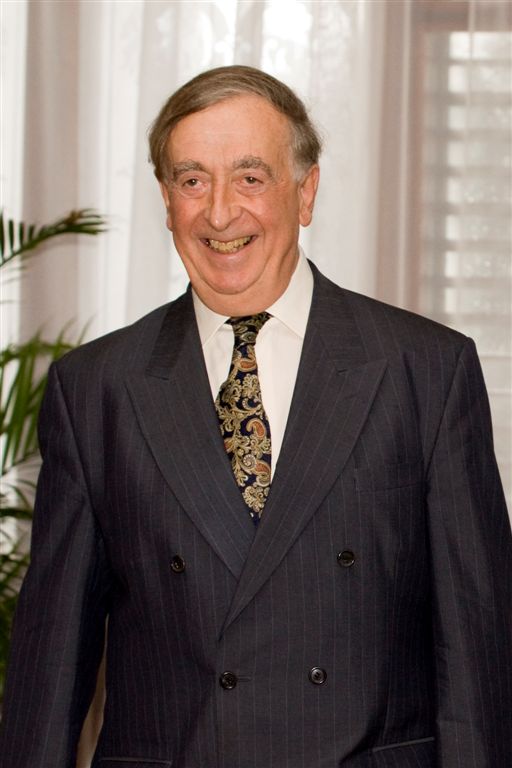
This is the opening statement given by Sir Anthony Colman QC at the first sitting of the Colman Commission on Friday 11th March 2011.
https://afraraymond.net/wp-content/uploads/2011/03/commission-of-enquiry-clico-sir-a-colman.pdf
This is the opening statement given by Sir Anthony Colman QC at the first sitting of the Colman Commission on Friday 11th March 2011.
https://afraraymond.net/wp-content/uploads/2011/03/commission-of-enquiry-clico-sir-a-colman.pdf
 If you think this title is for the latest brand of household cleaner, you would be wrong. I drew that title from the famous statement by deceased US Supreme Court Justice Louis Brandeis, in reference to corruption and fraudulent dealings: ‘sunlight is said to be the best of disinfectants.‘
Of course, this is all about the impending Colman Commission of Enquiry into the failure of CL Financial and other companies (including CMMB) and the Hindu Credit Union.
We are attempting to understand our situation in this financial fiasco – how was the entire collapse caused? Who is responsible? What can we do to avoid a repetition?
Our House needs a serious cleaning and we need a new commitment to serious retrospection if we are to succeed in understanding this scandalous situation.
To set the stage, there are four principalities being represented in this Enquiry –
My first point about this Colman Commission is how welcome it is, as a tangible sign of a change in how our country is being run. No, I did not vote for either group in the last election, but it seems to me that neither of the last two regimes (Manning or Panday) would have initiated a public enquiry into this financial fiasco.
As much as I approve the decision to have this public enquiry, the purpose of this article is to warn against some of the forces now being assembled to erode the enquiry’s effectiveness. Even though, in this respect, political times have changed, we need to remain vigilant if the Colman Commission is to be effective.
To be sure, the four principalities I listed comprise very powerful players for whom this enquiry is a literal nightmare, since they will be obliged to explain some of their biggest decisions and actions, which they would never have had to explain to anyone outside of their own circle.
If the Enquiry takes place as intended, we are going to be afforded an unprecedented insight into the workings, dealings, arrangements and situations in our leadership class – all of it at a depth and range never before recorded. Matters that had been only the subject of picong, ole talk and so-called urban legends will all now become part of the official record. Yes, our Republic will be coming of age.
Our country is a Republic, which to me means that no class of citizen ought to enjoy rights which are superior. But there has been a pattern of behaviour in this fiasco which has been very disturbing because it violates those Republican expectations. Of course, I am referring to the fact that a three-tier system seems to have been in operation during the entire meltdown.
Maybe I am entirely wrong and there was complete surprise when the CL Financial group collapsed. But if that is the case, one is really contemplating a slack system of management systems and an entire swath of our ruling elite who are not ‘fit and proper’. The question of who knew what and when, will be a main point of dispute, because either way you slice it, the picture is unappealing.
You can be sure that the people in the top layer will do anything in their power to protect themselves from the stern scrutiny of those in the lowest group, not to mention the public, who are paying for all this.
I wrote a previous column in this series, entitled ‘Taking in front‘ and on this occasion, in light of what is at stake, I, too, am taking in front. Having suffered a defeat in that the Colman Commission has now been established, the members of the Code of Silence can be expected to try halting, delaying or just diluting the Commission.

We have already had former Hindu Credit Union (HCU) chief, Harry Harnarine, defeated in the High Court in an attempt to stop the Colman Commission. I was not surprised to read reports that Harnarine is planning to appeal that decision. We can expect other strong challenges as this historic process unfolds.
If the members of the Code of Silence are unable to derail the Commission itself, we should not be surprised if they try to cloak the proceedings in some kind of blanket to prevent too much information escaping.
Readers, please note that the process of asking the Court to prevent publication of a particular piece of evidence is a very swift one, with the ruling expected in the very same sitting. That is because if those proceedings are too drawn-out, it can be actually self-defeating, since the matter which they are seeking to have concealed can be published and discussed while a decision is awaited.
That is the reason we need to beat this drum now. We cannot wait for the filing of injunctions and then seek to publish. By then, it would be too late.
The new algebra is simple and inescapable –
Expenditure of Public Money – Transparency = CORRUPTION
Whatever the negatives of the American Imperium, there are still aspects of that society which are worthy of emulation. The example which comes to mind is the recently-published report of the Financial Crisis Inquiry Commission.
The preface of that Report contains an instructive paragraph, at page xii –
“…This report is not the sole repository of what the panel found. A website — www.fcic.gov — will host a wealth of information beyond what could be presented here. It will contain a stockpile of materials — including documents and emails, video of the Commission’s public hearings, testimony, and supporting research — that can be studied for years to come. Much of what is footnoted in this report can be found on the website. In addition, more materials that cannot be released yet for various reasons will eventually be made public through the National Archives and Records Administration…”
The US legislature is determined that the inner lessons and testimony on this important crisis are available to all interested parties for the years ahead. That represents a solid commitment to a learning society, which will at least attempt to draw lessons from the bitterest of experiences. In my opinion, that commitment is worthy of emulation.
Has our society reached the stage of maturation to commit to an entirely transparent process of retrospection? That is the question which will be tested in the weeks and months to follow.
The entire proceedings of the Colman Commission must be held in public. The proceedings must be on TV and available on the internet. The Colman Commission needs a strong internet presence, with its own website.
Sunlight Disinfectant cleans brighter, you see?
 The new situation is charged with peril and one is reminded of Naipaul’s father, the intrepid journalist from A House for Mr. Biswas whose favourite tagline was “…amazing scenes were witnessed…”
Finance Minister, Winston Dookeran, addressed Parliament on the Finance Bill (No. 2) 2010 on Wednesday 24th November. It was a lengthy and detailed statement, which put things into a necessary perspective. For me, it was important that Dookeran gave priority to the claims of the contractors and of course, the last item being the claims being made by the various groups representing Clico policyholders.
The Finance Minister held his position as set out in the 2011 budget, which was no surprise when one considers his statement that the various submissions received from the policyholders’ groups did not withstand scrutiny. I only had two significant concerns in terms of outstanding items which require proper attention.
…Clauses 2.3.3 and 2.3.4. of the SA, require the outgoing CL Financial chiefs to render all assistance to the incoming Board and Management in terms of all records and accounts etc. The question here is ‘Have the new Board and management been receiving the full assistance of the previous CLF chiefs?’ If not, what is being done about it?…
The immediate statements of the Clico Policyholders’ Group (CPG), which targeted Dookeran, are a perturbing sign. For whatever reason, the CPG is ignoring the settled principle of Cabinet’s collective responsibility. That stance seems to be detrimental to effective negotiation and I am beginning to wonder if some person or persons in the Cabinet is ‘giving them basket’.
The threatening statements from the CPG as to the damage their proposed lawsuit can do to our country’s economy are nothing less than scandalous. We are now witness to a grim game of brinksmanship.
We have all heard the arguments and rumours surrounding this bailout, so no point repeating those. It certainly seems that those are going to be ventilated in a high-profile series of lawsuits. I only hope that the hearings remain open and do not take place in a sealed Court. That is what happened in the very first lawsuit after the bailout, in which the Central Bank was attempting to get CL Financial to comply with the terms of the bailout. The stakes are too high now for any concept of privacy to prevail in this matter.
The Minister of Finance also announced that the conditions under which the financial relief would be offered were being considered and it is good to know that there is to be no unconditional relief at our collective expense.
My thoughts on that aspect are that the State must conduct itself in an exemplary fashion and not be placed at any further disadvantage, having already shouldered this enormous, exceptional payout.
There are now anti money-laundering (AML) laws which require depositors to make declarations as to the Source of Funds, all in an effort to prevent the proceeds of crime from entering the legitimate economy. In my view it is necessary for the government to be satisfied that the various sums being claimed by these policyholders were properly declared under the AML laws. We have had shocking reports about the elementary management controls which were either absent or awry in the CL Financial group, so it would not surprise me if their AML-compliance was lax. That needs to be thoroughly checked. It would not be acceptable for our taxpayers’ monies to be used to rinse ‘dirty money’.
Also, the claimants who owe on their taxes – VAT, PAYE, Corporation Tax, Income Tax and so on – should not be refunded. As Dookeran said in that address, if everyone paid the taxes due, our budget would not be in deficit. We cannot go deeper into deficit without these elementary precautions being taken.
Finally, there is the issue of the many borrowers from Clico, British-American, Clico Investment Bank (CIB). In the case of CIB alone, we are told that about $1.0Bn of those loans are ‘non-performing’ – which means that the borrowers are not repaying their loans. It would be perverse for some of those non-performing borrowers to receive refunds from the State. This is a live part of this situation, since in the case of CIB itself, the very Inspector of Financial Institutions swore in his affidavit filed in the winding-up action for that failed bank –
…With respect to the Creditors of the Petitioner, the Petitioner has met the statutory obligations for the Board of Inland Revenue (except for Corporation Tax Returns for 2007, 2008 and 2009 which are being prepared and remain outstanding)…
That is a glaring example of the kind of wanton wrongdoing at the heart of this mess. CIB fails to file its Corporation Tax returns for three years, yet keep their banking licence and arrange for the taxpayer to bail them out when it all goes sour.
Some claimants may try to invoke the ‘corporate veil’ to shield themselves from various breaches committed by their companies, but this is an exceptional situation in which the State is making an offer. In my view, the corporate veil ought properly to be ignored, so that the long-standing commercial principle of ‘set-off’ can be applied to the claimants.
The Colman Commission of Enquiry and its effects on the Code of Silence will be my next topic.
We are now entering a bizarre endgame in this rounds of musical chairs. The children’s game has returned for us adults, but with a vengeance.
As I wrote on 10th September in this space, the real question is ‘When exactly did the CL Financial group collapse?’.
To understand this huge matter we need to put things in the correct order –
What did they know and when did they know it?
There now appear to be at least four groups representing these investors –
Some of the positions being taken by the various groups are indicative of the degree of desperation of the parties, hence the title of this article. The general view emerging from these groups seems to be that the CL Financial group is basically healthy and profitable, so there should be no issue about returning their investment.
I do not know what those views are based on and it is impractical to continue basing our discussions on the series of rumours and draft reports and suchlike. We need good quality information to make a quality decision and that is not negotiable. We need to insist on that as a minimum.
After the first round of organizing and attorneys’ letters, followed by the Prime Minister’s important address on 1st October, we are now into what appears to be an even stranger place.
Two of the stranger proposals emerging from the CPG’s Port-of-Spain meeting on 24th October were –
It may all just be a series of negotiating positions, but it seems pretty clear that no one from these various investors’ groups intends to take a discount or ‘haircut’ on the monies owed to them. The unstated assumption is that if someone has to stand the bounce or take a haircut, that someone must be the taxpayer. That could never be the correct position. So, we need the facts.
The most startling development is the Central Bank’s full page adverts on Thursday 28th October, repudiating the claims that it had offered any guarantees in this situation. The reaction was immediate, with the CPPA publishing large adverts in opposition the next day and a new anti-bailout group emerging for the first time – at last! The CPG’s response was a nadir in their campaign, with the Trinidad Guardian reporting that – “…Permell went on to say that they do not care where the Central Bank gets the money from once they guarantee the policyholders’ contracts…” – I could scarcely believe what was on the page before me. Even the most militant Trade Unionists use more reasonable language.
Which brings us right to the meat of the matter, the order of things. What is the reason that the investors’ groups are now at the front of the line for assistance from this government? I could be wrong, but it is easy to get that impression when one hears of Cabinet discussing the matter twice in one week, certain groups giving threatening timetables and so on. I do not know if our Cabinet – PNM, UNC or PP – has ever given such a total priority to any matter in the past.
There are other claims on the limited monies available to the State. All of those claims existed before these investors groups. All.
Many people have poor water supply. Outstanding payments to contractors and suppliers are in excess of $7.0Bn, according to Central Bank estimates. Insufficient money for OPVs – the estimated cost of $3.0Bn is too much for the country to bear, so national security is falling behind. More guns and drugs entering our homeland. Public Servants claims are about $3Bn and that is also a strain on the Treasury. Not enough police cars. Sad situation in the public hospitals.
The CPG issued a 2 page advert in the Guardian on Thursday 4th November and it deserves careful reading. It was good to see their call for the publication of the correct financial information before making a decision. They set out their proposals for the relief of CPG members – those are the latter of the two above, with the added condition that they be given two seats on the boards of CL Financial and Clico.
The CPG claims that its proposals place no additional burden on the taxpayers, which is a good thing, if that is truly so. The CPG’s proposals are silent as to how the monies already spent are to be recovered.
The real test will be if the accounts and asset valuations reveal the group to be insolvent. Will the various investors’ groups accept that or are we in for a long, bitter fight?
The Attorney General recently announced that he had withdrawn Sir Gavin Lightman QC as the sole Commissioner, due to an apparent conflict of interest. Lightman had appeared for Clico in a 1991 court case and the PNM did well to have stopped this before it went too far.
Two important further points, though –
 AfraRaymond.net