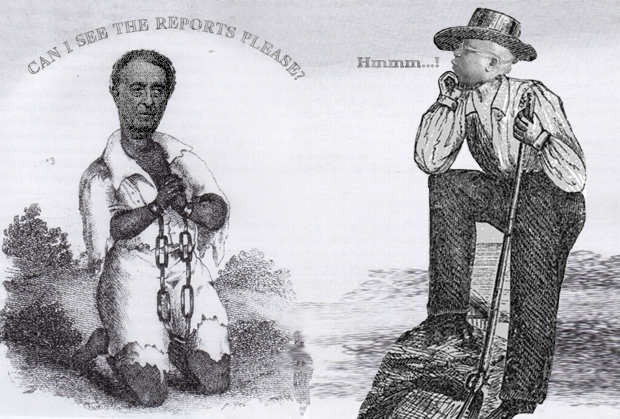
 There were several important developments in the Colman Commission last week, with the widely reported appeals of Sir Anthony Colman QC for the Central Bank to change its position with respect to the presentation of accounts to the Enquiry.
From my own attendance at the opening session of the Colman Commission on Friday 11th March and the various reports, it seems that there are various moves afoot to restrict or stop the enquiry. I expected this sort of scenario in declaring the main players to be part of a ‘Code of Silence’ – it is no surprise to me.
There are three strands which are becoming evident as we move into the new phase, with the Colman Commission and several legal actions swinging into action.
- Firstly, we had former HCU boss Harry Harnarine challenging the Colman Commission in Court, claiming it to be illegal etc. Obviously, Harnarine did not relish the thought of having to answer questions on TV. The Appeal Court rejected those claims on Monday 4th April and the reports were contradictory, to say the least –
“Speaking with reporters following the ruling, Harnarine said he was not satisfied with the panel’s ruling.
Harnarine said he welcomed the enquiry and would make objections “at the right time”.
Harnarine wanted the court to declare the commission null and void, that it was an abuse of the court’s process and that it was unlawful and illegal, among other requests.” - Secondly, the Central Bank’s action to wind-up Clico Investment Bank (CIB) was challenged by the National Gas Corporation (NGC) and the National Insurance Board (NIB). On 27th January the judge in that case ruled that the petitioner must be questioned. The Central Bank’s attorneys had fought very hard to resist that. The petitioner was the Inspector of Financial Institutions, Carl Hiralal. I have already questioned the apparent anomalies in his affidavits – in ‘The House on the Corner’ parts 1 & 2 – so Hiralal’s cross-examination was one to be anticipated. On 28th March, NGC withdrew from that lawsuit, which was to recover some $1.1Bn from CIB. There has been no statement as to why that was done. Given that the missing $1.1Bn is our taxpayers’ money, an urgent statement to clarify this decision is needed.
WHERE IS THE NGC’s MISSING $1.1Bn?
The NIB’s lawsuit is still ongoing and I await that cross-examination of Hiralal with great interest. - Thirdly, we now have reports of various objections being raised by the attorneys in respect of the accounts for CL Financial.
Readers need to be clear that there are three types of accounts in this matter. Given the room for error it is important to get this straight:
- Annual Audited Accounts – These are routine and ought to have been filed by now. The last accounts for the CL Financial Group and its subsidiaries were by PriceWaterhouseCoopers (PWC) as at year-end 2007. We therefore have a situation in this country with two insurance companies – CLICO and British-American – open for business with no accounts filed for 2008, 2009 or 2010. That is unacceptable and further delaying will only bring discredit to the responsible parties. The sidebar contains more on this.
- The Reviews of Accounts – Post-bailout, the Central Bank has hired Ernst & Young (E&Y) to review the accounts of the Clico Investment Bank and CLICO. In addition, the Commissioner of Co-operatives had hired E&Y to do the same for Hindu Credit Union (HCU). From what I have read, E&Y seem to be objecting to both the production of those reports to the Colman Commission and the subpoena to its Executive Chairman, Colin Soo Ping Chow – see Trinidad Express of 6th April – see here. I am not at all clear what is the objection to releasing those reports, after all, the E&Y report into CIB formed part of the Central Bank submissions to the High Court in the winding-up petition.
- Forensic Audits – These were reportedly done by Bob Lindquist and KPMG Canada for the Central Bank on CLICO, with the latter firm now claiming that their client is objecting to disclosure. The grounds appear to be that if those reports were disclosed, it would undermine the intended prosecutions. That seems to me to be a reasonable rationale to pause the publication of those reports until that impasse is resolved.
So, what is at stake here?
Sad to say, but this is reminding me of the actions of Calder Hart/UDeCOTT in trying to derail and frustrate the Uff Enquiry. On that infamous occasion we had the spectacle of a State-owned company challenging the Uff Commission – which had been established by the State – in the High Court. I hope that my view is incorrect.
This led to Colman’s appeal to the public as reported in the Trinidad and Tobago Guardian on 7th April and Trinidad Express of Friday 8th April. The first of those reports contained an intriguing fragment in which former AG and Law Association President, Russell Martineau SC raised objections on behalf of his clients, PWC, on grounds of confidentiality. That mystified me, since PWC’s audits seem to be confined to the first, most innocuous group, as outlined above.
According to Colman, if the Commission has to get fresh reports into these matters it will mean more delays and more expense. He said that would be a matter for the public to decide if that is in their interest, hence these efforts.
The Central Bank made a press release on 14th April which confirmed that they intend to take legal actions. Please note that the press release was silent as to the Annual Audited Accounts. For whatever reason, the Central Bank is continuing its silence as to the status of the most innocuous class of accounts.
It is unacceptable for these issues to be mixed in this misleading fashion. Simple and inescapable questions need to be answered now –
- Are the CL Financial annual audited accounts for 2008, 2009 and 2010 ready?
- If yes, why have they not been published?
- If not, why not?
- What is the objection to publishing the Reviews of Accounts?
It seems that we are being given a tough choice, between –
- a solid investigation, which preserves the secrecy of the forensic reports, with probable prosecutions, or
- a wide-open investigation, with a high level of information emerging about the entire fiasco, but little chance of successful prosecutions.
The Trinidad and Tobago Guardian editorial of Tuesday 12th opted for the former, while the Trinidad Express editorial of the same day took the opposite view, favouring the latter.
The decisive question, for me, is whether the Central Bank has a track record upon which we can rely. The basis of their objections is the notion that prosecutions are to be mounted against the offending parties. Can we really accept that?
The Central Bank’s track-record on these matters has been doubtful and people are right to be concerned. From the CIB’s reported failure to file Corporation Tax returns for 2007, 2008 and 2009 to the continued inaction on the ‘Fit and Proper’ regulations, to the failure to recover the dividends CLF paid after the bailout was requested. A poor record of proper enforcement.
We are now being asked to believe that an organisation which is unable or unwilling to pick those ‘low-hanging fruit’, will be able and willing to prosecute ‘high-flying smartmen’.
I am being reminded of those childish spelling-games we all played –
A for Apple
B for Bat
C for yuhself!
Trinidad & Tobago Transparency Institute made a press release on the issue, which called on the Central Bank to act in an exemplary fashion. That is a welcome statement.
My vote, for what it is worth, is that we should preserve the secrecy of the forensic reports so as to remove any escape hatch for these fraudsters and their accomplices. Leave them no avenue to claim that if this or that had not happened they would have been able to prosecute. There is probably enough material in the other two classes of accounts to progress the Colman Commission.
SIDEBAR
Freedom of Information – Having had three applications under the FoI Act ignored, I have now given the Ministry of Finance ten (10) days to provide a copy of CL Financial’s letter of 13th January 2009 requesting the bailout and the 2008 Audited Accounts for the CLF group – see here . If those documents are not supplied, it is off to Court we go.
Legal Opinions – At this point in the mix, we sorely need to hear from the legal columnists as to what is the position in this heated contest – Martin Daly, Dana Seetahal, Ken Lalla and Martin George, we await.
 If you think this title is for the latest brand of household cleaner, you would be wrong. I drew that title from the famous statement by deceased US Supreme Court Justice Louis Brandeis,
 AfraRaymond.net